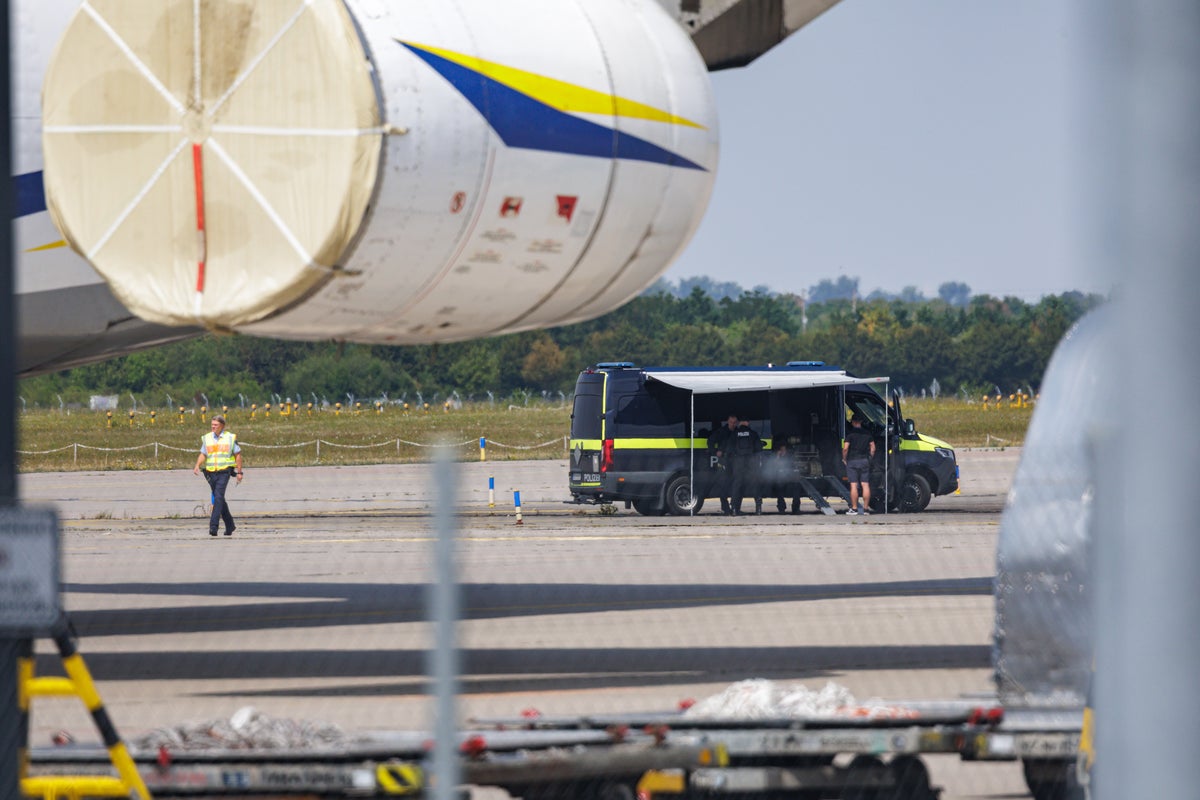
A routine night at Leipzig/Halle Airport turned into a massive counterterrorism investigation when an airport employee spotted something terrifying near the south runway. It wasn't just a stray quadcopter or a hobbyist flying where they shouldn't. It was a drone rigged with an explosive device and a live detonator.
German interior minister Alexander Dobrindt didn't mince words after rushing to the scene, calling it a "new quality of danger" and a hybrid attack scenario. If you've been paying attention to European logistics hubs, you know this isn't happening in a vacuum. But arming a drone on active airport grounds crosses a line that security experts have feared for years.
The Anatomy of the Leipzig Airport Threat
Let's look at what actually went down. Shortly before midnight, flying objects triggered security protocols at one of Europe's most critical freight hubs. Both runways shut down immediately. Flights diverted. Police deployed an anti-explosives robot to inspect the quadcopter sitting ominously close to the tarmac, ultimately pulling the detonator off the device.
To make matters worse, a DHL freight aircraft aborting its landing due to the sudden runway closure collided with an unidentified flying object while climbing away. That plane managed to limp safely to Hannover Airport with minor structural damage.
Why Leipzig? This specific airport isn't just any regional airstrip. It's a massive logistics spine and, crucially, a primary European base for Ukrainian Antonov transport aircraft. Local reports and photographs from the site pointed police technicians right toward areas frequented by these Ukrainian cargo planes. That proximity immediately drew intense scrutiny from intelligence agencies looking at foreign state actors and hybrid warfare tactics.
The Ghost of Past Incidents
We've seen warning signs before. Back in 2024, an incendiary device spontaneously ignited inside a freight container at a Leipzig logistics warehouse. Western intelligence agencies quickly pointed fingers at Russian intelligence operations testing European supply chain vulnerabilities.
Unauthorized drone buzzes near military bases, critical infrastructure, and ports have become a constant headache across Europe. But finding an actual explosive payload attached to an airframe on airport grounds shifts the conversation from passive espionage to active sabotage.
Intelligence officers and federal prosecutors are handling this as a high-stakes counterterrorism case because amateur hobbyists don't build and deploy weaponized quadcopters onto secured commercial runways. It takes planning, reconnaissance, and a blatant disregard for international borders.
What This Means for Aviation Security Going Forward
Let's be honest. Commercial aviation has spent decades tightening perimeter security against traditional threats—mostly focused on passenger luggage and insider threats. Counter-drone technology at major civilian airports remains wildly inconsistent. Many facilities rely on visual spotting or basic radar that struggles to differentiate between a commercial delivery drone and a low-profile threat.
When an explosive-laden drone can penetrate the perimeter of a major European freight hub without being intercepted mid-air, the defense models are broken. Expect European transport authorities to push hard for mandatory airspace denial tech, advanced radio-frequency jammers, and acoustic sensor grids around critical infrastructure.
The trouble is that consumer drone components are cheap, modular, and easy to source globally. You can buy parts off commercial marketplaces, 3D print a frame, and strap an explosive charge to it in a basement. Stopping a dedicated actor from exploiting open airspace near massive multi-acre logistics facilities is an absolute nightmare for security forces.
Airports will bounce back to normal schedules quickly—as Leipzig did when the north runway reopened hours later—but the psychological baseline has shifted. The threat has moved from theory to the tarmac. Security teams across the continent are currently rewriting their playbooks, and frankly, they don't have much time to get it right.


