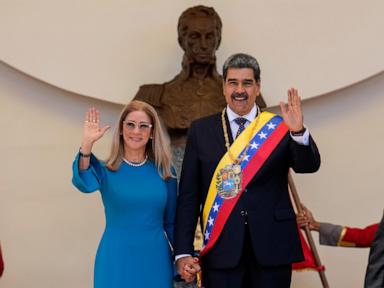
The legal establishment is having a collective meltdown over a courtroom motion filed in Manhattan federal court. Defense attorneys for Nicolás Maduro and his wife, Cilia Flores, are arguing that sovereign immunity protects a foreign leader from American criminal prosecution.
Cue the pearl-clutching by international law experts. Commentary columns are treating this defense as a serious philosophical puzzle about the boundaries of Westphalian sovereignty.
They are missing the entire point.
The lazy consensus says this is a complex constitutional standoff between customary international law and executive branch recognition policy. It assumes that because parchment exists with old Latin phrases on it, modern geopolitical reality has to pause and play nice with legal fiction.
Let us clear away the smoke. Sovereign immunity has never survived an army with air superiority and a pair of handcuffs.
The Fiction of Status-Based Protection
Maduro’s legal team wants everyone to respect the ancient doctrine that heads of state are exempt from foreign municipal courts. They cite the International Court of Justice and centuries of state practice.
Here is what the textbook theorists refuse to admit: immunity is a byproduct of power projection, not a magical force field. It protects leaders who remain inside their own borders backed by battalions loyal to their regime. It evaporates the second a foreign military conducts a midnight extraction, places the target in a federal detention center in Brooklyn, and lets the local magistrate set a trial date.
Imagine a scenario where a local municipal ordinance states that no citizen can be detained while wearing a red coat. If that citizen commits a bank robbery, gets hogtied by a SWAT team, and is thrown in a holding cell, arguing about the coat in front of a judge is pure theater. The physical reality of detention overrides the stylistic technicality of the garment.
The same logic applies to global strongmen. The United States stopped recognizing Maduro as a legitimate president years ago. In the precedent set by United States v. Noriega, courts made it clear that non-recognition by the executive branch pulls the rug out from under any functional head-of-state defense. You cannot demand the diplomatic courtesies of a sovereign office while simultaneously being treated by the world's primary superpower as an indicted narcotics trafficker sitting in a maximum-security block.
The Danger of Entertaining the Absurd
Why do mainstream pundits pretend this motion has a fighting chance? Because institutionalists are terrified of admitting that international law is mostly a suggestion backed by aircraft carriers.
When lawyers argue that Cilia Flores shares status-based immunity simply by marriage, they are stretching legal elasticity to its breaking point. If the spouse of an ousted autocrat sitting in a jail cell enjoys absolute immunity, then criminal syndicates have just found the ultimate organizational hack: run a nation-state as a family cartel, secure diplomatic passports, and launder billions through state machinery.
The indictment accuses Maduro of turning state institutions into logistics hubs for cocaine transit. When a government functions as a transnational drug cartel, the perpetrators lose the protective coloration of official acts. Conduct-based immunity does not cover running industrial-scale narcotics operations. If deploying the military to protect cocaine shipments counts as an official state function, the entire concept of international criminal law is a bad joke.
Uncomfortable Realities of Power
Let us look at the downside of this aggressive jurisdictional overreach. Critics are right about one thing: unilateral extractions set a chaotic precedent. When superpowers start treating sovereign capitals as open-air jurisdictions for snatch-and-grab operations, international norms fray.
Yet crying about sovereign immunity in a New York courtroom after a military raid is like complaining about property damage after a firebombing. The deed is done. The defendant is wearing standard-issue prison grey. District Judge Alvin Hellerstein is not going to check international law textbooks, throw his hands up, and book a first-class flight to Caracas to return the prisoner with an apology note.
The legal arguments scheduled for November are not a grand constitutional debate. They are a procedural ritual designed to give the defense something to bill their clients for while the calendar ticks toward a June trial date.
Stop looking for profound legal coherence where there is only raw, unvarnished power.
The courtroom door is closed. The handcuffs are real. Deal with it.