The International Court of Justice (ICJ) decision in The Gambia v. Myanmar fundamentally altered the enforcement mechanics of international law by decoupling legal standing from direct material injury. Under the doctrine of erga omnes partes obligations, any state party to the 1948 Genocide Convention now possesses the legal capacity to haul another signatory before the World Court, regardless of geographic proximity or direct harm to its own citizens. This structural shift transforms genocide prevention from a bilateral diplomatic grievance into a decentralized, multilateral enforcement mechanism, creating acute compliance risks, diplomatic liabilities, and strategic imperatives for every state party to the treaty.
The Structural Shift in Legal Standing
Historically, international dispute resolution operated on a bilateral injury model. State A could only bring a claim against State B if State B directly violated a right belonging to State A—such as breaching a trade agreement, seizing assets, or harming State A’s nationals. In the context of atrocity crimes, this created an enforcement vacuum. When a government persecuted its own domestic minority, no external state suffered a traditional, direct injury, effectively insulating the perpetrator from judicial scrutiny at The Hague. Also making headlines lately: The Quiet Arithmetic of a Winter Truce.
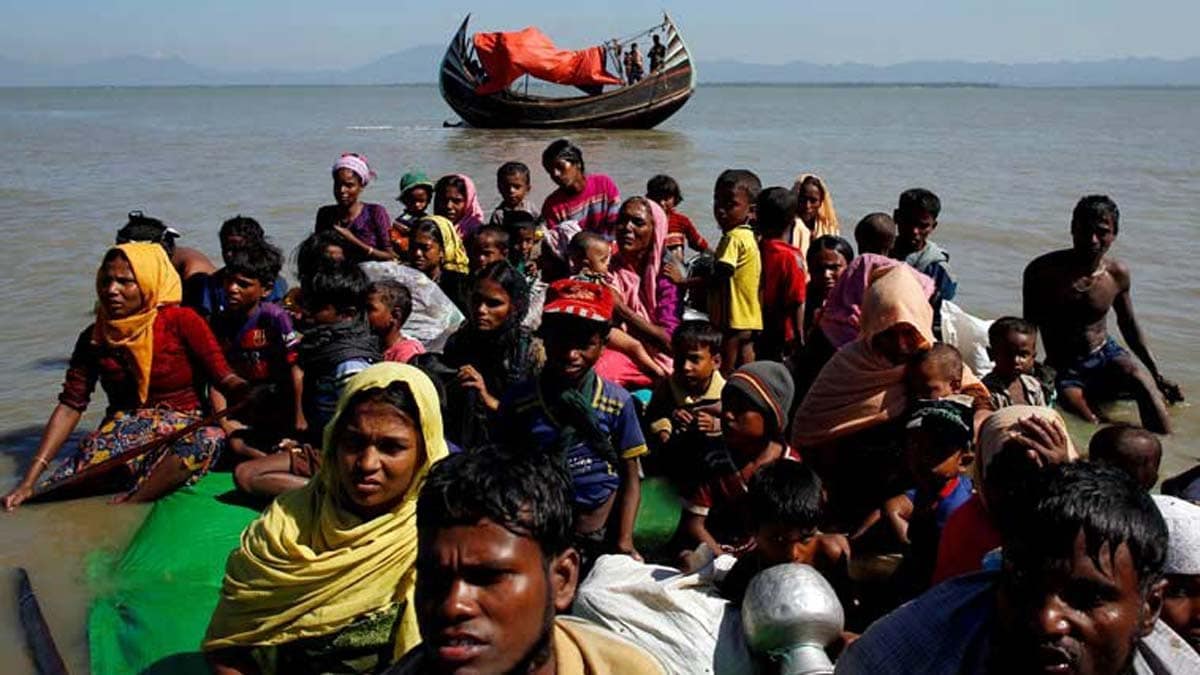
The Gambia’s November 2019 application against Myanmar dismantled this procedural barrier. The Gambia had no historical ties to the Rohingya population, shared no border with Myanmar, and suffered no direct economic or security fallout from the 2017 military clearances in Rakhine State. Myanmar’s primary legal defense rested on this exact absence of direct injury, arguing that The Gambia lacked standing and that only the Organisation of Islamic Cooperation (OIC)—which backed the litigation—was the true applicant, thereby violating the ICJ’s rule that only states may be parties in contentious cases.
The Court’s unanimous January 2020 provisional measures order, followed by its July 2022 judgment rejecting Myanmar’s preliminary objections, established a definitive legal precedent. The ICJ ruled that all states parties to the Genocide Convention share a common interest in ensuring that acts of genocide are prevented and punished. Because the obligations under the Convention are owed to the international community of signatories as a whole (erga omnes partes), every state party has a legal interest in compliance. Additional insights into this topic are explored by USA Today.
This ruling eliminates the jurisdictional gatekeeping that previously paralyzed international human rights enforcement. A small West African nation successfully initiated binding judicial proceedings against a Southeast Asian military regime based purely on shared treaty membership. The procedural hurdle of proving direct victimhood no longer exists within the 153-state framework of the Genocide Convention.
The Three Pillars of the ICJ Enforcement Mechanism
To understand how this precedent operates in practice, legal analysts and foreign policy practitioners must break down the Court's framework into three distinct operational components.
1. Decoupled Jurisdictional Standing
The first pillar is the separation of jus standi (the right to bring an action) from material damage. Under Article IX of the Genocide Convention, disputes relating to the interpretation, application, or fulfillment of the Convention fall under the compulsory jurisdiction of the ICJ. By confirming that any signatory can invoke Article IX without proving special injury, the Court effectively deputized all 153 state parties as potential plaintiffs.
This creates an asymmetric litigation environment. States with robust legal infrastructure—or coalitions of states pooling financial and legal resources, as seen with the OIC’s support for The Gambia—can target alleged perpetrators anywhere in the world, provided the target state has not entered a valid reservation to Article IX.
2. Lowered Evidentiary Thresholds for Provisional Measures
The second pillar involves the timing and evidentiary standard required to trigger binding court orders. Final judgments on the merits of a genocide case take years, often a decade or more, due to the extraordinarily high standard of proof required to establish dolus specialis (specific intent to destroy a protected group in whole or in part).
However, under Article 41 of the ICJ Statute, the Court can indicate provisional measures to preserve the respective rights of either party pending the final decision. In the Rohingya proceedings, the ICJ confirmed that to grant provisional measures, it does not need to determine definitively whether genocidal intent exists. It need only establish that the rights claimed are plausible and that there is a real and imminent risk of irreparable prejudice.
The operational consequence is severe: a state can be subjected to legally binding international injunctions—requiring it to halt military operations, preserve evidence, and submit periodic compliance reports to the Court—based on a plausibility standard rather than proof beyond a reasonable doubt.
3. The Affirmative Duty to Prevent
The third pillar expands the substantive obligation of third-party states from passive non-complicity to active prevention. Drawing directly from its 2007 precedent in Bosnia and Herzegovina v. Serbia and Montenegro, the ICJ reinforced that Article I of the Genocide Convention imposes an affirmative duty on all signatories to employ all means reasonably available to them to prevent genocide as soon as they learn of, or should normally have learned of, the existence of a serious risk that genocide will be committed.
Crucially, this is an obligation of conduct, not of result. A state does not violate the Convention simply because genocide occurs despite its efforts. Rather, a state breaches its legal duty if it manifestly fails to take all measures to prevent genocide which were within its power, and which might have contributed to preventing the atrocity. The threshold for triggering this duty is not the actual commission of genocide, but the awareness of a serious risk.
Quantifying the Duty of Conduct: The Capacity-Influence Matrix
When foreign ministries evaluate their legal exposure under Article I, they cannot rely on vague diplomatic rhetoric. The ICJ’s jurisprudence establishes a clear analytical framework for measuring whether a third-party state is meeting its duty of conduct. Legal liability is determined by a state's specific capacity to influence the alleged perpetrator, which breaks down into four measurable variables:
- Geographic Proximity: Bordering states bear a higher operational burden regarding border control, refugee flows, cross-border intelligence sharing, and preventing the transit of weapons or militant groups.
- Diplomatic and Political Leverage: States that maintain high-level diplomatic missions, sit on relevant regional bodies (such as ASEAN), or hold permanent seats on the UN Security Council possess greater institutional tools to exert pressure than isolated nations.
- Economic and Military Interdependence: The volume of bilateral trade, foreign direct investment, and, most critically, arms transfers directly dictates a state's leverage. Continuing to supply dual-use technology, aviation fuel, or weaponry to a state under a plausible risk of committing genocide moves a third-party state from failing its duty of conduct into potential complicity under Article III(e).
- Institutional and Financial Capacity: Wealthier states with advanced intelligence apparatuses and forensic capabilities face higher expectations regarding early warning, evidence preservation, and funding international investigative mechanisms compared to developing nations.
The cause-and-effect relationship is direct: the deeper a third-party state’s economic, military, or diplomatic integration with an accused state, the greater its legal obligation to use those exact channels to halt the offending conduct. Inaction by a major trading partner or arms supplier carries vastly higher legal risk than inaction by a state with zero bilateral ties.
Downstream Cascade Effects on Global Litigation
The Rohingya ruling did not remain an isolated legal anomaly. It established a repeatable blueprint that immediately altered state behavior across multiple active conflict zones, proving that the erga omnes partes mechanism is now a permanent fixture of statecraft.
In February 2022, Ukraine invoked the exact same jurisdictional hook under Article IX of the Genocide Convention to challenge Russia’s invasion, arguing that Russia falsely claimed genocide in the Donbas as a pretext for military aggression. Over thirty third-party states subsequently filed declarations of intervention under Article 63 of the ICJ Statute, seeking to shape the Court’s interpretation of the Convention.
In December 2023, South Africa replicated The Gambia’s precise legal architecture by filing an application against Israel regarding military operations in Gaza. Like The Gambia, South Africa claimed no direct territorial or material injury, relying entirely on its standing as a signatory to the Genocide Convention to secure provisional measures in January, March, and May 2024. Multiple states, including Nicaragua, Colombia, Mexico, Spain, and Türkiye, subsequently moved to intervene in the proceedings.
Furthermore, in June 2023, Canada and the Netherlands initiated joint ICJ proceedings against Syria under the Convention Against Torture (CAT), applying the identical erga omnes partes logic to a different human rights treaty.
This rapid proliferation demonstrates a clear structural trend: middle powers and coalitions of states are increasingly weaponizing multilateral treaties to bypass the political paralysis of the UN Security Council. When the Security Council is deadlocked by the veto power of permanent members, the ICJ serves as an alternative forum where veto rights do not exist and where procedural standing is universally distributed among treaty signatories.
Operational Limitations and Systemic Bottlenecks
While the expansion of erga omnes partes standing closes a major jurisdictional gap, treating the ICJ as a standalone solution to mass atrocities ignores severe structural bottlenecks in the international legal system. Practitioners must account for four hard limitations:
- The Enforcement Deficit: The ICJ possesses no police force, military, or independent enforcement arm. Under Article 94 of the UN Charter, if a party fails to perform the obligations incumbent upon it under a judgment, the other party may have recourse to the Security Council. If the accused state is a permanent member of the Security Council or is shielded by an allied permanent member’s veto, formal enforcement stalls completely. Myanmar’s military junta largely ignored the substantive directives of the January 2020 provisional measures order while submitting confidential reports that critics dismissed as performative.
- The Reservation Loophole: Compulsory jurisdiction under Article IX is not absolute. Several major powers—including the United States, China, and India—entered formal reservations to Article IX upon ratifying the Genocide Convention, explicitly rejecting the ICJ's automatic jurisdiction unless they grant specific consent for a given dispute. Consequently, the erga omnes partes litigation model cannot be deployed uniformly against all states; it selectively binds only those nations that accepted Article IX without reservation.
- Timeline Asymmetry: The speed of mass atrocities vastly outpaces the speed of international adjudication. Even with expedited provisional measures taking weeks or months, the merits phase—where the Court actually determines whether genocide occurred—routinely spans five to fifteen years. By the time a final judgment is rendered, the demographic reality on the ground is often irreversible.
- Dilation of the Legal Standard: High-profile invocation of the Genocide Convention for geopolitical leverage risks diluting the stringent legal definition of genocide. Genocide requires the specific intent to destroy a national, ethnical, racial, or religious group as such. If states routinely use Article IX to litigate broader war crimes, crimes against humanity, or territorial disputes simply because the Genocide Convention offers a convenient jurisdictional hook, the Court faces immense political pressure that could erode its institutional legitimacy.
Strategic Imperatives for State Legal Advisors and Policymakers
Given the irreversible shift in ICJ jurisprudence, foreign ministries, defense departments, and state legal advisors can no longer treat the Genocide Convention as a passive moral declaration. It is an active compliance regime with direct litigation exposure. States must immediately execute three structural adjustments to mitigate legal risk and operationalize their treaty obligations:
- Audit Bilateral Arms and Dual-Use Export Controls: Defense and trade ministries must immediately cross-reference all active arms export licenses, dual-use technology transfers, and state-backed financial guarantees against ongoing conflict zones where independent UN bodies or credible monitors have flagged a serious risk of atrocity crimes. Waiting for a formal ICJ ruling to suspend transfers is legally insufficient; the duty to prevent triggers upon awareness of serious risk. Continuing material support past that threshold exposes the exporting state to allegations of complicity.
- Institutionalize Early-Warning Legal Triggers: Foreign ministries should decouple atrocity risk assessments from political desk officers, who are structurally incentivized to preserve bilateral stability. States must establish an independent legal trigger mechanism within their international law bureaus. When intelligence or UN fact-finding missions indicate a plausible risk of genocide in a partner state, this mechanism should automatically mandate documented diplomatic demarches, targeted sanctions, and multilateral coalition-building to build an evidentiary record proving the state fulfilled its duty of conduct.
- Standardize Strategic Litigation and Intervention Protocols: Rather than reacting ad hoc to high-profile filings at The Hague, states should establish clear doctrinal criteria for when to initiate erga omnes partes proceedings or file Article 63 interventions. Selective intervention based purely on geopolitical alignment undermines the credibility of the treaty regime and invites reciprocal lawfare. Consistent, criteria-driven participation ensures that the expanded standing established in The Gambia v. Myanmar functions as a predictable deterrent rather than an erratic diplomatic weapon.