Diplomatic bargaining over detainees and missing people has pulled an almost invisible part of Lebanese history straight into the headlines. Most people outside Beirut assume Lebanon hasn't had a Jewish community for generations. They're wrong.
Negotiations tied to fighting between Israel and Hezbollah brought the fate of abducted Lebanese Jews back to the table, pairing prisoner releases with renewed attention to people who vanished during the country's 15-year civil war. Once roughly 18,000 to 20,000 strong, Lebanese Jews now number only a tiny handful, often keeping quiet about their identity. Meanwhile, you can explore other events here: When the Roof Costs Everything We Have Left.
Why the Israel-Lebanon agreement brought back a forgotten past
When talks between Israel and Lebanon address detainees and unresolved war crimes, memory becomes bargaining leverage. Reporting in late 2026 highlighted how deals involving the release of Lebanese prisoners held by Israel intersected with efforts or requests regarding the remains of Jewish figures who disappeared decades earlier.
That link surprises a lot of readers. Why would an agreement or prisoner exchange involving Israel and Lebanon spotlight a small, largely dispersed community? Because missing persons from Lebanon's civil war remain an open wound, and families or outside advocates push for answers whenever leverage exists. Among the roughly 17,000 people still listed as missing from the 1975–1990 civil war are at least seven Jews, including community leaders like Isac Sasson, physician Elie Hallak, and former secretary general Salim Jamous. To understand the bigger picture, check out the detailed article by NBC News.
Over 17,000 people remain unaccounted for from Lebanon's civil war, and the missing include prominent Lebanese Jews abducted during the conflict.
From a practical standpoint, searching for remains or verifying what happened forty years later isn't simple. Memories fade. Witnesses pass away. Urban neighborhoods like central Beirut have been rebuilt, demolished, and redeveloped multiple times. Even when diplomatic deals mention searches or humanitarian follow-through, turning intentions into answers on the ground is slow and uncertain.
How Beirut's Jewish quarter grew and then emptied out
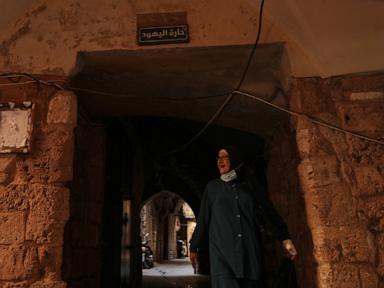
Walk through central Beirut and you'll hear about Wadi Abu Jmil, once nicknamed the Valley of the Jews. For decades in the twentieth century, it anchored a vibrant urban life with synagogues, schools, shops, and tight-knit family networks.
Unlike many neighboring Arab countries where Jewish populations dropped sharply right after 1948, Lebanon's Jewish population actually grew for a time. Refugees and migrants arrived from places like Syria, Iraq, Greece, and Turkey, drawn by Lebanon's commercial energy and relative openness compared to several neighbors. Some transited onward, while many put down real roots.
That stability didn't last. Regional wars and internal fractures chipped away at trust. After the 1967 Six-Day War and the 1969 Cairo Agreement, political polarization sharpened, street tensions rose, and security felt far less assured. Then came the 1975 civil war and later escalations involving Israel, the PLO, and Hezbollah. Kidnappings, shelling, economic strain, and fear drove wave after wave of families to leave for France, the United States, Canada, Latin America, and Israel.
Misconceptions people get wrong about Lebanese Jews
I see two big myths pop up whenever this topic trends online:
- Myth 1: Every Jew in Lebanon left in 1948. Not true. While tensions existed around 1948, major departures accelerated later—especially after 1967 and during the civil war starting in 1975.
- Myth 2: Judaism isn't recognized in Lebanon. Actually, Judaism remains one of Lebanon's 18 officially recognized religious sects. Legal recognition on paper hasn't translated into a large or visibly active community in recent decades.
What remains today and why the details stay murky
Today, estimates put the number of Jews still in Lebanon at a tiny fraction of what it once was—often cited in the low dozens or up to around a hundred at most, mostly in or near Beirut, with many keeping a low profile. Meanwhile, former residents and descendants scattered worldwide—including figures like Rabbi Elie Abadie, who left Lebanon more than half a century ago—keep family memories and historical ties alive.
There's a catch when you look for hard numbers or clear answers. Exact population counts are tricky because people don't always advertise their background. Historical archives have gaps. And on questions like the fate of missing persons or property and heritage sites, accounts vary depending on who you ask. Being honest about those limits matters way more than pretending every loose end is tied up.
You don't need to pick a partisan script to care about human history. Real history is messy. It holds stories of neighbors, lost homes, unresolved disappearances, and shifting borders all at once.
Practical steps if you want to dig deeper
If you want to understand this history accurately rather than relying on viral threads:
- Read primary reporting and historians first. Look up work by historians and journalists who have documented Lebanese Jewry—such as Kirsten E. Schulze's The Jews of Lebanon or books by Lebanese journalist Nada Abdelsamad—alongside wire reporting from outlets like the Associated Press.
- Separate diplomatic headlines from ground reality. When a news story links a prisoner swap or agreement to missing persons, check who is actually making the claim, what was agreed to, and what remains unverified.
- Trace the timeline carefully. Keep 1948, 1967, 1969, 1975, and 1982 distinct in your head so you don't flatten fifty years of shifting politics into one single moment.
AP Archive report on the Israel-Lebanon agreement and Jewish community
This video adds useful visual context by showing Beirut sites, synagogues, and community history tied to the agreement and the stories of Lebanese Jews.