The booth at the San Jose Denny’s was sticky.
It was 1993. Coffee cost less than a dollar, the hash browns were perpetually lukewarm, and three engineers were hunched over laminated menus, sketching out the future of computing on paper napkins. One of them, a former dishwasher at this very restaurant chain who had climbed his way through Oregon State and Stanford, possessed a quiet, terrifying intensity. His name was Jensen Huang. He didn’t look like a conqueror. He looked like a guy trying to figure out how to pay rent while betting his entire life on a thesis nobody else believed in: that the future of computer graphics would eventually devour the world.
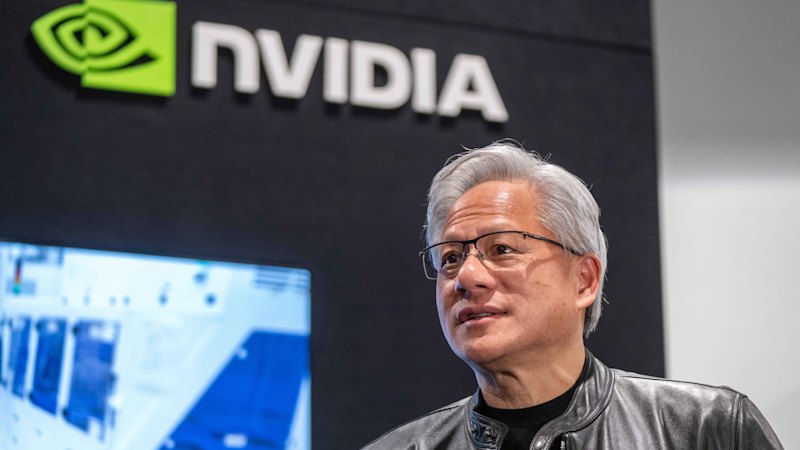
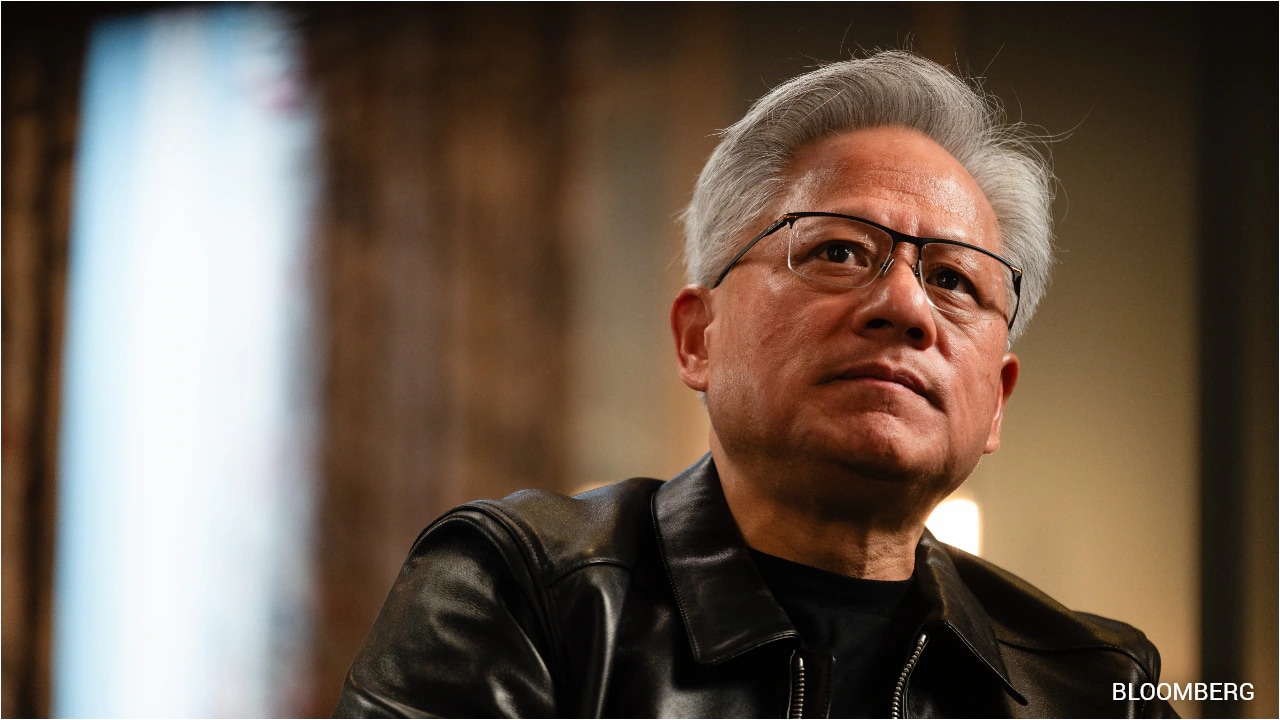
Fast forward three decades, and that former busboy stands on stages beneath blinding stadium lights, wearing a custom black leather jacket that has become the unofficial uniform of the artificial intelligence age. He signs autographs on people's chests like a rock star. He commands a company, Nvidia, whose market valuation has soared past the GDP of entire G7 nations, briefly eclipsing Apple and Microsoft to become the most valuable enterprise on earth.
If you stop the story there, it is the ultimate American fairy tale. The immigrant kid from Taiwan and Thailand who built an empire out of sand, math, and sheer stubbornness.
But fairy tales have dark woods. And if you look closely at the glittering, trillion-dollar edifice Jensen Huang has erected, you will notice a terrifying vulnerability. The rise of Nvidia is not just a story of American triumph; it is the story of how the United States accidentally outsourced its entire technological sovereignty to a single, perilous chokepoint halfway across the globe.
To understand how we got here, you have to understand what happens inside a modern data center.
The Architecture of a Miracle
Imagine, for a moment, a warehouse the size of ten football fields in rural Virginia. Let’s call the night-shift engineer who walks its aisles Marcus.
Marcus wears industrial ear protection because the roar inside this building is deafening—a relentless, metallic hurricane of cooling fans fighting to keep millions of dollars of silicon from melting into slag. When Marcus looks down the endless rows of black server racks, he isn't looking at traditional computers. He is looking at a synthetic brain.
For decades, computers were built around the Central Processing Unit, or CPU. Think of a CPU as a brilliant, solitary professor. If you give that professor one enormously complex calculus problem, they will solve it faster than anyone alive. For spreadsheets, word processors, and web browsing, the professor is king.
Nvidia bet the house on a different kind of intelligence. The Graphics Processing Unit, or GPU, isn't one brilliant professor. It is ten thousand eager third-graders armed with pocket calculators. Individually, none of them can do advanced calculus. Together, simultaneously, they can render millions of pixels for a video game—or, as Jensen Huang realized twenty years before anyone else cared, they can crunch the oceans of matrix multiplication required to train artificial intelligence.
In 2006, Huang made a decision that nearly got him fired by Wall Street. He forced his engineers to bake a software layer called CUDA into every single chip Nvidia shipped, regardless of whether customers wanted it. It cost billions. It tanked Nvidia’s stock price for years. Analysts called it a vanity project.
Huang didn't flinch. He was building a walled garden before anyone knew there would be anything to grow inside it.
When the generative AI explosion finally detonated in late 2022, the tech giants realized they were trapped in Huang’s garden, and he held the only keys. You couldn't just buy a rival chip from AMD or Intel and plug it in, because fifteen years of AI research, code libraries, and developer muscle memory had been written exclusively in Nvidia’s language. Switching away from CUDA wasn't like changing brands of gasoline; it was like trying to rewire the electrical grid of a skyscraper while the lights were still on.
Nvidia became a tollbooth on the highway to the future. Margin rates hit an astonishing seventy-five percent. Every cloud giant—Microsoft, Google, Meta, Amazon—found themselves begging Huang for allocations of his H100 and Blackwell chips, handing over tens of billions of dollars in a desperate arms race to build the smartest machine.
Jensen Huang became the kingmaker of Silicon Valley. Yet, as Marcus walks those roaring aisles in Virginia, surrounded by billions of dollars of American ingenuity, a quiet, unsettling truth hums beneath the floorboards.
Nvidia doesn't actually make a single chip.
The Illusion of the Fabless Empire
Read that again. The most valuable hardware company in human history owns zero factories.
In the jargon of the semiconductor industry, Nvidia is "fabless." Huang and his armies of brilliant engineers in Santa Clara design the blueprints—intricate, microscopic cities of transistors etched at scales smaller than a human virus. They write the code. They sign the deals.
Then, they email the digital blueprints across the Pacific Ocean.
Because while America spent the last forty years celebrating software, financial engineering, and asset-light business models, it quietly abandoned the dirty, brutally expensive business of manufacturing physical things. Wall Street hated factories. Factories required tens of billions of dollars in upfront capital, depreciated rapidly, and dragged down profit margins. So Silicon Valley kept the brains and exported the brawn.
That brawn landed in Taiwan. Specifically, it landed in the hands of one company: the Taiwan Semiconductor Manufacturing Company, or TSMC.
If Nvidia is the architect of the AI revolution, TSMC is the only builder on earth capable of pouring the concrete. Founded by Morris Chang—another legendary figure who straddled American and Taiwanese worlds—TSMC pioneered a radical business model. It didn't design its own chips; it simply manufactured everyone else’s, pouring every ounce of its profit back into mastering the dark arts of physics and lithography.
Today, over ninety percent of the world’s most advanced semiconductors—the exact chips powering Nvidia’s empire, Apple’s iPhones, and the Pentagon’s most sensitive defense systems—are forged inside a handful of sterile, fortress-like cleanrooms on an island sitting just one hundred miles off the coast of mainland China.
This is America’s silicon Achilles' heel. And the scale of the fragility is almost impossible to overstate.
Consider what it actually takes to make a single Nvidia Blackwell processor. It is not merely manufacturing; it is controlled alchemy. Inside TSMC’s fabs in Hsinchu and Tainan, machines built by a single Dutch company, ASML, fire high-powered lasers at microscopic droplets of molten tin, fifty thousand times a second. Each strike vaporizes the tin into a plasma that emits extreme ultraviolet light—a wavelength so short it would be absorbed by air itself, requiring the entire process to occur in a vacuum. Mirrors polished so flat that if you scaled one up to the size of Germany, its highest bump would be less than a millimeter tall, bounce that light onto silicon wafers, carving pathways just two or three nanometers wide.
You cannot simply "reshore" this capability with a burst of patriotic enthusiasm and a few government grants.
The Gravity of Geopolitics
Let’s step away from the cleanroom and look at the map.
I remember standing on the coastline of northern Taiwan a few winters ago, watching the gray swells of the Taiwan Strait churn under a low, heavy sky. On a clear day, the mainland feels close enough to touch. To a strategist in Washington or a portfolio manager in Manhattan, the Strait is a geopolitical abstraction—a line on a briefing slide labeled "Tail Risk." When you stand on the shore, the wind cuts through your coat, and the proximity becomes visceral.
For Beijing, bringing Taiwan under its control is not a policy preference; it is an existential historical mandate. For Washington, defending Taiwan is tied to the credibility of every alliance it holds across the Indo-Pacific.
Now, layer the global economy on top of that tectonic fault line.
If a blockade, an earthquake, or an outright military conflict were to sever the shipping lanes and flight paths out of Taipei tomorrow morning, the global technology sector wouldn't just suffer a correction. It would suffer a cardiac arrest.
Let’s trace the dominoes, grounded in cold, hard supply-chain reality. Within weeks, Nvidia’s revenue stream—almost entirely dependent on TSMC’s advanced packaging facilities—would evaporate. Apple would run out of processors for its flagship phones. Cloud providers would freeze expansion, halting the AI boom in its tracks. Automakers, medical device manufacturers, and telecommunications networks would grind to a halt, echoing the pandemic-era chip shortages multiplied by a factor of ten. Economists at Bloomberg Economics have estimated that a full-scale war over Taiwan would wipe out roughly ten trillion dollars from the global economy in its first year alone—more than ten percent of global GDP, eclipsing the 2008 financial crisis and the COVID-19 shock combined.
Suddenly, Jensen Huang’s leather jacket looks less like armor and more like a target.
Wall Street has priced Nvidia as if its growth is an immutable law of physics, an infinite upward curve stretching into a boundless digital horizon. Investors have treated Huang as an untouchable sovereign. Yet the company’s valuation rests entirely on a supply chain that passes through the single most contested piece of real estate on the planet.
Every company has a rise. Every empire eventually confronts the limits of its foundation. For Nvidia, a "fall" doesn't even require a competitor building a better chip. It only requires a geopolitical tremor six thousand miles away from its California headquarters.
The Painful Illusion of the Quick Fix
Washington finally woke up to this nightmare a few years ago. Panic, it turns out, is a wonderful bipartisan motivator.
In 2022, Congress passed the CHIPS and Science Act, pledging over fifty billion dollars in subsidies to lure semiconductor manufacturing back to American soil. Groundbreaking ceremonies followed in Arizona, Ohio, and Texas. Politicians stood in hard hats, waving golden shovels, promising a new golden age of American manufacturing.
It made for great television. The reality on the ground has been far messier.
Building a leading-edge semiconductor fab in the Arizona desert isn't like building an Amazon fulfillment center. It requires an ecosystem that the United States spent decades dismantling. When TSMC began constructing its massive fabrication plants in Phoenix, the collision of cultures and structural deficits was immediate.
There weren't enough specialized pipefitters, electricians, and cleanroom technicians in the region. Permitting dragged on for months. Costs ballooned far beyond initial estimates. Worse, TSMC executives discovered a stark cultural chasm: their Taiwanese engineers were accustomed to twelve-hour days, sleeping on cots near the fab floor when a lithography machine went down at two in the morning. American workers, understandably, wanted work-life balance, overtime rules, and predictable shifts.
Even when the Arizona fabs reach full capacity later this decade, they will produce only a tiny fraction of global demand, and they will still trail TSMC’s most advanced domestic facilities in Taiwan by at least a generation. Furthermore, even chips fabricated in Arizona currently have to be shipped back to Taiwan for advanced packaging—the intricate process of stitching multiple chiplets together into a single processor—because America lacks the specialized packaging facilities at scale.
You cannot buy forty years of institutional muscle memory with a single check from the Treasury.
The Trap of Over-Concentration
Meanwhile, another threat is quietly gathering inside Nvidia’s own backyard—a vulnerability born not of geography, but of hubris and economics.
History is unforgiving to monopolies that get too comfortable. In the late 1990s, Intel seemed invincible. Its "Intel Inside" stickers were plastered on virtually every personal computer on earth. Its margins were astronomical. Its dominance felt permanent. Then, blinded by its own success, Intel missed the mobile revolution, stumbled on its manufacturing roadmap, and watched nimbler rivals dismantle its empire piece by piece.
Jensen Huang is acutely aware of Intel’s ghost. It is why he famously runs Nvidia with a culture of perpetual paranoia, telling his employees that the company is always thirty days away from going out of business.
Yet the sheer scale of Nvidia’s pricing power has created an existential incentive for its biggest customers to destroy its moat.
Think about the economics from the perspective of Microsoft, Google, Meta, and Amazon. Together, these four companies account for roughly forty percent of Nvidia’s total revenue. Every quarter, they hand Huang tens of billions of dollars, subsidizing Nvidia’s meteoric rise while watching their own capital expenditures skyrocket.
No trillion-dollar tech giant wants to be a vassal to another company.
Behind closed doors in Redmond, Mountain View, Menlo Park, and Seattle, thousands of elite silicon engineers are working around the clock on a singular mission: breaking the CUDA lock-in. Google has its Tensor Processing Units. Amazon has Trainium and Inferentia. Meta is pouring billions into its own custom silicon. OpenAI is exploring bespoke chip architectures.
They don't need to build a chip that beats Nvidia on raw benchmarks. They just need to build chips that are "good enough" for specific tasks—like running AI models once they are already trained—at half the cost and zero Nvidia tax.
At the same time, the open-source software community is steadily chipping away at CUDA’s dominance, building translation layers and compilers that allow AI code to run smoothly across competing hardware. The walls of Huang’s garden are still high, fortified by relentless innovation and the sheer inertia of the developer ecosystem. But for the first time, you can hear the sound of picks striking the stone from both the inside and the outside.
What the Sand Remembers
If you strip away the market caps, the glossy keynote presentations, and the breathless headlines about artificial general intelligence, the entire digital revolution comes down to something astonishingly humble.
Silicon is just refined beach sand. Quartzite, crushed and melted in furnaces until it forms pure, crystalline cylinders, sliced into wafers thinner than a credit card, and etched with light.
We have built the modern world on top of those wafers. Our banking systems, our power grids, our medical breakthroughs, our weapons, and our collective human memory now depend on our ability to carve impossibly tiny patterns onto refined sand.
Jensen Huang saw the potential in that sand earlier and clearer than almost anyone alive. Through sheer willpower, brilliance, and a willingness to bet his company repeatedly when others played it safe, he turned a struggling graphics card startup into the central nervous system of the twenty-first century. His personal story remains extraordinary—a testament to what happens when relentless obsession meets a generational technological shift.
Yet his triumph has exposed a profound strategic blindness at the heart of the American economy. For decades, we convinced ourselves that ideas were everything and execution was a commodity. We believed we could own the blueprints while letting someone else own the factories. We mistook financial leverage for structural strength.
Now, the bill has come due. The most powerful nation in the world has staked its economic future and national security on a technological revolution whose physical beating heart lies inside a handful of buildings on a contested island across the Pacific.
Late at night, in that roaring data center in Virginia, Marcus finishes his shift. He pulls off his ear protection, steps out through the heavy steel doors into the cool night air, and walks toward his car. Behind him, millions of Nvidia processors continue to hum in the dark, calculating probabilities, generating text, simulating proteins, and reshaping human civilization at the speed of light.
Above him, the sky is clear and quiet. Everything works. The servers are cool, the power grid is steady, and the container ships are still crossing the Pacific.
We have built a miracle out of sand and light, and for now, the thread holding it all together hasn't snapped.