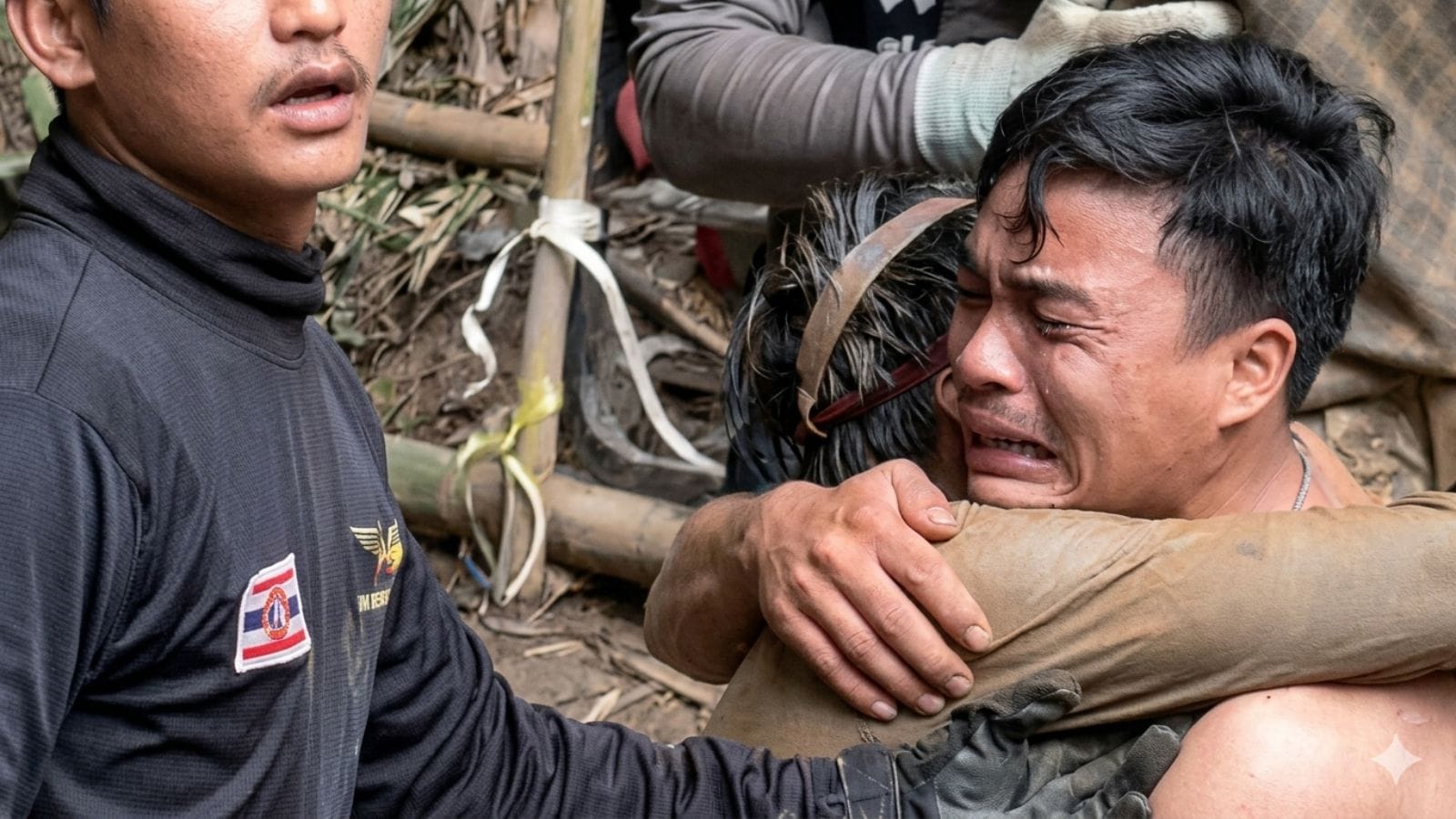
Four men are out. Two are still missing. The international media machine has already spun up its favorite narrative: a grueling, heroic battle of human will against the unforgiving elements. It is the same standard script used from Thailand to Peru whenever rising waters trap people underground.
But the mainstream reporting on the flooded cave rescue in Laos misses the point entirely.
The media treats these incidents as unpredictable acts of God—freak geological accidents that require multi-million-dollar heroic interventions. This perspective is not just lazy; it is dangerous. As someone who has spent two decades analyzing industrial risk management and remote-area logistics, I know the truth is far more clinical, frustrating, and preventable.
We do not have a cave rescue problem. We have a systemic infrastructure and economic desperation problem that we choose to ignore because a high-stakes rescue makes for better television than a drainage project.
The Illusion of the Freak Accident
The standard news report frames cave entrapments as sudden, tragic twists of fate. Tourists or local workers enter a cave, a sudden deluge hits, and they are inexplicably trapped.
Let’s dismantle that premise immediately.
Tropical hydrology is not a mystery. In Southeast Asia, monsoon patterns and subterranean water pooling are highly predictable phenomena. When individuals enter deep cave systems during transitional weather seasons, the risk of flash flooding approaches certainty, not probability.
[Risk Probability Formula]
Risk = Hazard x Vulnerability x Exposure
In these scenarios, the hazard (rising water) and the vulnerability (underground topography) are fixed variables. The only moving variable is exposure. Trapped victims did not suffer a stroke of bad luck; they entered a known hydraulic trap during peak risk windows.
When the media focuses entirely on the logistics of the rescue—the pumps, the divers, the oxygen lines—they treat the symptom while completely ignoring the disease.
The Economic Reality the News Ignores
Why were these men in the cave? While initial reports often obfuscate the exact motives of underground victims in remote regions—frequently hinting at casual exploration or resource gathering—the reality almost always traces back to economic necessity.
In rural Laos, as in many developing regions, caves are not just geological curiosities. They are places where locals forage for valuable resources like guano (used for fertilizer), search for rare bird nests, or engage in artisanal, unregulated mining.
- The Tourism Bias: Western media loves a tourist rescue because it plays into a specific narrative of adventure gone wrong.
- The Labor Reality: The far more common reality involves local laborers risking their lives for subsistence wages.
By framing the event as a grand adventure rescue, we gloss over the stark economic conditions that drive people into dangerous, unmonitored subterranean environments in the first place. If we actually cared about saving lives, the money spent on deploying international diving teams would be diverted into local economic development and basic geological fencing.
Why High-Tech Rescue Gear Fails Underground
Every time a cave rescue hits the news cycle, tech companies and military branches rush to highlight their latest gear. We hear about autonomous underwater vehicles (AUVs), ground-penetrating radar, and specialized breathing gases.
It is mostly theater.
I have watched organizations waste millions of dollars trying to deploy cutting-edge robotics into silt-heavy, high-velocity underground streams. The reality of cave rescue relies on tactics that are decades old: brute-force physical labor, static guide lines, and divers squeezing through zero-visibility mud chokes where machines cannot fit.
The Failure of Standard Subterranean Logistics
| Rescue Method | Media Perception | Operational Reality |
|---|---|---|
| High-Powered Pumping | Clears the cave quickly to allow walking exits. | Frequently causes localized structural collapses and clogs instantly with silt. |
| Autonomous Drones | Can navigate flooded passages to map routes. | Silt renders optical sensors useless; radio signals fail through solid limestone. |
| Saturation Diving | Allows divers to stay underground indefinitely. | Logistics of moving heavy gas cylinders through dry chokes makes it practically impossible. |
The hard truth is that technology does not save trapped people in caves; sheer, agonizing luck and low-tech grit do. When you see a headline about a new piece of tech being deployed to find the remaining two missing men in Laos, understand that it is likely a public relations exercise for the entity providing it.
Stop Asking How to Save Them
The question dominating the public discourse right now is: "How do we get the final two men out?"
That is the wrong question. The mathematically and logistically honest question is: "Why did we allow this environment to remain accessible?"
We have engineered solutions for almost every other natural hazard. We build avalanche barriers, we map floodplain zones, and we enforce strict zoning laws around active fault lines. Yet, globally, deep cave networks remain entirely unmanaged, unregulated wild zones until a disaster happens. Then, we act surprised.
The Cost-Benefit Inversion
Consider the financial calculus. A single international cave rescue operation can easily cost hundreds of thousands, if not millions, of dollars when accounting for military transport, specialized personnel, and equipment deployment.
Imagine a scenario where a fraction of that budget is allocated to installing heavy-duty steel grates and remote monitoring sensors at the mouths of known high-risk cave systems.
"An ounce of prevention is worth a pound of cure."
This old adage is treated as a cliché, but in subterranean logistics, it is a literal law. A fifty-dollar warning sign and a five-hundred-dollar locked gate prevent the multi-million-dollar circus currently unfolding in Laos. But prevention doesn't generate clicks. It doesn't create heroes. It just keeps people alive quietly.
The Dark Side of Rescue Romanticism
There is a psychological cost to the way we cover these events. By celebrating the miraculous survival of the four rescued men, the media creates a false sense of security. It sanitizes the brutal reality of underground entrapment.
It normalizes the behavior that led to the crisis.
When the public sees triumphant images of survivors emerging from the mud, the takeaway isn't "never go into a cave during monsoon season." The subconscious takeaway is "if things go wrong, an elite team of international heroes will fly in to save me."
This romanticism actively breeds complacency. It encourages amateur explorers and desperate laborers alike to take risks they cannot manage, under the assumption that the safety net of modern emergency response is infallible.
It isn't. For every miraculous rescue that dominates the 24-hour news cycle, dozens of bodies are left behind in unmapped, anonymous fissures worldwide, deemed too dangerous or too expensive to retrieve.
Stop looking at the Laos cave rescue as an inspirational story of human survival. Look at it for what it actually is: a catastrophic failure of basic risk management, an indictment of local economic pressures, and a reminder that nature does not care about your media narrative.
Turn off the cameras, lock the cave gates, and stop treating preventable negligence as prime-time entertainment.