Every business journalist covering Asian luxury brands just regurgitated the exact same press release.
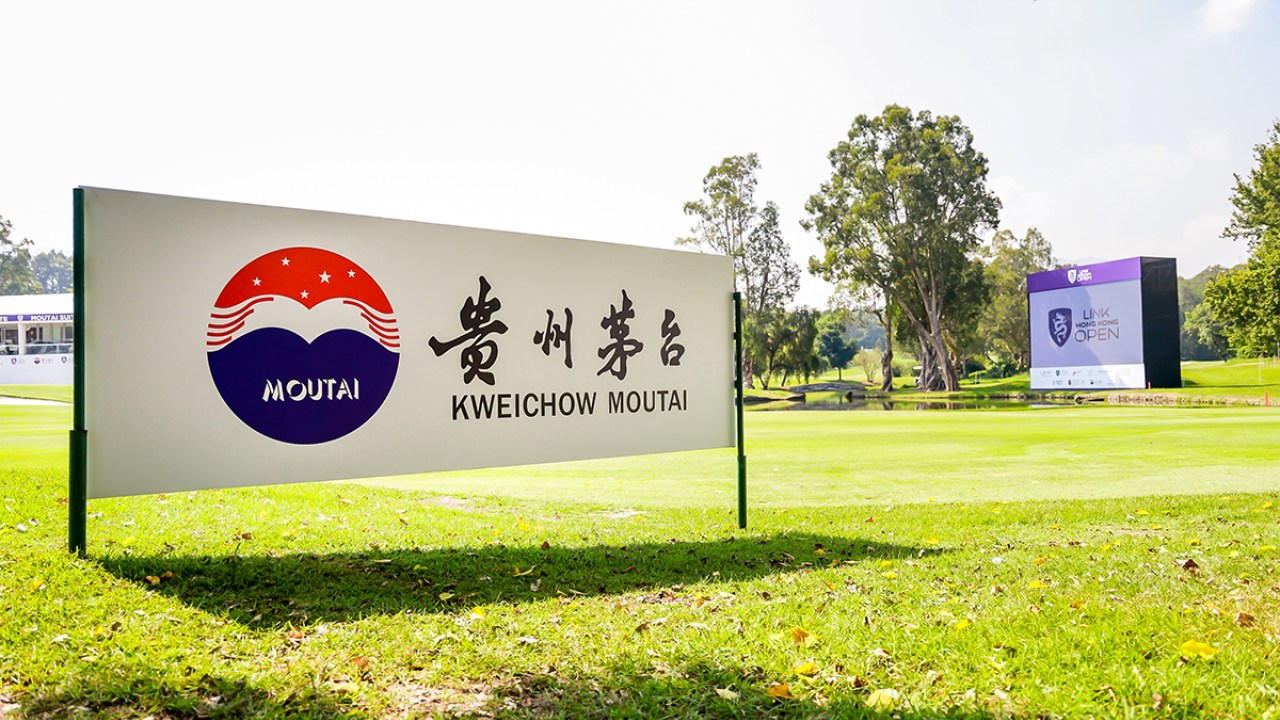
Kweichow Moutai signs on as Premier Partner of the Hong Kong Open 2026. The mainstream consensus? China’s state-backed baijiu juggernaut is finally cracking the Western market, using elite golf to build a global consumer base.
That narrative is lazy, comforting, and dead wrong.
If you think an executive in London, New York, or Zurich is watching a golf tournament at Fanling, seeing a red-and-gold Moutai banner on the 18th green, and suddenly craving 53% ABV fermented sorghum spirit, you do not understand luxury economics. You certainly do not understand baijiu.
Moutai is not buying Western market share with the Hong Kong Open. They are executing a high-stakes defensive play aimed squarely at Chinese capital, cross-border wealth preservation, and domestic deflation.
The Myth of the Global Baijiu Breakout
For over a decade, Western analysts have predicted that baijiu would follow Japanese whisky or Mexican tequila into global cocktail culture. They point to Moutai’s massive market capitalization—which routinely dwarfs Diageo, Pernod Ricard, and LVMH—and assume international dominance is merely a marketing budget away.
It hasn't happened. And a golf tournament in Hong Kong isn't going to change it.
Here is the hard truth that corporate press releases bury: overseas sales account for roughly 3% of Kweichow Moutai’s total revenue. After years of duty-free activations, international distributor partnerships, and splashy sponsorships, 97% of the company’s money still comes from mainland China.
Even among that tiny 3% international slice, who is actually buying the bottles? Overseas Chinese executives, diplomats, and diaspora communities. Not local Western drinkers.
I have sat in boardrooms where heritage spirits brands burned tens of millions of dollars chasing "global awareness" through sports sponsorships, only to discover that awareness without cultural context is just expensive wallpaper. You cannot sponsor your way past a sensory barrier. Single malt scotch and cognac have centuries of Colonial and global trade routes baked into Western palates. Baijiu has an intense, savory, soy-and-pineapple ester profile (specifically in Moutai's jiangxiang or sauce-aroma style) that requires acquired cultural conditioning.
Putting a logo next to a leaderboard does not rewire taste buds.
Why Hong Kong Is a Domestic Market Disguised as an International One
To understand why Moutai wrote a massive check for the Hong Kong Open 2026, stop looking at a map of the world and start looking at the Greater Bay Area.
Hong Kong is not a springboard to Europe or North America for Moutai. Hong Kong is the premier offshore wealth management hub for mainland China’s ultra-high-net-worth individuals (UHNWIs).
When mainland Chinese billionaires, private equity partners, and tech founders move capital, set up family offices, or negotiate cross-border mergers, they do it in Central and Admiralty. And when they want to signal status without drawing the harsh glare of mainland anti-corruption optics, they meet on the fairways of the Hong Kong Golf Club in Fanling.
Let’s look at the mechanics of guanxi—the Chinese system of reciprocal social networks and relationship-building—and how it operates in 2026:
- The Shift from Banquet Hall to Golf Course: On the mainland, ostentatious displays of luxury liquor at government-adjacent banquets remain politically sensitive. Golf in Hong Kong provides a semi-private, internationally sanctioned arena where deals still get closed over a bottle of Feitian Moutai, just with better plausible deniability.
- Price Anchoring in a Deflationary Environment: Over the past two years, Moutai has faced unprecedented pressure on its domestic wholesale prices. Weakening consumer sentiment and real estate stagnation on the mainland caused the secondary market price of a standard 500ml bottle of Flying Fairy (Feitian) Moutai to wobble, threatening the brand's aura as an appreciating liquid asset.
- The Hong Kong Arbitrage: By cementing itself as the Premier Partner of Hong Kong’s oldest professional sporting event, Moutai is reinforcing its prestige right where mainland capital congregates. It is reminding wealthy Chinese buyers that Moutai belongs in the same tier as Rolex, UBS, and private aviation.
The competitor articles call this "deepening its global presence." In reality, it is shoreline defense. Moutai is securing the perimeter of its existing ecosystem.
Dismantling the Golf Sponsorship Playbook
If you ask a sports marketing agency why luxury brands sponsor golf, they will feed you a line about "affluent demographics" and "four-hour broadcast windows."
Let's tear that premise apart.
Golf sponsorships are notoriously inefficient for customer acquisition. Nobody buys a $300 bottle of liquor—or a $1,000+ bottle on the secondary market—because they saw a tee-box sign during a par-3 broadcast.
Luxury brands use golf for B2B hospitality and institutional signaling, not retail conversion.
What Moutai Actually Bought at Fanling
When a brand buys the "Premier Partner" tier at a tournament like the Hong Kong Open—a fixture on the Asian Tour and The International Series—the logo on the broadcast is merely a receipt. The real asset is the VIP hospitality chalet overlooking the 18th green.
Imagine a scenario where Moutai’s senior leadership needs to align its top regional distributors, institutional investors, and cross-border logistics partners. Sending formal corporate summonses creates friction. Inviting them to an exclusive pro-am round at Fanling followed by a private tasting of 30-year-old vintage Moutai creates loyalty.
This is the exact playbook used by financial institutions like HSBC and UBS at the same venue for decades. They aren't trying to get retail spectators to open a checking account on the spot. They are hosting the 200 people in the city who control $50 billion in capital.
Moutai is using the exact same mechanism, just with a different asset class. For decades, Moutai has functioned less like a beverage company and more like a central bank of social currency. Bottles are hoarded, traded, used as collateral, and gifted to unlock business approvals. The Hong Kong Open is simply a vault door opening for the people who keep that currency circulating.
The Hidden Vulnerability Behind the Splashy Spend
Before we crown Moutai’s marketing department as geniuses, we need to look at the downside of this strategy—because it exposes a massive structural flaw in the company's long-term trajectory.
Relying on hyper-affluent, older, male-dominated golf culture doubles down on the exact demographic concentration that threatens Moutai’s future.
The Generational Cliff
Younger consumers in both mainland China and Hong Kong—Gen Z and younger Millennials—are actively rejecting heavy baijiu drinking culture. To a 26-year-old finance analyst in Central or a tech worker in Shenzhen, baijiu represents forced toasts, corporate hierarchy, and hangovers. They are drinking low-ABV craft beers, natural wines, iced coffee, and single-serve cocktails.
Moutai knows this. That is why they previously launched bizarre cross-promotions like Moutai-infused Luckin Coffee lattes and Moutai ice cream. Those stunts generated viral headlines, yet they failed to convert young drinkers into core spirits buyers because a novelty latte doesn't bridge a $300 price gap.
By pivoting back to elite golf in Hong Kong, Moutai is admitting something its executives would never say out loud: they cannot win the youth market on flavor or lifestyle, so they are retreating to the boardroom.
The Governance and Margin Trap
There is also the matter of capital allocation. Kweichow Moutai is majority state-owned, which means its strategic decisions are never purely commercial. "Going global" is a state-mandated directive for premier Chinese enterprises.
When state-owned enterprises are told to internationalize, they often confuse spending money abroad with building international demand. Sponsoring an international sporting event in a Special Administrative Region checks the bureaucratic box for "global expansion" without forcing the company to confront the brutal reality of Western distribution regulations, excise taxes, and marketing restrictions.
It is safe. It looks great in an annual report. And it avoids the messy, low-margin work of actually competing against Diageo and Pernod Ricard shelf-by-shelf in New York and London.
What Smart Luxury Operators Should Do Instead
If you are a brand strategist, investor, or executive watching Moutai’s move and thinking about how to scale a culturally specific luxury product outside its home turf, do not copy their golf sponsorship. You will go broke trying to replicate a state-backed monopoly's balance sheet.
Instead, apply the contrarian lessons that actually move product across borders:
- Stop Buying Awareness Before You Have Distribution: Moutai can afford to put banners in front of millions of viewers who have zero access to the product at retail. You cannot. Never spend a dollar on top-of-funnel sports sponsorship until your product is physically sitting in the top 50 on-trade accounts (bars, restaurants, private clubs) in your target city.
- Weaponize Scarcity, Not Reach: Global expansion does not mean selling to everyone. If Moutai wanted genuine Western cachet, they wouldn't sponsor a tournament broadcast to millions; they would release 500 numbered decanters exclusively through Sotheby’s and three Michelin-starred restaurants in London and Paris. True luxury moves from the apex down, never from a stadium banner up.
- Separate Domestic Prestige from International Utility: Accept that what makes your brand iconic at home might be a liability abroad. Stop trying to force-feed traditional rituals to foreign consumers. If a product requires a 20-minute lecture on heritage just to get someone to take a sip, the positioning is broken.
The Verdict on Fanling 2026
When the cameras roll at the Hong Kong Open in 2026, the commentators will dutifully read the talking points about Kweichow Moutai bridging East and West, bringing Chinese heritage to the global stage, and elevating international golf.
Ignore the commentary. Watch the gallery instead.
Look at who is walking inside the ropes during the pro-am. Look at who is sitting in the private boxes behind the 18th green, swirling tiny porcelain cups while the rest of the world watches the leaderboard.
Moutai isn't trying to conquer the world from Hong Kong. They are keeping their richest customers close, guarding their domestic price floor, and dressing up a local wealth-preservation play in the tuxedo of international sport.
Anyone calling this a global breakthrough is drinking the press release, not the baijiu.