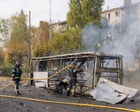
War doesn't always roar with the sound of distant artillery; sometimes it arrives silently from the sky at ten in the morning, right outside a crowded dental clinic. When an aerial bomb tore through public transport in the eastern Ukrainian city of Kramatorsk, killing at least 30 people and wounding 18 others, it wasn't a stray round or collateral damage from a battlefield skirmish. It was a direct, calculated blow against ordinary people trying to live ordinary lives inside the country's eastern "fortress belt".
If you've been following the conflict only through sweeping strategic maps and high-level political debates, you miss the grim reality on the ground. Cities like Kramatorsk and Sloviansk are packed with civilians who refuse to leave, alongside soldiers defending the last strongholds of Donetsk under Ukrainian control. Roads there are strung with anti-drone nets just to give commuters a fighting chance against roving aerial threats. Yet, against heavy aerial bombs, those nets are useless.
The Strategy of Terror in Eastern Ukraine
What happened on Yuvileina Street in Kramatorsk is part of a broader, grim pattern. Analysts note that when military offensives stall or face stubborn resistance on the front lines, tactics often shift toward civilian infrastructure to break collective morale. Just a day prior to the Kramatorsk strike, a residential apartment block in Pryluky collapsed after a Russian strike, killing 22 people, including five young children.
When you look at these incidents side by side, a chilling conclusion emerges. This isn't about capturing strategic high ground or neutralizing military assets. It's about making daily survival untenable. Ukrainian authorities and international observers have pointed out that hitting public transport stops during morning rush hours guarantees maximum civilian casualties.
Why Frontline Cities Remain Trapped
People always ask why civilians don't just evacuate these danger zones entirely. The answer is rarely simple. Many residents are elderly, have deep roots they cannot bear to sever, or simply lack the financial means to restart life in a safer western region like Lviv or Kyiv. They stay because home is home, even when that home turns into a frontline.
Local officials, including Donetsk regional governor Vadym Filashkin, have repeatedly stressed that these aren't dry statistical anomalies or abstract consequences of war. They are targeted killings carried out by an army relying heavily on terror. Meanwhile, the international community finds itself locked in cyclical debates over air defense deliveries, while people waiting for a bus pay the ultimate price.
Until the skies over eastern Ukraine are genuinely secured, morning commutes in cities like Kramatorsk will remain lethal lottery draws. The human cost of this stalemate continues to mount, proving that the safest place in a warzone is often an illusion.
Russia Accused of Killing 30 in Ukraine Bus Strike
This news report provides on-the-ground context and official reactions regarding the devastating aerial attack on public transport in Kramatorsk.