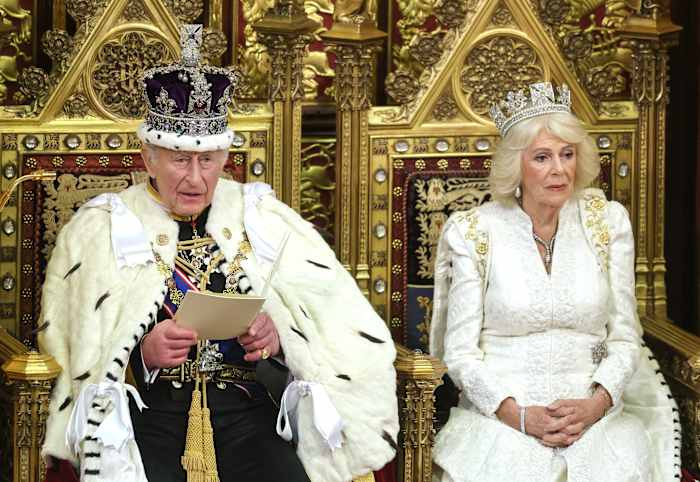
The British press is currently obsessed with a fiction. They are painting a picture of a monarch reading a script to a Prime Minister who is one bad poll away from the abyss. It makes for great drama. It is also fundamentally wrong.
The "King’s Speech" is not a vision for the future. It is a series of administrative checkboxes designed to give the illusion of momentum while the real power shift happens in the windowless rooms of the Treasury. To suggest that Keir Starmer’s job "hangs in the balance" because of a legislative schedule or a few weeks of mediocre approval ratings betrays a profound misunderstanding of how the UK’s parliamentary system actually functions when a massive majority is involved.
Starmer isn't fighting for his life. He’s liquidating the old firm.
The Myth of the Vulnerable Majority
Pundits love to compare Starmer’s current "dip" to the collapse of previous administrations. They cite the speed of his falling popularity as if the British public has ever been known for its enduring patience. This is a category error.
In a first-past-the-post system, popularity is a currency you spend to get a 170-seat majority. Once you have the seats, the currency is irrelevant for at least four years. Starmer isn't running a popularity contest; he’s running a restructuring.
The idea that backbench rebellions or a grumpy electorate will topple a leader with this much mathematical insulation is a fantasy. Unless there is a literal shadow cabinet coup—which lacks both a leader and a coherent alternative platform—Starmer is the most secure Prime Minister since Blair in 1997. The noise you hear isn't the sound of a house falling down; it’s the sound of the previous occupants' furniture being thrown out the window.
The King is a Rubber Stamp for Radical Boredom
Watching Charles III deliver the government's agenda is an exercise in cognitive dissonance. We see the gold, the ermine, and the crown, and we assume we are witnessing "The State."
We aren't. We are witnessing a press release with a high costume budget.
The contents of the speech—planning reform, railway nationalization, the creation of Great British Energy—are being framed as "tests" for the government. They aren't tests. They are the inevitable outputs of a bureaucratic machine that has been waiting for a driver for fourteen years.
- Planning Reform: The media calls this a "gamble." It isn't. It is the only way to trigger GDP growth without spending taxpayer money the UK doesn't have. By stripping power from local NIMBY councils, Starmer isn't "risking a backlash." He is picking a fight with a demographic (homeowning boomers) that didn't vote for him anyway.
- Nationalization: Critics call this "ideological." It’s actually clinical. The private rail model failed. Keeping it on life support was costing more than absorbing it. This isn't a return to 1970s socialism; it’s an act of corporate insolvency management.
Why the "First 100 Days" Metric is Total Garbage
Business school professors and political consultants love the "First 100 Days" metric. It’s a clean, marketable timeframe. It’s also completely useless for judging a structural overhaul of a G7 economy.
Real change in the UK happens through Statutory Instruments and the agonizingly slow process of committee stages. If a Prime Minister does everything in their first 100 days, they haven't actually done anything—they’ve just signed a lot of Executive Orders that will be overturned by the first court challenge they encounter.
Starmer’s perceived "slowness" or "lack of spark" is a feature, not a bug. He is a lawyer by trade and a civil servant by instinct. He is building a legal fortress around his policies so that by the time the opposition wakes up, the changes are already baked into the machinery of the state.
I’ve seen leaders try to "win" the first 100 days by launching flashy initiatives. Those initiatives almost always die in the implementation phase because the groundwork wasn't laid. Starmer is digging the foundation. It’s dirty, it’s boring, and it looks like nothing is happening from the street level. But that’s where the strength of the building comes from.
The Fiscal Trap the Media Ignores
The "lazy consensus" argues that Starmer is trapped by the lack of money. They say he can’t do anything because the "cupboard is bare."
This assumes that the only way a government exerts power is by writing checks. This is the great lie of modern political commentary. Power is exercised through:
- Regulation: Changing the rules of the game so private capital has no choice but to move where you want it.
- Permission: Allowing things to be built that were previously blocked.
- Personnel: Replacing the heads of every major Quango and agency with people who share your grim, technocratic worldview.
Starmer is doing all three. He doesn't need a massive budget to deregulate housing or to force pension funds to invest in UK infrastructure. He just needs the legislative hammer, which the King just handed him on a velvet cushion.
Stop Asking if He is Liked and Start Asking if He is Effective
The British public doesn't need to like Keir Starmer for him to be a successful Prime Minister. In fact, his lack of charisma might be his greatest asset. He doesn't trigger the same visceral "culture war" reactions that a more flamboyant leader would. He is the human equivalent of a spreadsheet. You don't have to love a spreadsheet for it to balance.
The "People Also Ask" sections of the internet are filled with queries like "When will the next election be?" or "Can Starmer be replaced?" These questions are based on the premise that a government’s mandate is a fragile thing.
It’s not. In the UK, a 170-seat majority is an elective dictatorship.
The media focuses on the "job hanging in the balance" narrative because "Man with overwhelming power quietly implements five-year plan" doesn't sell newspapers. They are trying to find a heartbeat in a statue.
The Brutal Reality of the Opposition
To have a government in "peril," you need a viable opposition. Currently, the Conservative Party is a circular firing squad disguised as a political movement. They are debating whether to move to the right or to the far-right, while the Liberal Democrats are content to be a regional pressure group for the middle class.
There is no one to catch the ball if Starmer drops it.
When you have no competition and a massive majority, you don't "hang in the balance." You own the balance. You define the balance.
The Governance of Grumpiness
We are entering an era of "Grumpy Governance." The taxes will stay high. The services will improve at a glacial pace. The Prime Minister will continue to look like he’s explaining a parking fine to a disgruntled neighbor.
The mistake the "insiders" are making is assuming this grumpiness equals instability. It doesn't. It equals a settled, albeit joyless, status quo.
The King’s Speech wasn't a desperate plea for relevance from a failing leader. It was a list of chores. Starmer is the janitor of the British State, and he has just been given the keys to every room in the building. He isn't going anywhere.
The drama isn't that he might lose his job. The drama is that he is actually going to do it.
Stop looking for a collapse that isn't coming. Start looking at the fine print of the planning bills and the energy mandates. That is where the country is being rebuilt, one boring clause at a time. The King has spoken, the cameras have left, and the real work of dismantling the last decade has begun in earnest.
If you're waiting for the "Starmer era" to begin, you’ve already missed the start. He’s already won the war; he’s just waiting for the losers to finish their speeches.