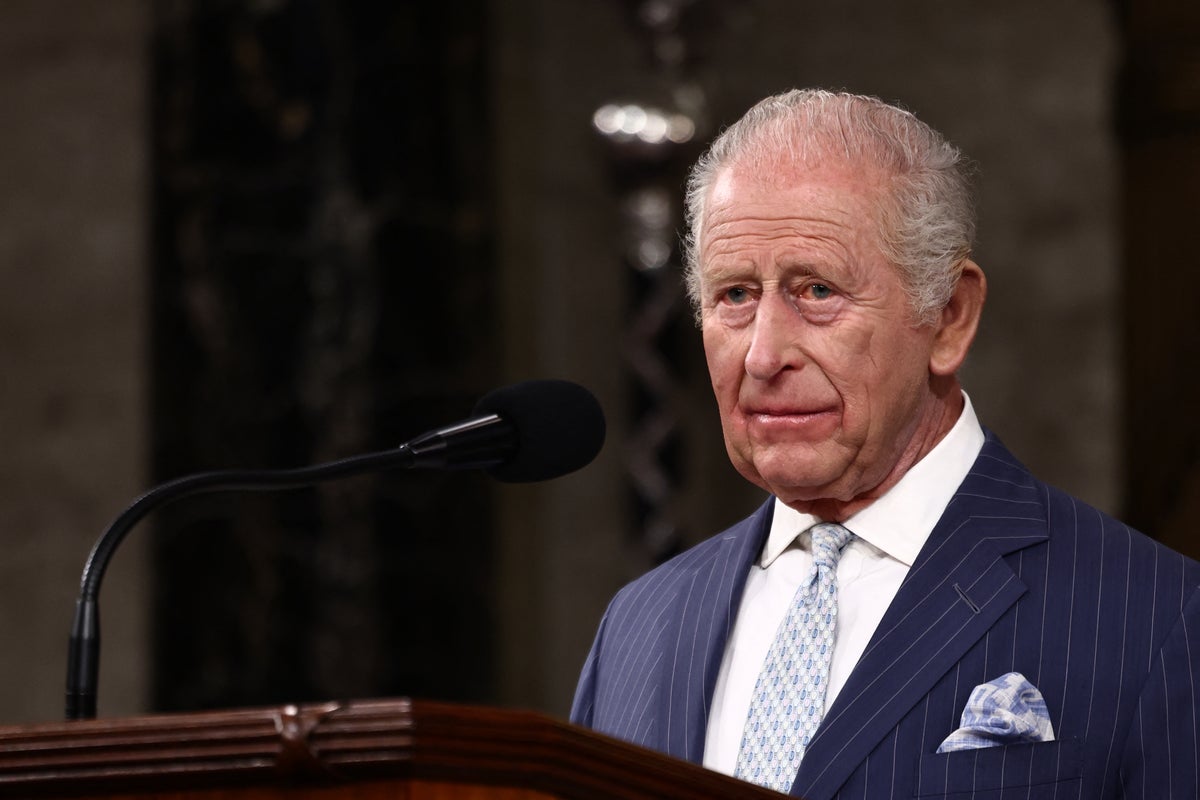
King Charles III didn't just walk into the United States Capitol to exchange pleasantries and talk about the weather. He stood before a joint session of Congress and delivered a masterclass in constitutional diplomacy. The room was packed. You could feel the weight of history as the British monarch spoke about the friction and the glory of democratic governance. But the moment that really set the room on fire wasn't a platitude about "special relationships." It was his specific, pointed nod to the checks and balances that keep a presidency from turning into a light-speed slide toward autocracy.
The crowd erupted. Cheers. Applause. A standing ovation that lasted long enough to make a few people uncomfortable. Why? Because in a political era defined by polarization and anxiety over executive overreach, hearing a hereditary monarch praise the mechanics of limiting power felt like a refreshing, albeit ironic, reality check.
The irony of a King talking about limited power
It’s easy to miss the subtext if you aren't paying attention. Here is a man whose ancestors literally triggered the American Revolution because they didn't want to deal with colonial oversight. Now, centuries later, he's standing in the very building designed to replace his crown with a complex web of legislative and judicial hurdles.
King Charles knows his history. He understands that the British monarchy only survived because it surrendered its teeth. By praising the American system of checks and balances, he wasn't just being polite. He was validating the messy, slow, often frustrating process of democracy. He basically told the room that the gridlock they hate is actually the shield that protects them.
The President of the United States holds an immense amount of power. It's a job that can easily inflate an ego until it's the only thing in the room. The King's speech served as a reminder that nobody—not a King, not a President—should have the final word without a fight from the other branches of government.
Why the applause felt different this time
Congress gets a lot of visitors. They see heads of state all the time. Usually, the applause is polite and choreographed. This was different. The reaction to the mention of "checks and balances" felt visceral.
We’re living in a time where people are genuinely worried about the "unitary executive theory." That’s the idea that the President should have near-total control over the executive branch. When Charles mentioned that the American system is designed to prevent that exact scenario, he hit a nerve. He tapped into the collective anxiety of a legislature that often feels like it's losing its grip on oversight.
He didn't name names. He didn't have to. The beauty of the speech was its ability to be universal. Whether you lean left or right, you probably have a version of a "runaway President" that keeps you up at night. By framing the power of the President as something that needs to be checked, Charles gave everyone in that room permission to feel important again.
The constitutional dance between London and Washington
You might wonder why a British King even cares about how the U.S. President is managed. It comes down to stability. The UK operates on a system of parliamentary sovereignty, but it's held together by conventions that are just as rigid as the U.S. Constitution.
- The Monarch acts on advice.
- The Prime Minister answers to Parliament.
- The Courts keep everyone in their lane.
Charles spent decades as the Prince of Wales watching these gears turn. He’s seen the fallout when leaders try to bypass the system. In his address, he drew a straight line between the Magna Carta and the U.S. Constitution. He reminded the audience that the impulse to grab power is human, but the genius to restrict it is divine.
When he spoke about the "necessary tension" between the branches, he wasn't describing a bug in the system. He was describing the main feature. The applause wasn't just for him; it was a self-congratulatory roar from a Congress that needed to be reminded of its own job description.
The specific moments that moved the room
Charles has a dry, almost professorial delivery. He isn't a fire-breathing orator. But he uses silence well. He waited for the applause to die down after his mention of the judiciary’s role in keeping the executive in line. That was a big one.
The judiciary is often the most controversial check on power. It's the branch that can't pass laws or command armies, but it can say "no" to the person who does. By highlighting this, Charles acknowledged the friction that is currently defining American politics. It wasn't a "feel-good" moment as much as it was a "this is hard, but it's worth it" moment.
He also touched on the role of a free press. While not a formal branch of government, the "Fourth Estate" is the unofficial check that Charles himself has felt the sting of more than most. Seeing a man who has been hounded by tabloids his entire life defend the necessity of public scrutiny was a bit of a "wow" moment. It showed a level of maturity that resonated with the lawmakers who are also constantly under the microscope.
What this means for the future of the special relationship
We talk about the "special relationship" so much it’s become a cliché. But this speech gave it some new bone and muscle. It moved the conversation away from just "we trade stuff and fight wars together" to "we believe in the same fundamental way of organizing a society."
The King’s visit wasn't just a PR win for the royals. It was a strategic reinforcement of democratic values at a time when those values are being tested globally. If the U.S. and the UK can agree on the importance of limiting power, they have a solid foundation for everything else.
Charles managed to be both a guest and a mirror. He showed the U.S. its own best self, even if that self is currently struggling with a bit of an identity crisis. The cheers were loud because the message was clear: the system only works if you actually let the checks and balances do their job.
How to watch the fallout
Don't expect the King's words to change the legislative calendar or stop the next executive order. That's not how this works. Instead, look for how these themes start showing up in the rhetoric of the lawmakers who were there.
You'll likely see quotes from this speech used in floor debates for months. It's a powerful tool. When a King tells you that your ability to check a President is what makes your country great, you tend to remember it.
Keep an eye on the following:
- Bipartisan statements that reference the King's "constitutional wisdom."
- New legislative pushes for executive oversight that frame it as a "core democratic value."
- Op-eds from constitutional scholars who will use the Charles speech as a springboard to discuss the health of the American system.
The King did his part. He came, he spoke, and he reminded us that the crown is heavy, but the gavel and the pen are what actually keep the world spinning. Now it's up to the people in that room to prove him right. Start by reading the full transcript of the address to see the nuances he tucked into the middle sections—it’s a masterclass in saying a lot without saying too much.