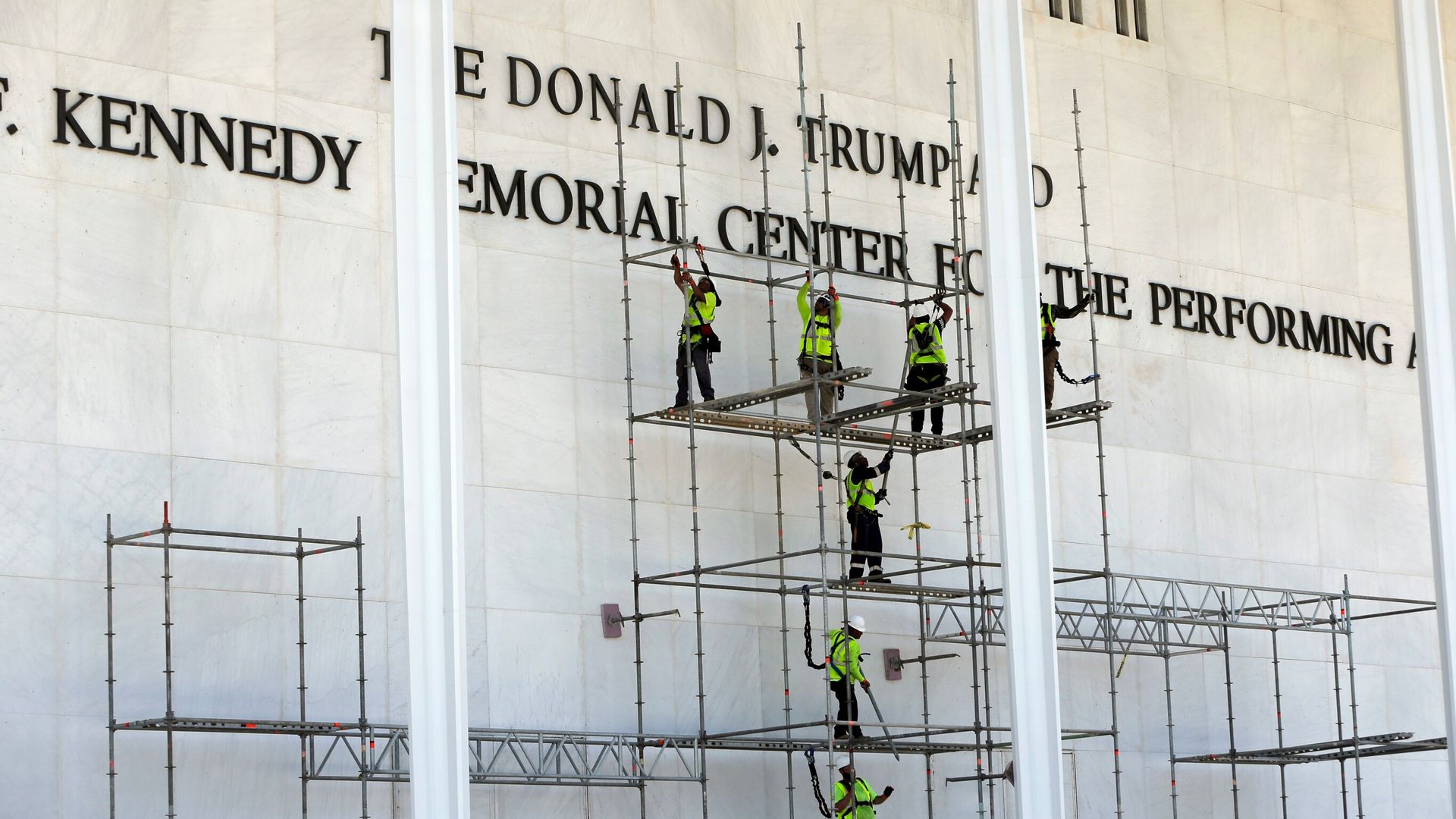
Crowds gathered on the plaza in front of the John F. Kennedy Center for the Performing Arts hoping to witness a dramatic, highly symbolic moment. They wanted to see workers physically pry the massive letters spelling out "Donald J. Trump" from the building's marbled facade. Instead, the final act of this bitter Washington soap opera happened mostly out of sight.
Crews erected scaffolding and draped a thick white tarp over the front portico, concealing the work from the public eye. Cheers of "take it down" echoed through the plaza as onlookers waited through heavy thunderstorms. By noon on Saturday, June 13, 2026, the letters were gone, confirmed by court filings.
The physical scrub followed a rapid digital erasure earlier in the week, where the center stripped "Trump" from its website logo and YouTube channel. It marks a staggering legal and cultural defeat for a president obsessed with branding. But if you think this is just a petty squabble over a building sign, you're missing the real story. This battle exposes a much deeper fight over institutional control, political power, and the limits of executive overreach in Washington.
The Lawsuit That Broke the Board
How did we get here? When Donald Trump returned to office for his second term in January 2025, he wasted no time reshaping the nation's capital. By February, he purged the Kennedy Center's board of trustees, stacking it with loyal allies who promptly elected him board chair.
In December 2025, that hand-picked board took the radical step of voting to rename the legendary national monument. Almost overnight, the facade read: "The Donald J. Trump and The John F. Kennedy Memorial Center for the Performing Arts." The website instantly changed its branding to the "Trump Kennedy Center."
The administration claimed the renaming reflected a "bipartisan commitment to the arts." But Justice Department lawyers later accidentally gave away the game, conceding that the heavy exterior letters had been purchased and prepared before the board even held its official vote.
The backlash was instant. Artists backed out of scheduled performances. Members of the Kennedy family spoke out, calling the move a defilement of a living memorial to the assassinated president.
The real hammer blow, however, came from Ohio Democratic Representative Joyce Beatty. As an ex officio board member, Beatty tried to object to the name change during a virtual meeting, only to be muted by Trump's allies. She sued.
Congress Holds the Deed
The legal argument against the renaming wasn't about aesthetics or hurt feelings. It was about basic constitutional law. Congress created the Kennedy Center in 1964 as the sole official national monument to President John F. Kennedy in Washington.
In a scathing 94-page opinion issued in late May 2026, U.S. District Judge Christopher Cooper made the legal reality explicit. He noted that the center's organic statute is clear. Congress gave the building its name. Therefore, only Congress can change it. A presidentially appointed board cannot simply rewrite federal statutes on a whim.
Judge Cooper gave the administration a strict deadline to reverse the changes. The center's general counsel fired off an internal memo warning staff that email signatures, letterheads, and digital assets had to be scrubbed immediately. Physical signage had to come down by mid-June.
The administration tried every trick in the book to stall. They filed an emergency eleventh-hour appeal to pause the order, arguing that changing the name back and forth would cause public confusion. They even claimed that prominent donors who gave money specifically because of the Trump name would demand their money back, halting fundraising entirely.
The appeals court didn't buy it. A three-judge panel rejected the emergency request, forcing the center to comply with the noon Saturday deadline.
The Battle Inside the Building
While the crowd on the plaza celebrated the missing letters, the real crisis is unfolding inside the theater walls. The sign removal is a visible victory for critics, but it leaves behind a deeply fractured and damaged cultural institution.
Judge Cooper's ruling didn't just target the building's name. It also blocked a controversial, Trump-backed $257 million "revitalization project." That plan would have completely shuttered the Kennedy Center for two solid years starting in July 2026.
The administration fought hard to preserve the closure plan. In their legal appeals, they used characteristically dire language, warning that the court was blocking critical repairs to "life threatening structural damage" like rusted beams and crumbling parking garage ceilings. They warned of "total collapse."
For the musicians, stagehands, and staff who work there, the whiplash has been agonizing. A two-year closure meant terrifying job instability. Now, the sudden cancellation of that closure leaves the center scrambling to salvage its upcoming seasonal programming. The reputational damage from the renaming caused audience numbers to dwindle and performers to stay away. Stripping the name off the website and the facade might bring some audiences back, but it won't instantly heal the institutional rot.
What Happens Next
Trump has already blasted the court's decision on social media, calling it the work of "radical left" judges and threatening to hand full control of the center over to Congress, hinting that it might close permanently over safety concerns. The administration's formal legal appeal is still active, and center leadership has explicitly stated they hope to put the letters back up if they win later this summer.
If you're tracking the future of Washington's cultural institutions, watch these specific developments over the next few weeks:
- Monitor the Appeals Briefs: Legal teams are scheduled to file detailed briefs later this month. Watch whether the Justice Department continues to aggressively push the fundraising and structural damage arguments.
- Track the Programming Rebound: Check the Kennedy Center's official schedule for late summer and autumn. The return of prominent artists who previously boycrolled the venue will be the first true indicator of institutional recovery.
- Watch the Budget: Keep an eye on congressional appropriations committees. If the administration follows through on threats to defund or abandon the venue, Congress will need to step in with emergency funding to address the actual, verified maintenance issues plaguing the building.