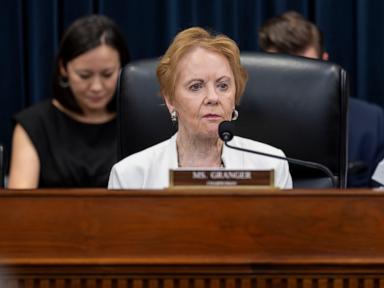
The standard obituary writing kit for a veteran politician is predictable. You dust off the words trailblazer, pillar, and dedicated servant. You talk about decades in the trenches, committee chairmanships, and the solemn duty of public office. When Kay Granger passed away at age 83, the media immediately reached for these exact scripts.
They praised her as the first Republican woman from Texas to serve in the House, a former mayor of Fort Worth who brought home the bacon for defense contractors, and a fixture of the old guard.
They missed the real story.
Granger did not just represent a changing conservative movement; she personified the exact operational model of Washington that created our current political paralysis. We romanticize career politicians who stick around for nearly three decades, as if legislative longevity is an automatic proxy for excellence. It is not. It is often a monument to institutional inertia.
Let us look past the sanitized press releases and examine what a twenty-seven-year congressional run actually buys a district, a party, and a country.
The Myth of the Eternal Incumbent
For decades, the conventional wisdom dictated that seniority was the holy grail of governance. If you kept sending the same person back to Washington, they accumulated committee seats, trading influence for federal dollars, and your district won the lottery. Granger mastered this craft. As a senior member of the House Appropriations Committee, and later its chair, she wielded the purse strings with the practiced hand of a machine politician of the twentieth century.
Fort Worth got its infrastructure, Lockheed Martin secured its defense contracts, and everyone patted each other on the back at the Fort Worth Club.
Here is the brutal truth the political establishment refuses to admit: Seniority is a trap.
When representatives treat Congress as a retirement home with voting rights, the system calcifies. It rewards compliance over vision. It trades national fiscal health for local pork. Granger entered the House in 1997 during a very different era of American politics—an era when bipartisan backroom deals were still currency and the national debt was a fraction of its current staggering total.
By the time she retired ahead of the 2024 election, that era was long dead. Yet she kept playing the same game, treating the federal budget like an endless grab bag for district priorities while the ship of state took on water.
When you praise someone for bringing home billions in federal earmarks, you are praising them for fueling the exact spending addiction that is currently hollowing out the dollar. You cannot separate Granger's storied career on Appropriations from the reality of a thirty-five-trillion-dollar national debt. She was an architect of the old order. And the old order is broken.
The Texas Paradox
The media loves the novelty of Texas milestones. First Republican woman from Texas in the House. It sounds great on a plaque. But identity politics from thirty years ago look remarkably different today, and the political geography of the Lone Star State underwent a tectonic shift while Granger was busy working the committee room.
Texas used to be the incubator for a specific brand of pragmatic, pro-business conservatism. It was rooted in local governance, municipal budgeting, and a distinct skepticism of federal overreach wrapped in southern charm. Granger fit that mold as the mayor of Fort Worth in the early nineties.
Then came the divergence.
As the national Republican party mutated into a populist, insurgent force fueled by grassroots anger at institutional failure, Granger remained firmly anchored in the world of country-club appropriations and closed-door subcommittee markups. She represented the Washington establishment that the base eventually rose up to overthrow.
The disconnect became glaring in her final terms. While the activist wing of her own party was demanding systemic disruption and debt reckoning, Granger was quietly steering millions toward traditional defense projects and regional priorities.
This is the central contradiction of the modern Republican old guard: they preach fiscal conservatism on Sunday and deliver defense windfalls on Monday. Granger was remarkably good at the latter. But being good at playing the inside game while your party's house is on fire is not an achievement. It is an indictment.
Why We Worship Longevity
Why do we mourn the passing of career politicians with such reverence? Because we are terrified of the alternative: competence that cannot be neatly categorized by a thirty-year resume.
We have institutionalized political hoarding. We look at a politician who served fourteen terms and assume it is a testament to their unshakeable bond with the electorate. In reality, it is usually a testament to incumbency advantage, campaign finance moats, and name recognition built on taxpayer dimes.
Imagine a scenario where congressional term limits were capped at twelve years.
Instantly, the incentives change. Representatives stop treating Washington as a career destination and start treating it as a tour of duty. They stop spending their first six years learning where the executive dining room is and their final six years protecting their fiefdom. They might actually pass legislation because they want results, not because they are waiting out the clock to secure a lucrative lobbying gig or a committee chair.
Granger stayed until she was 81 before announcing her retirement. By then, the institution she served had long outpaced her ability—or willingness—to challenge its core dysfunctions.
The Ledger of Accountability
Let us be completely fair to her legacy. Kay Granger was tough. You do not survive decades in the House without a spine of cold rolled steel. She broke glass ceilings in Texas Republican politics at a time when the local boys' club was formidable. She governed with a pragmatic streak that got things built when ideology threatened to stall local progress.
Those traits matter. But they operated in service of a legislative machine that has failed the American people.
When historians write about the decline of fiscal discipline in the late twentieth and early twenty-first centuries, they will look at the Appropriations Committee not as a temple of stewardship, but as an engine of administrative expansion. Granger was not the sole author of that machine, but she was one of its most skilled, enduring engineers.
We do her memory no favors by wrapping her in lazy hagiography. To understand Kay Granger is to understand why Washington cannot fix itself from the within: the system is specifically designed to reward the people who master its corruption.
She played the game brilliantly.
The game itself is what killed the republic.
Stop mourning the architects of the old normal. Start demanding architects of something that actually works.