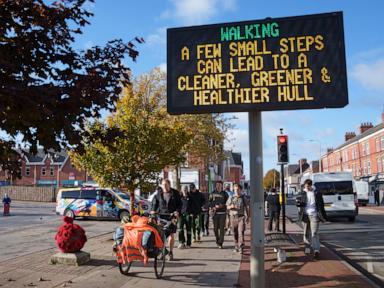
Everyone is clapping for Karl Bushby.
The former British paratrooper finally stepped back into Hull, England, closing the book on the Goliath Expedition—a 28-year, 31,000-mile slog across the globe. Mainstream outlets are churning out the exact same lazy, feel-good fluff: Unstoppable grit. Triumph of the human spirit. Never give up on your dreams.
They are completely missing the point.
If you look closely at the 28-year timeline of Karl Bushby’s walk, you don’t see a triumph of modern exploration. You see an indictment of it. Bushby didn't spend nearly three decades walking because the Earth is that big. He spent three decades trapped in a geopolitical meat grinder of expired visas, closed borders, Russian bureaucratic purges, and global financial collapses.
Calling this a "walk" is like calling a hostage negotiation a polite chat.
We romanticize extreme endurance while ignoring the uncomfortable truth: the golden age of human-powered circumnavigation isn't being defeated by mountains, deserts, or oceans. It is being strangled by paperwork. And by blindly applauding a 28-year timeline as pure perseverance, we are lying to ourselves about what real exploration actually requires today.
The Lie of the "Unbroken Footstep"
Let’s dismantle the core myth of the Goliath Expedition right out of the gate.
Bushby’s self-imposed rule was simple: return home on foot without using motorized transport, never advancing a single mile unless he walked it himself. When the Russian government slapped him with a five-year ban in 2013 for crossing the border improperly, he flew back to the US, walked from Los Angeles to Washington D.C. to protest at the Russian embassy, and waited out the clock.
Respect the stubbornness. Do not confuse it with purity.
In expedition logistics, there is a hard distinction between continuous progression and fragmented persistence. A true expedition operates against a ticking clock—seasonal weather windows, calorie deficits, and physical degradation. When you pause an expedition for years at a time to wait out visa embargoes, raise money in a different hemisphere, and restart when the political winds shift, you are no longer executing a continuous journey. You are assembling a mosaic.
Look at the math. A fit human walking 20 miles a day covers 31,000 miles in 1,550 days. That is roughly 4.2 years.
Bushby took 10,220 days.
Where did the other 24 years go? They evaporated into visa queues, geopolitical standoffs in the Bering Strait, the 2008 financial crash drying up his sponsorships, and border closures from Panama to Central Asia. The competitor coverage treats those 24 lost years as romantic plot twists. Anyone who has actually managed high-stakes expedition logistics knows better. I have watched veteran mountaineers and polar explorers burn through hundreds of thousands of dollars in permit fees only to get turned back at an airport tarmac by a border guard having a bad Tuesday.
The obstacle wasn't the Darién Gap or the frozen sea ice between Alaska and Siberia. The obstacle was the modern nation-state.
Why Geography Is No Longer the Enemy
If you ask the average armchair traveler why nobody else has walked around the world under Bushby’s rules, they will tell you it’s because the terrain is too brutal. They will point to his 2006 crossing of the Bering Strait with Dimitri Kieffer—a genuinely terrifying feat of navigating shifting ice floes and freezing water—and assume nature is the gatekeeper.
They are asking the wrong question entirely.
Humans conquered the physical geography of this planet decades ago. Roald Amundsen, Ernest Shackleton, and Sir Ranulph Fiennes proved that raw biological grit, paired with the right gear, can survive anything the Earth throws at it. Even Fiennes’s legendary Transglobe Expedition—the first surface circumnavigation of the Earth via both poles—took just three years (1979 to 1982).
Fiennes moved faster across the literal poles of the planet in the 1970s than Bushby could walk across paved roads in Eurasia in the 2010s.
Why? Because in 1979, the world had fewer hardened borders, fewer biometric databases, and far less paranoid immigration apparatuses. Today, the toughest terrain on Earth isn't a vertical ice wall; it is a consulate waiting room.
Consider the absurdity of Bushby’s final stretch. After decades of surviving extreme cold, bandits, and starvation, he was forced to swim across the Caspian Sea in 2024—covering 179 miles over 31 days with support boats—because the land borders through Iran and Russia were politically impossible to cross safely or legally.
Think about that. A man trying to walk around the world had to swim across an inland sea because the diplomatic map of the 21st century made walking illegal.
When the media frames this as a heartwarming story of perseverance, they sanitize the reality. Bushby didn't beat the system; he survived a 28-year war of attrition against it.
The Dark Economics of Extreme Endurance
There is another side to this story that breathless human-interest articles conveniently bury: the brutal personal cost of obsessive, multi-decade goals.
We live in a culture addicted to "hustle porn" and extreme endurance worship. Ultra-marathons, Everest queues, and multi-year solo treks are packaged as the ultimate expression of self-actualization. We tell people that if you just want something badly enough, the universe will bend to your will.
Karl Bushby’s life is a sobering counterweight to that toxic fantasy.
When he started in Punta Arenas, Chile, in 1998, he was 29 years old. He had a young son. He thought the trip would take eight years. Instead, it consumed the entirety of his youth, his prime earning years, and his normal adult life. He missed his son growing up. He lived in perpetual financial precarity, relying on sporadic sponsors, small donations, and the kindness of strangers while sleeping in ditches and cheap motels.
Imagine a scenario where a corporate executive sacrifices 28 years of family life, financial stability, and personal health to finish a single spreadsheet. We would call that an intervention-worthy obsession. Put a backpack on that same obsession and point it toward the horizon, and we put it on the front page of the news.
Let’s be brutally honest about the trade-off:
- What you gain: A unique entry in the history books, a masterclass in mental resilience, and a perspective on human kindness across dozens of cultures that almost no one else will ever experience.
- What you lose: Decades of compounding career growth, daily presence with the people who love you, long-term physical joint integrity, and the ability to exist outside the shadow of a single unfinished task.
I am not saying Bushby made the wrong choice for himself. He knew the stakes, and he paid the price willingly. What I am attacking is the lazy editorial framing that presents his 28-year sacrifice as an aspirational blueprint without mentioning the wreckage it leaves behind.
What Everyone Gets Wrong About Walking Around the World
Search engines are flooded right now with people asking basic, surface-level questions about Bushby’s journey. Let’s strip away the PR gloss and answer what actually matters.
Did Karl Bushby actually walk every single mile?
No—and he never claimed he could. You cannot walk on water. To stick to his "no motorized transport" rule, he had to swim the Caspian Sea and cross the English Channel via the Channel Tunnel service road or by swimming/non-motorized means depending on final harbor permissions, while using skis and swimming across open leads of water on the Bering Strait. The achievement is defined by human-powered propulsion, not strictly dry-land footsteps.
Why didn't he just take a boat across the Caspian Sea?
Because taking a boat violates the core constraint of the Goliath Expedition. Once you step onto a motorized vessel, you are just a passenger. By swimming 179 miles in open water, Bushby kept the human-powered chain intact. It was a brilliant tactical pivot, even if it highlights how absurd the geopolitical detours had become.
Is he the first person to walk around the world?
Not by a long shot. Dave Kunst completed a verified walk around the world in 1974 (taking four years), though he flew across oceans. Jean Béliveau walked 46,000 miles over 11 years starting in 2000. Rosie Swale-Pope ran and walked around the northern hemisphere over five years. What separates Bushby is the unbroken geographical path—connecting the Americas to Eurasia across the Bering Strait without taking a single commercial flight to advance his position.
How to Actually Tackle Impossible Goals Without Losing Your Life
You do not need to spend three decades dodging Russian border guards to learn from Bushby’s expedition. In fact, if you apply his literal methodology to your own career, business, or personal ambitions, you will probably fail.
Bushby succeeded in spite of his timeline, not because of it. Most people who stretch a goal across three decades don't finish—they quietly quit in year four and spend the next twenty-four years making excuses.
If you want to execute massive, high-friction projects in the real world, throw out the romantic myths and use actual expedition mechanics:
- Audit the bureaucracy before you pack your bags. Amateur adventurers obsess over gear—the lightest tent, the warmest boots, the best GPS. Professionals obsess over permits, visas, and exit strategies. In business and life, the terrain rarely kills your project; regulatory friction and compliance bottlenecks do. Solve the paperwork before you take step one.
- Never confuse movement with progress. Walking 1,000 miles in a circle while waiting for a visa isn't advancing your mission—it is burning calories to stay sane. When a massive obstacle blocks your primary route, stop burning resources on performative effort. Pivot the route entirely (like swimming a sea instead of crossing a border) or pause cleanly until the leverage shifts.
- Set a hard kill-switch on sunk costs. The sunk cost fallacy is the deadliest trap in endurance sports and entrepreneurship alike. Bushby pushed past the point of no return early on, which forced him to finish or admit twenty years of his life were spent on an incomplete line on a map. Before you commit to a multi-year obsession, define the exact conditions under which you will walk away—before your ego gets welded to the outcome.
- Build modular milestones instead of binary outcomes. For 27 years and 364 days, Bushby’s expedition was technically incomplete. If a bus had hit him in France a month before Hull, the record books would have stamped Failed across three decades of his life. Structure your long-term ambitions into standalone, banked victories so that an external shock outside your control cannot erase twenty years of work.
The End of an Era Nobody Will Repeat
Karl Bushby’s return to Hull isn't the beginning of a new wave of adventure. It is a funeral for an old one.
Look at the world map today. Wars in Eastern Europe and the Middle East, tightening surveillance states, strict biometric border controls, and rapidly warming Arctic ice that makes crossing the Bering Strait on foot exponentially more dangerous than it was in 2006.
Nobody is going to replicate the Goliath Expedition. Not because humans have gotten softer, and not because we lack the cardio to walk 31,000 miles. It won't happen because the modern world no longer permits a human being to simply walk across it uninterrupted.
Admire Karl Bushby for his iron will. Buy him a pint if you see him in Hull. Just don't buy the fairy tale that his 28-year odyssey proves you can conquer anything with sheer willpower.
The real lesson of Karl Bushby’s walk is much colder: you can cross frozen oceans, survive deserts, and outlast every physical limit of the human body—and still spend a quarter of your life waiting for a stranger behind a desk to stamp a piece of paper.


