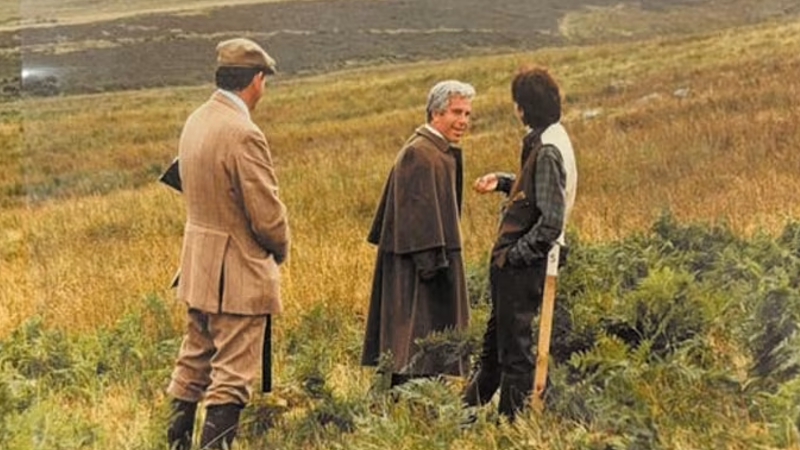
When Police Scotland initiates a preliminary assessment or formal inquiry into historical allegations involving Prince Andrew and Jeffrey Epstein at a Scottish royal estate, the decisive variable is not public outrage or media pressure, but the statutory friction between sovereign property status, cross-border criminal procedure, and the evidentiary decay of historical offenses. Understanding why an inquiry opens—and why it frequently stalls before reaching the Crown Office and Procurator Fiscal Service (COPFS)—requires stripping away tabloid framing and analyzing the precise operational architecture of Scots criminal law.
The Architecture of a Scottish Police Assessment
In Scotland, law enforcement does not operate under the same prosecutorial sequence as England and Wales. When allegations surface regarding conduct at a Scottish residence—such as Balmoral Castle in Aberdeenshire—Police Scotland executes a bifurcated intake process before any suspect is interviewed under caution or charged.
- Jurisdictional Verification: Investigators first establish locus delicti—the exact geographic location where the alleged criminal act occurred. Scots law requires that the substantive elements of an offense took place within Scottish territorial boundaries to trigger domestic jurisdiction, regardless of the nationality or domicile of the complainant or the accused.
- Statutory Mapping: Offenses alleged to have occurred prior to December 1, 2010, cannot be prosecuted under the Sexual Offences (Scotland) Act 2009. Instead, detectives and legal advisors must map historical allegations onto common law offenses or repealed statutory instruments active at the precise date of the alleged incident, such as the Criminal Law (Consolidation) (Scotland) Act 1995.
- Corroboration Screening: Unlike English law, which permits conviction on the uncorroborated testimony of a single credible witness, Scots criminal procedure enforces the Moorov doctrine and strict corroboration rules. Every essential fact of a crime—specifically the actus reus (the criminal act) and the identification of the perpetrator—must be supported by at least two independent sources of evidence.
This third filter eliminates the vast majority of historical inquiries before they convert into formal criminal investigations. A complainant's statement regarding events at a private estate, standing alone without contemporaneous flight logs, third-party witness testimony, or documented communications placing both parties at the exact location simultaneously, fails the threshold required by the Procurator Fiscal to authorize a warrant.
Sovereign Immunity vs. Private Estate Liability
A persistent misconception in coverage of royal inquiries is that Crown immunity shields members of the royal family or insulates royal estates from police entry. Operational reality divides sharply between the reigning monarch and other members of the royal household, as well as between Crown Estate properties and privately owned residences.
Under UK constitutional law, sovereign immunity is personal to the reigning monarch. While civil and criminal proceedings cannot be brought against the Sovereign in their personal capacity, no other member of the royal family—including Prince Andrew—possesses immunity from criminal investigation, arrest, or prosecution.
The physical site of the alleged activity introduces a separate layer of legal classification:
- Privately Owned Royal Estates: Balmoral Castle is not part of the Crown Estate. Purchased by Prince Albert in 1852, it is the private property of the monarch. Because it is private land rather than a sovereign palace functioning as an official seat of government, Police Scotland possesses the same statutory powers of entry, search, and seizure under a sheriff's warrant as it would on any private agricultural or residential estate in Aberdeenshire.
- Official Royal Residences: Properties such as the Palace of Holyroodhouse in Edinburgh remain occupied palaces of the Sovereign. While police access to occupied royal palaces historically required notification to the Lord Chamberlain's office to avoid constitutional friction, no statutory bar prevents Police Scotland from executing a judicial warrant if evidence of a serious indictable offense is established.
The operational bottleneck at a location like Balmoral is therefore physical and logistical rather than constitutional. Private royal estates maintain closed perimeter security managed by the Metropolitan Police's Royalty and Specialist Protection (RaSP) command. Consequently, historical visitor logs, gatehouse entries, and protection officer duty rosters are bifurcated between local estate staff records and Metropolitan Police archives in London.
The Three Evidentiary Bottlenecks in Historical Cross-Border Inquiries
When an inquiry involves both a British royal figure and a deceased foreign national like Jeffrey Epstein—who died in federal custody in New York in August 2019—investigators confront three structural impediments that degrade the probability of a prosecutable case file.
1. Evidentiary Decay and Archival Fragmentation
Historical inquiries spanning two decades suffer from standard digital and physical attrition. Flight manifests from private aviation operators, guest registers maintained by private household staff, and telecommunications metadata rarely survive beyond standard seven-year corporate retention windows unless preserved by prior litigation. When Epstein and Ghislaine Maxwell visited Balmoral in 1999—a documented historical visit widely reported in prior civil filings—commercial digital footprints were minimal. Reconstructing the exact movements of guests within a 50,000-acre estate twenty-five years after the fact relies almost entirely on human memory and surviving paper ledgers.
2. Transatlantic Mutual Legal Assistance Friction
Because Epstein's network operated primarily out of New York, Florida, and the US Virgin Islands, corroborating evidence frequently resides within sealed US federal court dockets, FBI case files, or Southern District of New York (SDNY) grand jury materials. Accessing these records requires a formal Mutual Legal Assistance Treaty (MLAT) request routed from the Crown Office through the UK Home Office to the US Department of Justice. Under US federal rules—specifically Federal Rule of Criminal Procedure 6(e)—grand jury materials are strictly protected from disclosure to foreign law enforcement unless a federal judge grants an exception for a judicial proceeding. A preliminary police assessment in Scotland does not qualify as an active judicial proceeding, creating a circular barrier: Police Scotland cannot easily obtain US grand jury records to establish corroboration, yet without corroboration, they cannot initiate the judicial proceeding required to unlock the records.
3. The Deceased Co-Conspirator Deficit
In conspiracy or facilitation inquiries, the death of a primary actor removes both a potential defendant and a source of compelled testimony. While statements made by Epstein prior to his death or documents seized from his Manhattan townhouse during the July 2019 FBI raid exist in federal custody, admissibility in a Scottish High Court trial faces strict hearsay prohibitions under the Criminal Procedure (Scotland) Act 1995. Statements by a deceased individual are only admissible under narrow statutory exceptions, and they cannot be cross-examined by defense counsel—a limitation that frequently renders them insufficient to satisfy the corroboration threshold on their own.
Distinguishing Preliminary Assessment from Formal Investigation
Media reports frequently conflate a police "assessment" with a full criminal investigation, distorting the actual procedural posture of law enforcement. In Police Scotland's operational taxonomy, these terms represent distinct resource commitments and legal thresholds.
During a preliminary assessment, detectives review submitted correspondence, civil court transcripts, or third-party referrals to determine whether the alleged conduct, if proven, constitutes a crime under Scots law and whether any viable avenue of corroboration exists. No suspects are interviewed under caution, no warrants are sought, and the Procurator Fiscal is typically consulted only on points of statutory interpretation.
Transitioning to a formal investigation requires the appointment of a Senior Investigating Officer (SIO), the opening of an incident room on the HOLMES (Home Office Large Major Enquiry System) database, and active evidence collection—including taking formal statements from witnesses, requesting RaSP deployment logs from the Metropolitan Police, and submitting formal disclosure requests to civil litigants in the United States.
Previously, the Metropolitan Police conducted multiple reviews of allegations linked to Epstein and Prince Andrew—most notably in 2015, 2016, and 2021—concluding on each occasion that no further criminal action would be taken in England and Wales due to jurisdictional constraints and insufficient evidence. A separate inquiry in Scotland does not inherit the Metropolitan Police's conclusions; Police Scotland is an independent territorial force answering to a distinct legal system. However, it confronts the identical underlying evidentiary record.
Strategic Reality for Institutional Observers
Any institutional assessment of a Scottish police inquiry into Prince Andrew and Jeffrey Epstein must discount speculative timelines and focus strictly on observable procedural milestones. The trajectory of the case is governed entirely by whether investigators can bridge the Scottish corroboration requirement using external documentation generated outside the United Kingdom.
To track whether the inquiry is progressing toward a prosecutable file or approaching administrative closure, monitor three specific indicators:
- Confirmation of an MLAT Transmission: Watch for formal confirmation from the Crown Office or US court filings indicating that the UK Central Authority has requested specific, non-public evidentiary exhibits from the Epstein estate or SDNY archives. Without a formal MLAT request, the inquiry remains confined to domestic open-source and local witness review.
- Metropolitan Police RaSP Disclosure: Look for verified reporting that Police Scotland has formally requested historical protection officer logs covering Balmoral deployments for the specific dates in question. This signals that investigators have narrowed the locus delicti to a precise timeframe.
- Referral to the High Court of Justiciary: Under Scots law, serious sexual offenses or historical facilitation charges must be prosecuted on indictment in the High Court, which requires the Crown Office to serve a formal petition. Until a suspect is formally placed on petition, no criminal prosecution is underway.
Absent new, contemporaneous documentary evidence placing a complainant and the accused together at a Scottish property under circumstances that independently corroborate an offense under pre-2010 Scots law, the statutory requirement for dual-source corroboration remains the decisive barrier preventing a preliminary police inquiry from converting into a criminal indictment.


