The Structural Limits of Executive Enforcement
When a federal court curtails an agency's operational reach, the immediate friction centers on political controversy, but the underlying mechanism is entirely about institutional jurisdiction. The fundamental question governing administrative law is not whether an agency desires a specific policy outcome, but whether statutory authority explicitly grants the operational instruments deployed to achieve it.
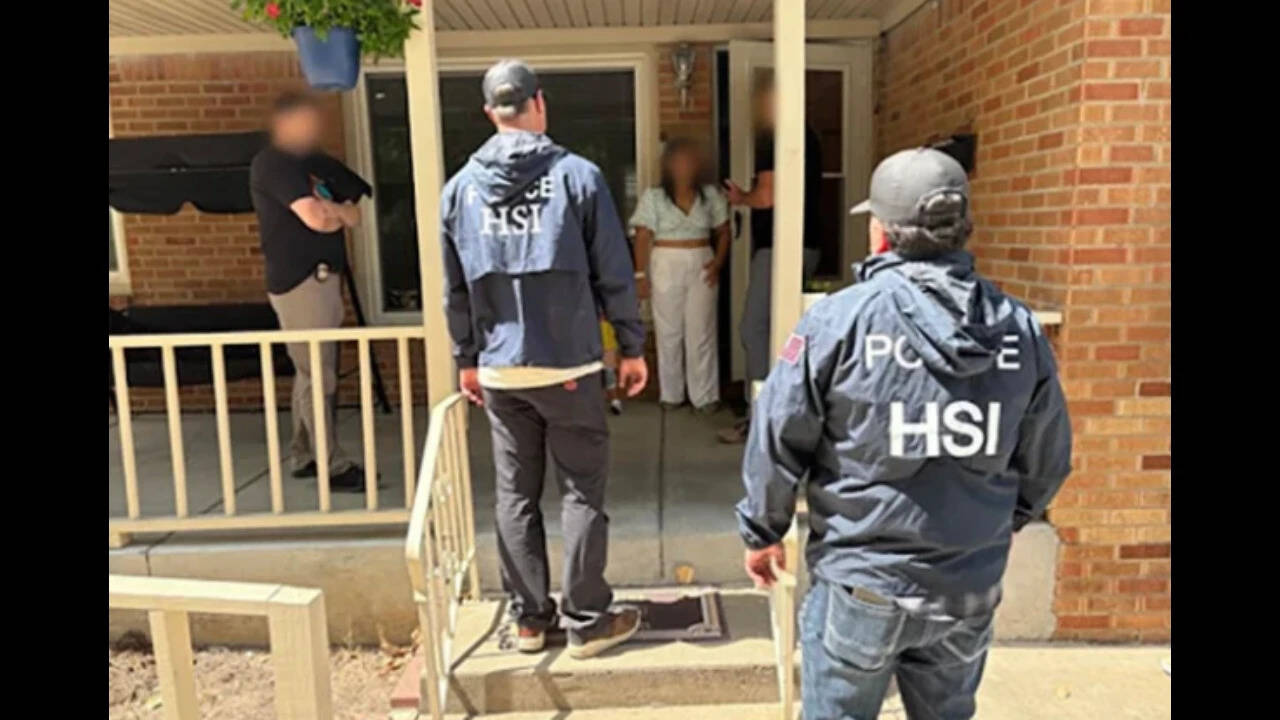
In the context of federal immigration enforcement, operations conducted at residential thresholds expose a critical tension between broad statutory mandates and constitutional boundaries. When field agents approach private entryways to question occupants about legal status without judicial warrants or verified consent, they operate in a zone of administrative discretion that frequently collides with Fourth Amendment protections and the limits delegated by Congress.
Deconstructing this dynamic requires examining three distinct vectors: the statutory delegation of power, the constitutional threshold of the curtilage, and the operational friction points that trigger judicial intervention.
The Statutory Delegation Dilemma
Federal agencies derive their existence and operational capacity from authorizing statutes passed by the legislature. These statutes define the boundaries of administrative power. When an agency attempts to expand its footprint—moving from broad enforcement zones to localized, door-to-door inquiries—it tests the limits of its statutory authorization.
The core challenge for enforcement bodies lies in the distinction between broad civil administrative authority and targeted criminal investigative powers. Civil immigration statutes grant authorities the power to inspect, interrogate, and arrest under specific conditions. However, statutory language rarely grants blanket permission to circumvent constitutional constraints or bypass the procedural requirements demanded of criminal law enforcement.
Statutory Mandate -> Administrative Discretion -> Judicial Review -> Operational Boundary
This sequence illustrates the natural lifecycle of an enforcement practice. An agency interprets its mandate broadly to maximize efficiency. That interpretation increases administrative discretion. When discretion infringes upon protected rights, judicial review intervenes, establishing a definitive boundary that restricts future operations.
The Spatial Mechanics of the Curtilage
From a legal and operational perspective, the physical approach to a private residence is governed by well-established property and privacy doctrines. The area immediately surrounding a home—known as the curtilage—enjoys significant constitutional protection against warrantless intrusion.
- The Knock and Talk Protocol: Law enforcement officers possess a limited license to approach a home, knock on the door, and seek to converse with occupants. This license is shared with the general public, including postal workers and commercial vendors.
- The Scope of Consent: The duration and objective of an approach areFederal Judicial Authority and Administrative Enforcement Limits
news
The boundaries of federal enforcement authority are established through a framework of constitutional parameters and statutory limitations. When a federal agency engages in field operations, its mandate is bounded by specific statutory delegations and judicial oversight. Recent rulings regarding agency interactions with individuals highlight the operational friction between investigative mandates and constitutional protections against unreasonable search and seizure.
The legal mechanics governing administrative inquiries distinguish between consensual encounters and detentions requiring individualized suspicion. Under established Fourth Amendment jurisprudence, law enforcement and administrative officers possess the baseline liberty to approach individuals in public spaces or knock on residential doors to pose questions. However, this liberty is conditioned on the absence of coercion. The distinction between an investigative inquiry and a seizure turns on whether a reasonable person would feel free to terminate the encounter and decline to answer.
When administrative personnel attempt to secure information regarding status or identity at private residences, several operational constraints govern the interaction. A threshold legal principle dictates that the curtilage of a home—the area immediately surrounding the dwelling—receives heightened constitutional protection. Officers generally lack the authority to enter private, non-public areas of property without a warrant, consent, or exigent circumstances. Consequently, knocking on a door is legally permissible only insofar as it mirrors the permitted access granted to the general public, such as a visitor approaching an entryway.
Furthermore, answering inquiries posed by federal personnel remains voluntary absent a valid judicial warrant or subpoena. The compulsion to produce identification or answer questions requires specific legal predicates, such as reasonable articulable suspicion of an ongoing violation or probable cause. Administrative agencies operating without these predicates encounter structural enforcement barriers. Individuals retain the legal right to decline entry, remain silent, or refuse to answer questions regarding their status when approached without judicial authorization.
The operational impact of these judicial limitations alters investigative strategy. Federal components relying on field-based canvassing must reallocate resources toward data-driven, institutional methods of review rather than unannounced residential visits. This shift changes the cost function of enforcement, increasing reliance on documentary audits, inter-agency data sharing, and formal administrative subpoenas. The administrative burden shifts from physical presence in communities to legal compliance and records analysis.
Future operational planning within administrative enforcement agencies must account for judicial limits on physical access. Compliance protocols now require personnel to obtain explicit, voluntary consent prior to entering private property or conducting questioning within the protected curtilage of a home. Training regimens must incorporate these constitutional boundaries to prevent unlawful entry and the subsequent suppression of administrative findings.