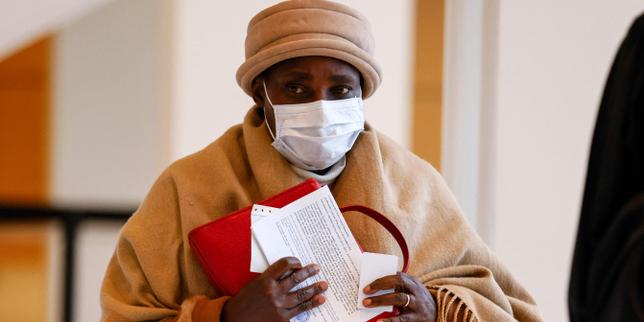
The failure to resolve the legal status of Agathe Habyarimana represents a systemic breakdown in the application of international criminal law within domestic jurisdictions. For three decades, the French judicial system has operated within a vacuum created by the intersection of administrative rejection and judicial inertia. The core of this impasse is not a lack of evidence, but the fragmented management of historical and judicial documentation. To move beyond the current stalemate, the French judiciary must transition from a reactive posture to a proactive, archive-driven investigative model that integrates historical expertise directly into the prosecutorial framework.
The Dual Logic of the Habyarimana Stalemate
The Agathe Habyarimana case is defined by a paradox: she is deemed "unworthy" of asylum due to serious reasons to believe she participated in the genocide against the Tutsi, yet she remains unprosecuted and non-extraditable. This situation stems from two conflicting legal architectures.
- The Administrative Threshold: The Council of State and the French Office for the Protection of Refugees and Stateless Persons (OFPRA) apply Article 1F of the 1951 Geneva Convention. This requires a lower burden of proof than a criminal conviction—"serious reasons to consider" that a crime was committed.
- The Criminal Threshold: The judicial system requires a high level of individualization of guilt. The disconnect exists because the evidence used to bar her from asylum has not been effectively translated into a criminal indictment that survives the rigors of the French investigative chamber.
This gap is a structural failure of information transmission. The archives that inform administrative decisions often sit in siloed repositories, disconnected from the active criminal investigation.
The Architecture of Total Documentation
Vincent Duclert’s central thesis—that the judiciary must consult "all available documentation"—is a call for a shift in the epistemic basis of the investigation. In cases of mass atrocity, the "smoking gun" is rarely a single document but a constellation of data points that establish a pattern of command and influence.
The Three Pillars of Documentary Evidence
The investigation into the "Akazu"—the inner circle of the Habyarimana regime—requires a tripartite approach to archiving:
- State Archives (The Duclert Commission Precedent): The 2021 Duclert Report proved that access to the highest levels of State archives (Presidential, Intelligence, and Diplomatic) can redefine the understanding of institutional complicity. The judiciary currently lacks a mechanism to automatically ingest these historical findings into criminal proceedings without significant procedural friction.
- NGO and Human Rights Repositories: Organizations like African Rights and the International Federation for Human Rights (FIDH) hold contemporaneous testimonies that are often more detailed than those collected by judicial investigators decades later. The "decay rate" of witness memory makes these early archives the primary source of truth.
- The ICTR Residual Mechanism Data: The International Criminal Tribunal for Rwanda (ICTR) generated millions of pages of testimony and evidence. The French judiciary's failure to fully integrate the ICTR’s digital forensic trail into the Habyarimana file creates a redundancy that delays justice.
The Cost Function of Judicial Delay
The cost of 30 years of inaction is not merely symbolic; it has tangible impacts on the viability of a trial.
- Witness Attrition: Every year of delay results in the death of key survivors and perpetrators. This leads to a "biological amnesty" where the case eventually collapses because the adversarial principle can no longer be upheld.
- Diplomatic Friction: The Habyarimana case remains a persistent irritant in France-Rwanda relations. The lack of a definitive judicial conclusion prevents a full normalization of bilateral security and intelligence cooperation.
- Jurisprudential Risk: The longer the French state allows a suspected architect of genocide to reside on its territory without trial, the more it undermines its claim to universal jurisdiction. It creates a precedent of "passive complicity through procedure."
The Mechanism of the Akazu and Command Responsibility
A primary challenge in the Habyarimana investigation is defining her specific role within the "Akazu." Unlike formal military commanders, her power was informal and based on proximity to the presidency. To prosecute this, the judiciary must apply the logic of Joint Criminal Enterprise (JCE) or Command Responsibility within the framework of Rwandan social and political structures in 1994.
The "Akazu" functioned as a shadow cabinet. Documentation must prove her involvement in the radicalization of the Hutu Power movement and her influence over the Interahamwe militias. This requires a granular analysis of the radio broadcasts (RTLM), financial flows to extremist organizations, and the logistical planning of the provisional government established after the April 6, 1994, assassination of her husband.
The Limitation of the "Precedent" Model
Critics often point to the successful prosecution of individuals like Pascal Simbikangwa or Tito Barahira as a blueprint. However, these cases focused on direct participation or immediate local command. Agathe Habyarimana represents a different tier of perpetrator: the high-level political orchestrator.
The investigative model must shift from "Who pulled the trigger?" to "Who created the conditions for the trigger to be pulled?" This requires the intervention of historians as expert witnesses who can map the social and political networks that enabled the genocide. The historian does not replace the judge; rather, the historian provides the coordinate system in which the judge evaluates the evidence.
Strategic Reorientation of the Investigation
The current investigative strategy is bottlenecked by a traditional reliance on physical testimony. To break the impasse, the following structural adjustments are required:
- De-siloing Judicial and Historical Data: A permanent liaison between the National Anti-Terrorism Prosecutor's Office (PNAT) and the National Archives must be established to ensure that new historical discoveries regarding 1994 are immediately assessed for judicial relevance.
- Digital Forensic Reconstruction: Utilizing the ICTR’s digitized evidence to create a map of the Habyarimana inner circle's movements between April and July 1994. This allows investigators to cross-reference her location with specific orders or inciting events.
- Formalizing the Role of Expert Historians: The French Code of Criminal Procedure should be utilized to commission comprehensive historical reports that serve as the foundational narrative of the indictment, reducing the burden on individual witnesses to recount the entirety of the political context.
The Agathe Habyarimana case is the final frontier of France’s legal reckoning with the genocide against the Tutsi. The refusal to extradite on the grounds of potential "lack of fair trial" in Rwanda places an absolute obligation on the French state to provide that trial on its own soil. To fail to do so is to transform the principle of non-extradition into a shield for impunity.
The judiciary must now treat the archive not as a library of the past, but as an active crime scene. The immediate tactical move is the integration of the "Duclert Method"—rigorous, unhindered access to state documentation—into the criminal file. Without this, the investigation will continue to cycle through procedural rejections until the biological clock renders the entire exercise moot. The credibility of French universal jurisdiction depends on the transition from administrative disapproval to criminal accountability.