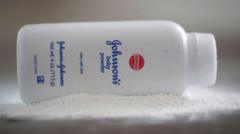
The headlines are writing themselves. Major media outlets are hyperventilating over Johnson and Johnson dangling a multi-billion dollar payout to make the baby powder litigation vanish. The lazy consensus says this is a sign of weakness, an admission of guilt, a wounded corporate giant finally writing a massive check because the walls are closing in.
That narrative is entirely wrong.
I have spent decades watching massive corporations handle existential litigation risks. I have seen companies blow millions on defensive lawyering that only prolongs the bleeding, and I have seen masterclasses in liability containment. What Johnson and Johnson is doing with its bankruptcy maneuvers and settlement proposals is not a surrender. It is a calculated purchase of operational certainty. They are buying an exit ticket from a courtroom circus so they can get back to printing money.
Let us dismantle the fiction that this settlement proves the product is inherently toxic in the way plaintiffs' attorneys claim, and let's look at the cold, hard mechanics of how mass tort finance actually works.
The Great Misunderstanding Of The Talc Docket
To understand why this settlement offer is a strategic weapon rather than a white flag, you have to look past the emotional resonance of baby powder and examine the science of mass tort logistics.
Plaintiffs' lawyers love to conflate two entirely different entities in the public mind: cosmetic talc and industrial asbestos. They sound similar in a soundbite, but chemically and geologically, they are worlds apart. Industrial talc used in heavy manufacturing often shared geological spaces with asbestos veins. Cosmetic talc, processed and purified for decades, underwent stringent regulatory scrutiny.
The core of the litigation relies heavily on epidemiological debate rather than smoking-gun causality. When juries hear emotional testimony about ovarian cancer or mesothelioma, science often gets dragged out the back door. Juries do not evaluate relative risk ratios or confidence intervals; they evaluate sympathy. Corporate boardrooms know this better than anyone.
When a company faces tens of thousands of individual lawsuits across multiple state jurisdictions, the legal defense costs alone become a bottomless pit. Paying outside counsel, managing discovery for hundreds of thousands of claimants, and fighting jurisdiction battles drains cash flow and depresses stock value through sheer uncertainty.
Wall Street does not hate bad news. Wall Street hates unpredictable news.
By engineering a settlement structure—even one scaling up toward billions of dollars—Johnson and Johnson is performing financial chemotherapy. They are cutting out the malignant uncertainty of jury trials and replacing it with a fixed, amortized line item.
The Bankruptcy Two-Step Nobody Wants To Explain Honestly
Let's talk about the mechanism everyone loves to hate: the Texas Two-Step bankruptcy strategy.
Critics scream foul, calling it a fraudulent transfer of liability designed to dodge accountability. Let's look at the reality of the maneuver with clear eyes. A subsidiary is created, the liability is loaded into it, and that subsidiary files for Chapter 11 bankruptcy to force a global resolution instead of a localized death by a thousand cuts.
Is it aggressive? Absolutely. Is it legal? Courts have scrutinized it heavily, and the legal battles over whether a solvent parent company can utilize this path are ongoing. But let us stop pretending this is unique to Johnson and Johnson. This is the modern playbook for mass tort management in an era where litigation funding firms turn lawsuits into high-yield Wall Street asset classes.
Third-party litigation funding changed the entire game. Wall Street hedge funds now pour billions into funding mass tort campaigns, turning injured plaintiffs into leverage points for massive payouts. When litigation becomes an institutional investment vehicle, traditional defense strategies fail. You cannot out-litigate an opponent whose balance sheet is backed by speculative capital looking for a quick settlement multiple.
So what does a prudent corporation do? They fight fire with corporate restructuring. They use bankruptcy courts not to run away from victims, but to create a centralized, equitable trust where every claimant gets paid according to a uniform matrix, rather than letting the first few jurisdictions bankroll lottery-sized verdicts that leave later claimants with an empty corporate shell.
The Cost Of Doing Business Versus The Cost Of Chaos
Let's look at the numbers. A multi-billion dollar price tag sounds astronomical to the average retail investor or consumer reading the morning news. But relative to Johnson and Johnson's market capitalization and annual free cash flow, it is a managed expense.
Imagine a scenario where a company fights every single case to the bitter end. You win seventy percent of the trials, you settle twenty percent on favorable terms, and you get hit with ten percent blockbuster verdicts in plaintiff-friendly jurisdictions like parts of New Jersey, California, or St. Louis. The headline risk never ends. Every quarter, earnings calls are hijacked by questions about litigation reserves. Institutional investors pull back because they cannot model the risk profile of the stock.
By pushing for a structured settlement through a bankruptcy court framework, management achieves two vital objectives:
- Definitive Closure: Every current and future claim is funneled into a trust, cutting off the tail risk permanently.
- Valuation Re-rating: Once the legal overhang is removed, the market can price the core healthcare and pharmaceutical engine based purely on fundamentals rather than legal roulette.
Admitting the downside here is critical: this approach leaves a bitter taste in the public mouth. It feels clinical. It looks like a giant corporation is using legal engineering to sweep a public health controversy under the rug. Trust in corporate governance takes a hit.
That is the price of admission. Corporate titans do not manage for public applause; they manage for long-term equity value and business continuity.
Dismantling The PAA Questions
People ask whether this settlement means consumers should immediately throw away every bottle of talc-based product they own, or whether it proves the company knew about contamination for decades.
The premise of the question is flawed. It assumes legal settlements equal scientific confessions. In the American legal system, settlements are economic calculations, not scientific peer reviews. Companies settle cases every day that they believe they can win, simply because the transaction costs of winning exceed the cost of settling.
If you want to understand corporate accountability, look at the regulatory bodies. Cosmetic talc has been studied by the FDA, the cosmetic ingredient review panels, and international health organizations for generations. While public concern is valid and consumer safety standards rightly evolve, treating a civil tort settlement as a definitive scientific verdict is lazy thinking.
The Real Lesson For Industry Insiders
If you are running a business or managing corporate risk today, take notes. The era of defending mass torts one courtroom at a time is dead. If your product is caught in the crosshairs of aggressive plaintiffs' lawyers and third-party litigation funders, traditional defense is a slow suicide.
You either control the litigation landscape through aggressive structural resolutions, or you let the litigation landscape control you.
Johnson and Johnson is not folding. They are clearing the decks. While the media focuses on the size of the check, the real story is how quickly the company plans to move on once the ink dries.
Stop looking at the settlement as a tragedy. Look at it as a transaction.
The litigation machine wanted blood and headlines. Johnson and Johnson offered cash and quiet.
Game over.