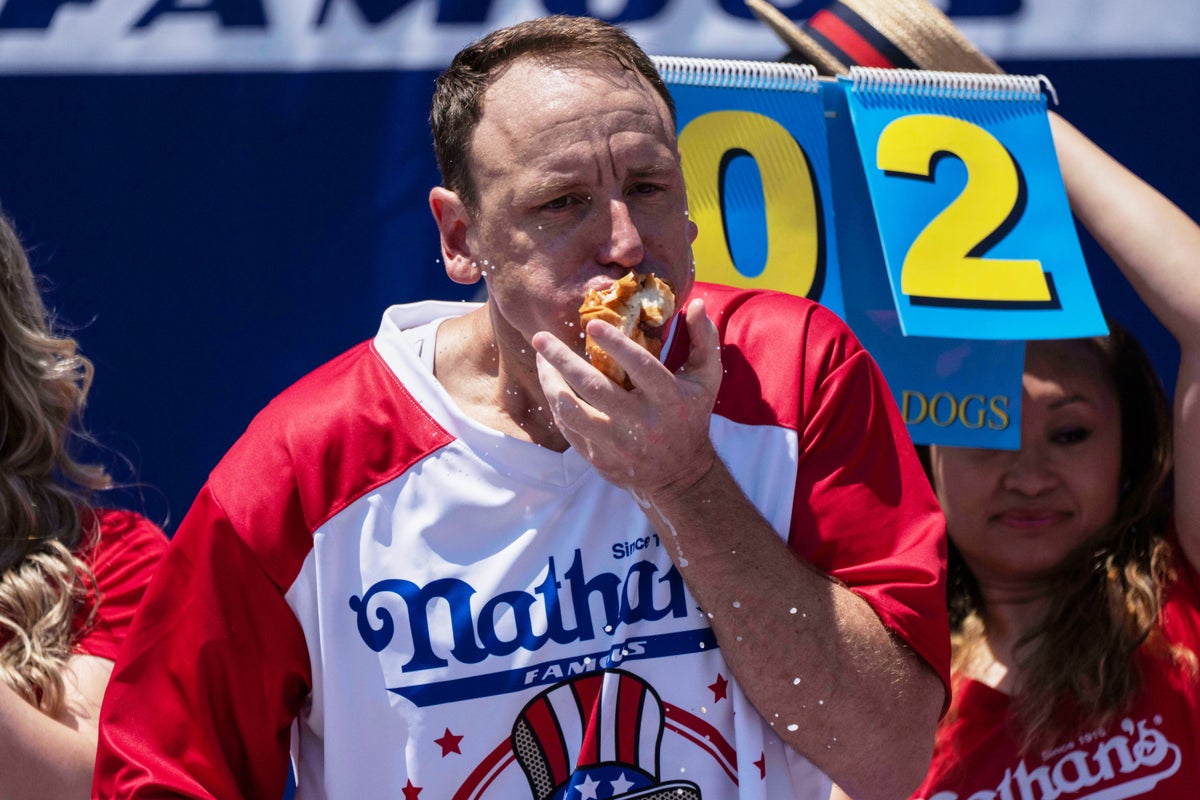
The mainstream sports media is currently salivating over the manufactured drama of Joey Chestnut’s "Coney Island comeback." They are painting a picture of a exiled hero returning to reclaim his throne after a tragic fallout with Major League Eating over a vegan sponsorship deal and some overblown legal theater.
It is a beautiful narrative. It is also complete nonsense.
The collective sports media is missing the entire point of what is actually happening to competitive eating. They are treating a dying, artificial monopoly like it is the NFL in the 1970s. The reality is far uglier, far more fascinating, and rooted entirely in a desperate corporate chokehold that Chestnut just broke.
Joey Chestnut’s return to Coney Island isn't a triumph. It is a calculated corporate capitulation by a governing body that realized they are absolutely nothing without a single 40-something man shoving wet buns down his throat.
The Myth of the Major League Eating Monopoly
For two decades, Major League Eating (MLE) operated the slickest racket in sports entertainment. They took a century-old Brooklyn marketing gimmick—Nathan’s Famous International Hot Dog Eating Contest—and wrapped it in a suffocating web of exclusive talent contracts.
If you wanted to eat professionally, you signed your life away to MLE. They controlled where you ate, what you ate, and who paid you to do it. They created a classic artificial barrier to entry, convincing the public that their yellow mustard belts actually meant something.
Then Joey Chestnut signed a deal with Impossible Foods.
The media framed it as a betrayal. "How could the king of beef hot dogs go vegan?" they asked, completely blinded by the marketing. It wasn't a lifestyle choice. It was a calculated business pivot. Chestnut realized something that every elite athlete in traditional sports figures out eventually: the league needs the superstar infinitely more than the superstar needs the league.
When MLE banned Chestnut from the 2024 Coney Island event, they didn't punish him. They committed commercial suicide.
Imagine the NBA banning LeBron James from the Finals because he wore Nike socks to an Adidas-sponsored event. The ratings for the 2024 Nathan's contest didn't just dip; they cratered. Netflix immediately swooped in, realized the value was in the talent rather than the governing body, and threw millions at Chestnut for a live special against his old rival, Takeru Kobayashi.
This upcoming "comeback" isn't Chestnut begging for forgiveness. It is MLE crawling back on its knees because their entire business model is built on a single point of failure.
The Flawed Premise of "Competitive Eating" as a Real Sport
Let’s dismantle the "People Also Ask" consensus that treats competitive eating like track and field. Fans constantly ask: How do competitive eaters train? or What is the ceiling for the human stomach?
These questions assume we are witnessing the peak of human athletic evolution. We aren't. We are witnessing the optimization of a highly specific, biologically punishing parlor trick that has reached its logical, stagnant conclusion.
In traditional sports, performance relies on a massive matrix of variables: biomechanics, neurological reaction times, strategic adaptation, and team synergy. In competitive eating, the mechanics are brutally simple and entirely fixed. It comes down to three things:
- Gastric accommodation: The ability of the stomach to stretch without triggering the vagus nerve's emetic reflex.
- The "Fat Cap" theory: Keeping body fat exceptionally low so that intra-abdominal fat doesn't restrict stomach expansion.
- Jaw strength and lubricated deglutition: The physical act of breaking down mass and sliding it past the esophagus.
That’s it. There is no strategic pivot at the eight-minute mark. There is no second-half adjustments. Chestnut perfected this mechanical pipeline fifteen years ago. The fact that he is still the undisputed face of the industry in his 40s isn't a testament to his ongoing greatness; it is an indictment of the sport's total lack of developmental depth.
When a sport cannot produce a single compelling antagonist to challenge a aging champion for over a decade, it isn't a sport. It’s a touring exhibition. It’s the Harlem Globetrotters, except instead of spinning basketballs, someone is getting heartburn.
Why the Chestnut Comeback is Bad for Everyone Involved
Everyone is cheering for this reunion, but nobody is looking at the economic fallout. This comeback guarantees that competitive eating will remain trapped in a nostalgic, early-2000s time capsule.
It Smothers Emerging Talent
As long as MLE relies on Chestnut to generate ratings, they will never invest in building a sustainable roster of new talent. The younger eaters on the circuit are treated like background actors in a movie they will never get to star in. They are paid fractions of what Chestnut makes, locked into restrictive contracts, and given zero promotional push. Why build the future when you can just milk the past?
It Exposes the Irrelevance of the Event Itself
The Nathan’s Famous contest used to be the event. It was an American institution. By forcing Chestnut out and then inevitably welcoming him back after his Netflix pivot, the organizers proved that the event is completely secondary to the individual. The brand has been thoroughly decoupled from the sport.
The Illusion of Competition is Gone
We already know how this script ends. Chestnut will show up, the crowd will go wild, he will eat somewhere between 68 and 75 hot dogs, and he will hoist a trophy. There is no tension. There is no stakes. The "arrest drama" and the "vegan feud" were just the wrestling-style promos needed to sell tickets to a match whose outcome was decided years ago in a laboratory of stomach-stretching exercises.
The Actionable Pivot for Content Creators and Brands
If you are a brand looking to invest in the broader "alternative sports" or creator economy, look at this drama as a massive warning sign.
Stop buying into centralized leagues that claim to own a niche. The power has completely shifted to individual creators who own their distribution channels. Chestnut proved that a man with a distinct personal brand can out-negotiate an entire corporate infrastructure.
If you want to sponsor an event, don't sponsor the league that hosts it. Sponsor the freak-nature individual who forces the league to change its rules just to keep him on the stage.
The Coney Island comeback isn't a resurrection of competitive eating. It is the final victory lap of a solo performer who realized he owns the stadium, the concession stands, and the referees. Enjoy the circus on the Fourth of July, but don't mistake it for a competitive sport. It’s just one man collecting a massive check from a room full of suits who are terrified of what happens when he finally decides he's full.