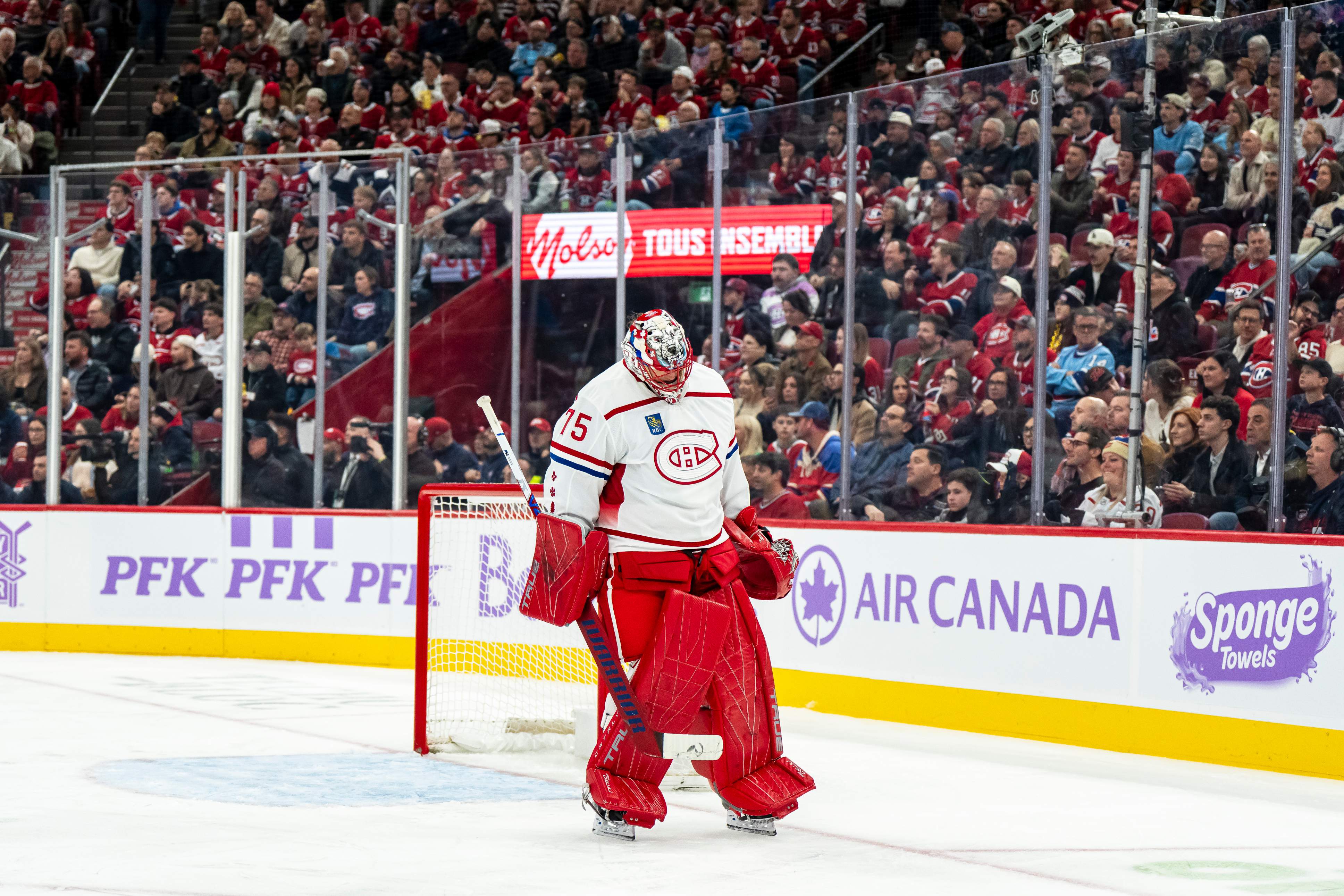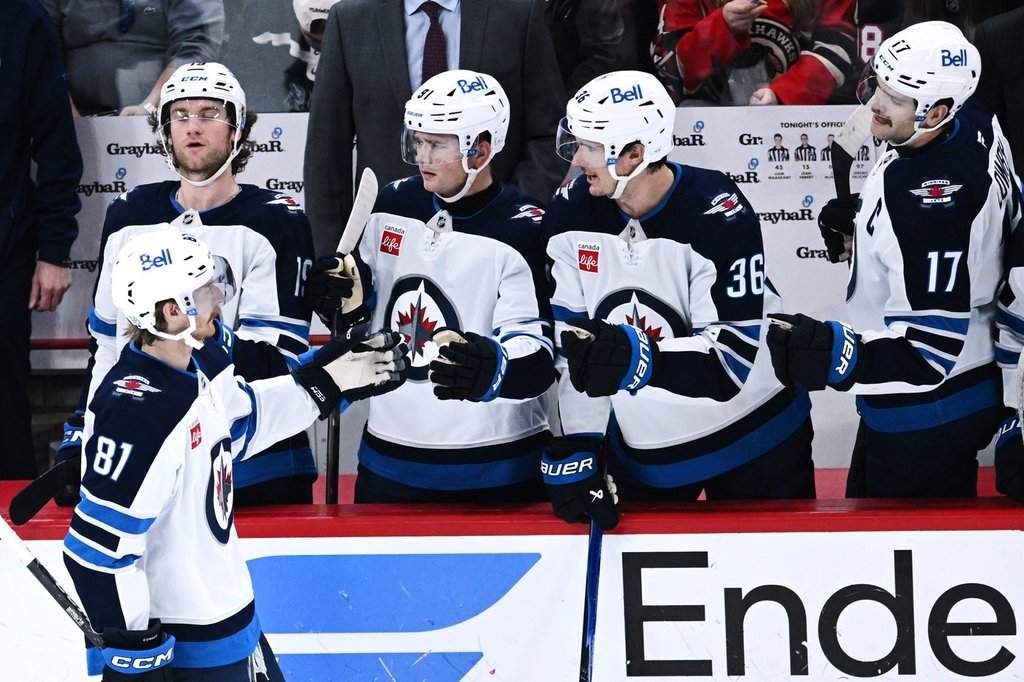
The Winnipeg Jets trailed the Chicago Blackhawks 4-0 before scoring five unanswered goals to win 5-4, a collapse and resurrection that had nothing to do with luck and everything to do with structural discipline.
In the modern NHL, a four-goal cushion is no longer a death sentence. It is an invitation for the leading team to abandon the exact habits that built the advantage while the trailing squad strips its tactical system down to pure, relentless pressure. When Winnipeg erased that 4-0 deficit against Chicago, the game functioned as a textbook case study in momentum shifts, neutral-zone abandonment, and goaltending fatigue. Most surface-level recaps treat a 5-4 comeback like a miraculous stroke of fortune. Anyone who has spent decades watching professional hockey from the press box knows better.
Miracles do not happen across sixty minutes of ice time. Execution happens. Breakdowns happen.
The Anatomy of a Four-Goal Mirage
Building a 4-0 lead in the National Hockey League requires a specific alignment of events. Usually, it combines clinical finishing on high-danger chances with an opponent whose defensive structure has temporarily evaporated. For the Blackhawks, jumping out to a four-goal advantage looked like total dominance on the scoreboard, yet the underlying mechanics of a runaway first half often mask severe vulnerabilities.
When a team goes up by four goals early, human nature takes over the bench. Forward lines begin cheating toward the offensive blue line, looking for the easy fifth or sixth tally to pad personal statistics. Defensemen stop pinching aggressively at the opposing blue line to keep pucks alive, opting instead to retreat early into a passive, preventative posture. In hockey parlance, they start playing not to lose.
That shift in posture is lethal. By conceding the neutral zone to protect the house, the leading team hands the trailing opponent free entry into the offensive zone with speed. The Jets did not need to fight through a clogged neutral-zone trap to mount their comeback against Chicago. Once the Blackhawks backed off, Winnipeg gained the offensive blue line at will, establishing prolonged cycle shifts that wore down Chicago’s defensive pairs and forced icings that trapped tired personnel on the ice.
How Winnipeg Flipped the Tactical Switch
Trailing 4-0 leaves a coaching staff with zero margin for error and complete freedom from conservative thinking. You cannot defend your way back from a four-goal hole. Winnipeg’s response relied on three distinct adjustments that systematically dismantled Chicago’s comfort level.
Aggressive Forechecking and Weak-Side Support
First, the Jets abandoned any semblance of a passive 1-2-2 neutral-zone setup. They deployed an aggressive two-man forecheck designed to punish Chicago’s defensemen on retrievals. Instead of letting the Blackhawks cleanly execute rim-arounds or D-to-D passes behind their own net, Winnipeg’s F1 and F2 attackers angled their pursuits to cut off the strong-side boards.
This forced Chicago’s defenders to make rushed decisions under physical duress. When a defenseman cannot see the ice clearly because a forechecker is bearing down at twenty miles per hour, turnovers multiply. Winnipeg’s third forward—F3—remained high in the slot rather than diving below the goal line, intercepting panicked clearing attempts and immediately funneling pucks back toward the net.
Point Shot Volume and Net-Front Chaos
Second, Winnipeg stopped looking for the pretty east-west pass through the seam. Trailing teams often waste precious minutes trying to thread needles against a packed defensive box. The Jets simplified their offensive zone attack by moving the puck high to the blue line and firing low, hard shots through traffic.
A 4-0 comeback requires dirty goals. Screened point shots, deflected wristers, and second-chance rebounds off the goaltender’s pads are the currency of late-game rallies. By planting bodies directly in the sightlines of the Chicago netminder, Winnipeg turned routine perimeter shots into coin flips. Every rebound created a scramble, and every scramble forced Chicago’s defenders to expend massive amounts of energy boxing out heavier forwards.
Exploiting Line-Matching Mismatches
Third, the Jets capitalized on the fatigue cycle caused by long shifts. When a defending team is hemmed in its own zone for ninety seconds, players lose their positional discipline. Stick checks replace body positioning. Players reach instead of skating.
Winnipeg’s bench aggressively rolled fresh lines over the boards the moment Chicago iced the puck or failed to clear the zone. By pitting rested, top-six skaters against exhausted fourth-line forwards and bottom-pair defensemen, the Jets created artificial power plays at five-on-five. The scoreboard began to tick upward not because Winnipeg suddenly discovered new talent, but because Chicago’s defenders were operating on empty lungs.
The Psychological Trap of the Prevent Defense
There is a persistent myth in professional sports that playing defensively protects a lead. In reality, surrendering puck possession is the fastest way to lose control of a hockey game.
Consider a hypothetical scenario where two evenly matched teams play a twenty-minute period. If Team A holds the puck for fourteen minutes and Team B holds it for six, Team A will almost always outscore Team B over a large sample size, regardless of what the score was when the period began. When Chicago retreated to protect its 4-0 lead against Winnipeg, it voluntarily handed over the possession metrics.
The psychological toll of watching a 4-0 lead shrink to 4-1, and then 4-2, cannot be overstated. At 4-0, the bench is loose, sticks are held lightly, and passes are crisp. At 4-2, doubt creeps into the central nervous system. Defensemen grip their sticks tighter, leading to bobbling pucks on routine breakout passes. Forwards hesitate for a split second before shooting, worried about a blocked shot turning into an odd-man rush the other way.
By the time Winnipeg scored the third goal to make it 4-3, the Blackhawks were no longer playing to win the hockey game. They were praying for the final buzzer. Conversely, the Jets played with the house-money liberation that only comes when everyone in the building has already written you off. Every puck bounce felt like validation. Every hit felt heavier.
Why Score Effects Dictate Modern NHL Outcomes
Analysts who study hockey data closely rely heavily on a concept known as score effects. Statistically, trailing teams generate a significantly higher share of shot attempts, expected goals, and offensive zone time than leading teams. This is not an anomaly; it is a structural reality of the sport.
| Tactical Phase | Leading Team Behavior (4-0) | Trailing Team Behavior (0-4) | Resulting Ice Tilt |
|---|---|---|---|
| Neutral Zone | Drops into a passive 1-3-1 or 1-2-2 shell | Attacks with speed through the middle lane | Uncontested zone entries for trailing squad |
| Defensive Zone | Collapses tightly around the crease | Activates defensemen down the walls | Prolonged offensive cycle shifts |
| Puck Retrievals | Safe, high-glass clears that invite icings | Aggressive pinch at the blue line | Sustained pressure against tired defenders |
| Shot Selection | Low-risk dump-ins to kill clock | High-volume point shots with net-front screens | Elevated rebound and deflection probabilities |
The table above illustrates why large leads evaporate faster in today’s NHL than they did twenty years ago. Modern offensive systems are built around activating defensemen—turning five-man units into interchangeable attacking waves. When a team like Winnipeg unleashes its blue line to join the rush and pinch down the half-walls, the defending team faces a five-on-five overload in its own end.
For a team like Chicago, which has spent recent seasons navigating roster turnover and integrating younger players into high-leverage minutes, surviving that kind of sustained tactical pressure is extraordinarily difficult. Young defensemen often struggle with the cognitive load of sorting out switches when the opposing team’s defensemen are rotating down into the faceoff circles. One missed assignment leaves a shooter wide open in the high slot. One late stick check allows a cross-crease tap-in.
The Goaltending Equation Under Siege
No comeback from four goals down happens without a stark divergence in goaltending performance over the final thirty minutes of play.
On one end of the ice, the trailing team’s netminder has to slam the door completely shut. Facing a 4-0 deficit means the next goal against effectively ends the competitive phase of the night. Winnipeg’s crease had to absorb the inevitable counter-punches—the odd-man rushes generated when the Jets took aggressive risks in the offensive zone—without yielding a fifth tally. Making those momentum-killing saves keeps the bench alive. If a team scores twice to make it 4-2, only to immediately surrender a soft goal to make it 5-2, the emotional air leaves the building permanently.
On the other end, the leading goaltender faces a unique psychological and physical grind. Early in a 4-0 blowout, the goalie often sees sporadic action, standing cold while his teammates dominate the offensive zone. Suddenly, the tide flips. Instead of facing twenty-five predictable perimeter shots over sixty minutes, he faces twenty-five chaotic, screened, deflected attempts in a single twenty-minute span.
Lateral movement slows down. Rebound control deteriorates. Even elite goaltenders struggle when their own defensemen stop clearing the front of the net, forcing the goalie to peer around three sets of shin pads just to locate the puck leaving the point. By the time Winnipeg found the equalizer and the eventual 5-4 winner, Chicago’s netminder had been hung out to dry by a defensive structure that had completely fractured in front of him.
What the Box Score Hides About Roster Construction
When a franchise blows a 4-0 lead—or pulls off a 5-4 miracle—front offices look past the final score to evaluate roster resilience. A single regular-season game does not define an eighty-two-game campaign, yet extreme outcomes expose the exact DNA of both locker rooms.
For Winnipeg, climbing out of a four-goal crater reinforces a culture of institutional belief. Teams that know they are never truly out of a hockey game carry a distinct psychological edge into the postseason, where single-game momentum swings routinely decide seven-game series. Having the veteran composure to stick to a structural game plan when trailing 4-0 separates genuine contenders from pretenders who fold the moment adversity hits.
For Chicago, coughing up a 4-0 lead is the painful tuition required during a developmental curve. Protecting leads is a learned skill in professional hockey. It requires veteran centers who can win critical defensive-zone faceoffs cleanly, third-line wingers who know how to eat thirty seconds along the boards without turning the puck over, and defensemen who understand how to absorb a forecheck without panicking and firing the puck blindly up the middle.
You cannot teach that composure on a whiteboard in October. Players have to experience the sting of watching a guaranteed two points evaporate into a 5-4 regulation loss to understand why shifting into cruise control is fatal in this league.
The Myth of Momentum Versus the Reality of Execution
Fans love to talk about momentum as if it were an invisible force field that magically pushes pucks across the goal line. Veteran coaches hate the word because it implies outcomes are out of their control.
Winnipeg did not beat Chicago 5-4 because an abstract wave of energy carried them to victory. They won because they systematically attacked the space Chicago surrendered. They won because their forwards drove the net without the puck, forcing Chicago’s defenders to turn their backs to the play. They won because they recognized that a 4-0 lead often makes a young team lazy with its puck management, and they punished every single lazy pass with immediate, vertical transition speed.
When the final horn sounded on the Jets' 5-4 triumph, the scoreboard told the story of an improbable comeback, yet the game tape told a much simpler, more ruthless truth about professional hockey: the moment you stop doing the hard things that built your lead, the game will take everything back.