JetBlue is not backing down from Florida. Despite the spectacular collapse of its planned merger with Spirit Airlines, the New York-based carrier is doubling down on Fort Lauderdale-Hollywood International Airport (FLL). This isn't just a expansion; it’s a survival strategy. By aggressively claiming gates and flight frequencies in South Florida, JetBlue aims to lock out competitors and create a primary gateway to Latin America that functions independently of its Northeast strongholds.
The airline currently operates over 90 daily flights from FLL, with plans to scale that number to 250 in the coming years. While critics argue that the carrier is overextending itself in a low-yield, highly competitive market, the internal logic at JetBlue headquarters is clear. They believe that controlling a major North-South axis is the only way to remain relevant in an industry dominated by four massive legacies.
The Ghost of the Spirit Merger
When the federal courts blocked JetBlue’s $3.8 billion acquisition of Spirit Airlines, the industry expected a retreat. The logic was simple. Without Spirit’s planes and pilots, JetBlue lacked the scale to challenge Delta or American on a national level. However, the leadership in Long Island City saw a different reality. They realized that if they didn't occupy the vacuum left by a struggling Spirit, someone else would.
South Florida is the battlefield. Spirit Airlines, currently fighting for its life amid restructuring and debt negotiations, has been forced to trim its schedule and pull back from once-dominant routes. JetBlue is moving into those gaps with surgical precision. They are not waiting for Spirit to fail; they are actively making Spirit’s recovery more difficult by competing head-to-head on the most profitable Caribbean and domestic segments.
This is a high-stakes play. JetBlue is pivoting away from its "boutique" identity toward a more aggressive, scale-oriented model. The goal is to make Fort Lauderdale a fortress hub. In airline economics, a fortress hub allows a carrier to dictate pricing and schedule density, effectively forcing local passengers to use their services through sheer convenience.
Why Fort Lauderdale Matters More Than New York
For decades, JetBlue was defined by its dominance at JFK. But New York is a saturated, slot-constrained environment. There is no room left to grow. Fort Lauderdale offers the opposite: a growing population, a massive tourism draw, and a geographic advantage for "near-international" flying.
The airline is betting that the shift in American demographics toward the Sun Belt is permanent. By establishing a massive footprint in FLL, they capture the lucrative "VFR" (Visiting Friends and Relatives) traffic to Puerto Rico, the Dominican Republic, and Colombia. These routes are the bread and butter of JetBlue’s international network. Unlike business travel, which fluctuates with the economy, leisure and family travel to the Caribbean has proven remarkably resilient.
However, the infrastructure at FLL is struggling to keep pace. The airport is currently undergoing massive renovations, including the development of a new Terminal 5. JetBlue’s ability to execute its 250-flight-a-day vision depends entirely on these gates becoming available. If construction stalls or costs spiral, the airline could find itself with more planes than places to park them.
The Pratt and Whitney Engine Crisis
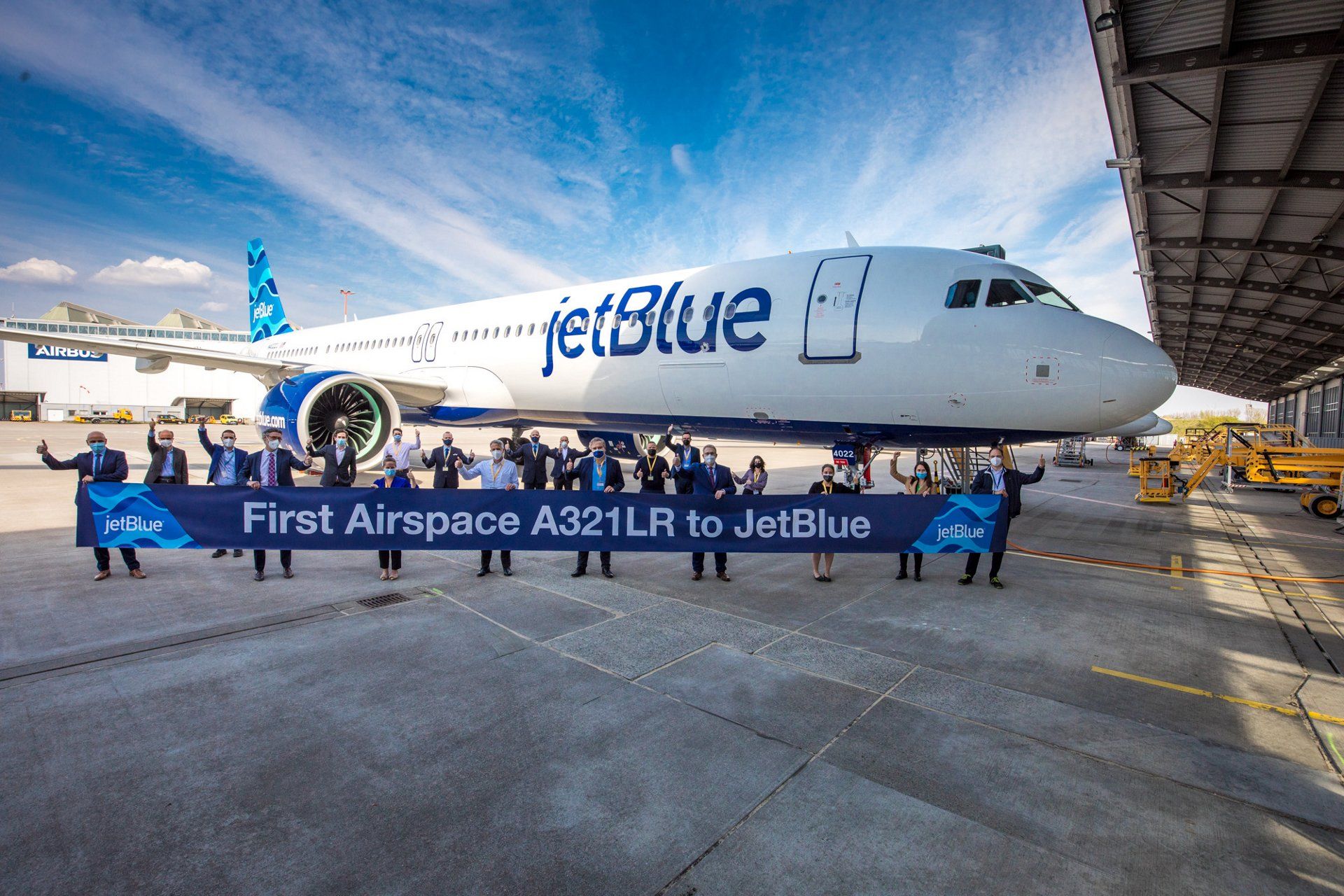
No analysis of JetBlue’s Florida strategy is complete without addressing the mechanical elephant in the room. The carrier has been forced to ground multiple Airbus A321neo aircraft due to issues with Pratt & Whitney Geared Turbofan (GTF) engines. This isn't a minor inconvenience. It’s a structural threat to their growth.
When planes are grounded, fixed costs don't disappear. The leases must be paid, and the crews must be kept on the payroll. To compensate for the lost capacity, JetBlue has had to shuffle its fleet, often pulling aircraft from underperforming routes to keep the Fort Lauderdale engine humming. This "robbing Peter to pay Paul" strategy works in the short term, but it leaves the rest of the network vulnerable.
The reliance on the A321neo is a double-edged sword. On one hand, the aircraft is incredibly fuel-efficient and perfect for the long, thin routes from Florida into South America. On the other hand, the engine reliability issues have turned a technological advantage into a scheduling nightmare. JetBlue is essentially sprinting toward a 250-flight goal while wearing a lead weight.
Countering the Big Four
American Airlines owns Miami. Delta has turned Atlanta into the world’s busiest hub. United dominates Newark. JetBlue’s push into Fort Lauderdale is an attempt to find a middle ground where they can compete without being crushed by the sheer weight of a legacy carrier’s loyalty program.
The problem is that the "Big Four" have deep pockets. If American Airlines decides that JetBlue’s growth in South Florida is a threat to their Miami operations, they can easily flood the market with cheap seats to bleed JetBlue dry. We have seen this movie before. In the airline industry, the larger player can often afford to lose money on a specific route longer than the smaller player can afford to compete.
JetBlue is banking on its superior product to win the day. Their "Mint" premium service has been a massive success on transcontinental routes, and they are increasingly deploying it on Florida-to-Los Angeles and Florida-to-London flights. They are betting that the modern traveler is tired of the legacy experience and will choose the airline with more legroom and free high-speed Wi-Fi, even if the price is slightly higher.
The Financial Tightrope
Financially, JetBlue is in a precarious position. The company hasn't posted consistent profits since the pandemic. The failed Spirit merger cost them a $69 million breakup fee, and their debt load is significant. Expanding in Fort Lauderdale requires massive capital expenditure. They are buying new planes, hiring thousands of new staff, and investing in airport lounges.
Investors are skeptical. The stock price has taken a beating, and there are constant rumors of activist investors circling the company, looking to force a management change or a radical pivot. The current leadership is effectively saying: "Trust the process." They believe that once the FLL hub reaches critical mass, the efficiencies of scale will finally lead to sustained profitability.
But there is a thin line between "full steam ahead" and "blindly charging off a cliff." If the US economy enters a significant recession, or if fuel prices spike back to 2022 levels, JetBlue’s aggressive expansion could become an existential liability.
The Competitive Landscape of South Florida
South Florida is unique because it is served by three major airports: MIA, FLL, and PBI. Passengers in the region are notoriously price-sensitive and have no problem driving an extra thirty minutes to save fifty dollars. This creates a hyper-competitive environment where loyalty is secondary to the bottom line.
JetBlue isn't just fighting Spirit at FLL. They are fighting Southwest, which has a significant presence, and Allegiant, which dominates the ultra-low-cost niche. To win, JetBlue has to occupy a "premium leisure" space that doesn't really exist yet in a meaningful way. They want to be the airline for people who are too wealthy for Spirit but don't want to deal with the chaos of Miami International.
Operational Hurdles and the Florida Weather
Operating a hub in Florida brings a specific set of challenges that don't exist in New York. Summer thunderstorms in the Everglades can shut down FLL for hours, creating a ripple effect across the entire network. Unlike JFK, where there are multiple runways and complex departure patterns to navigate congestion, FLL is relatively constrained.
When 250 flights a day are funneling through a single geographic point, one bad afternoon of lightning can result in thousands of stranded passengers. JetBlue’s operational reliability has been a point of contention for years. They are often near the bottom of the rankings for on-time performance. For the Fort Lauderdale strategy to work, they must fix their operations. A "premium" airline cannot consistently be three hours late.
The Role of Mint in the South Florida Strategy
The expansion of Mint service out of Fort Lauderdale is perhaps the most interesting part of the plan. Historically, FLL was seen as a low-cost, "no-frills" airport. By bringing Mint to routes like FLL to San Francisco or FLL to Paris, JetBlue is trying to change the DNA of the airport itself.
This attracts a different kind of traveler—the high-net-worth individual living in Boca Raton or Fort Lauderdale who previously would have endured the traffic to Miami just to fly business class. If JetBlue can successfully capture this demographic, the yields in FLL will skyrocket, making the 250-flight goal not just a vanity metric, but a cash cow.
The Labor Factor
Expanding a hub requires people. Pilots, flight attendants, mechanics, and ground crew. South Florida is an expensive place to live, and the labor market is tight. JetBlue has had to negotiate new contracts with its unions, which increases their cost base.
There is also the cultural challenge. Rapid expansion often leads to a dilution of company culture. JetBlue’s original appeal was its "humanity" and customer-centric approach. As they scale into a massive hub operator, maintaining that level of service becomes exponentially harder. We have seen other airlines lose their soul during periods of rapid growth; JetBlue is at high risk of the same fate.
Navigating the Regulatory Landscape
Even though the Spirit merger was blocked, the Department of Justice is still watching JetBlue closely. Any moves that look like predatory pricing or anti-competitive behavior in South Florida will be scrutinized. The airline has to grow aggressively enough to survive, but carefully enough to avoid further legal entanglements.
They are also dealing with a changing regulatory environment regarding passenger rights and fee disclosures. The Biden administration’s push for more transparency in the airline industry means that JetBlue can no longer rely on "hidden" fees to pad its margins. Everything must be above board, which puts even more pressure on the core ticket price to cover the costs of the expansion.
The Strategy is the Only Choice
JetBlue's decision to go "full steam ahead" in Fort Lauderdale isn't a sign of overconfidence. It is a sign of necessity. In the current consolidated airline market, a mid-sized carrier cannot survive by standing still. They are too big to be a niche player and too small to compete with the legacies on every route.
By focusing on FLL, JetBlue is attempting to carve out a territory they can truly own. They are moving the center of gravity of the airline south, away from the snowy delays of New York and toward the high-growth markets of the future. It is a gamble that requires perfect execution in an industry where perfection is impossible.
The next twenty-four months will determine if JetBlue becomes a dominant force in the Americas or a cautionary tale of strategic overreach. They have the planes, they have the gates, and they have a clear vision. Now they just have to prove they can fly the planes on time while making a profit.
The gates at Terminal 5 are waiting. The engines—when they work—are ready. The passengers are there. JetBlue has placed its bet on the Florida sun, and there is no turning back now.
Watch the gate utilization rates at FLL over the next four quarters. If those numbers don't climb alongside the flight frequencies, the airline will be forced to retreat, leaving South Florida open for the very legacies they are trying to outrun.