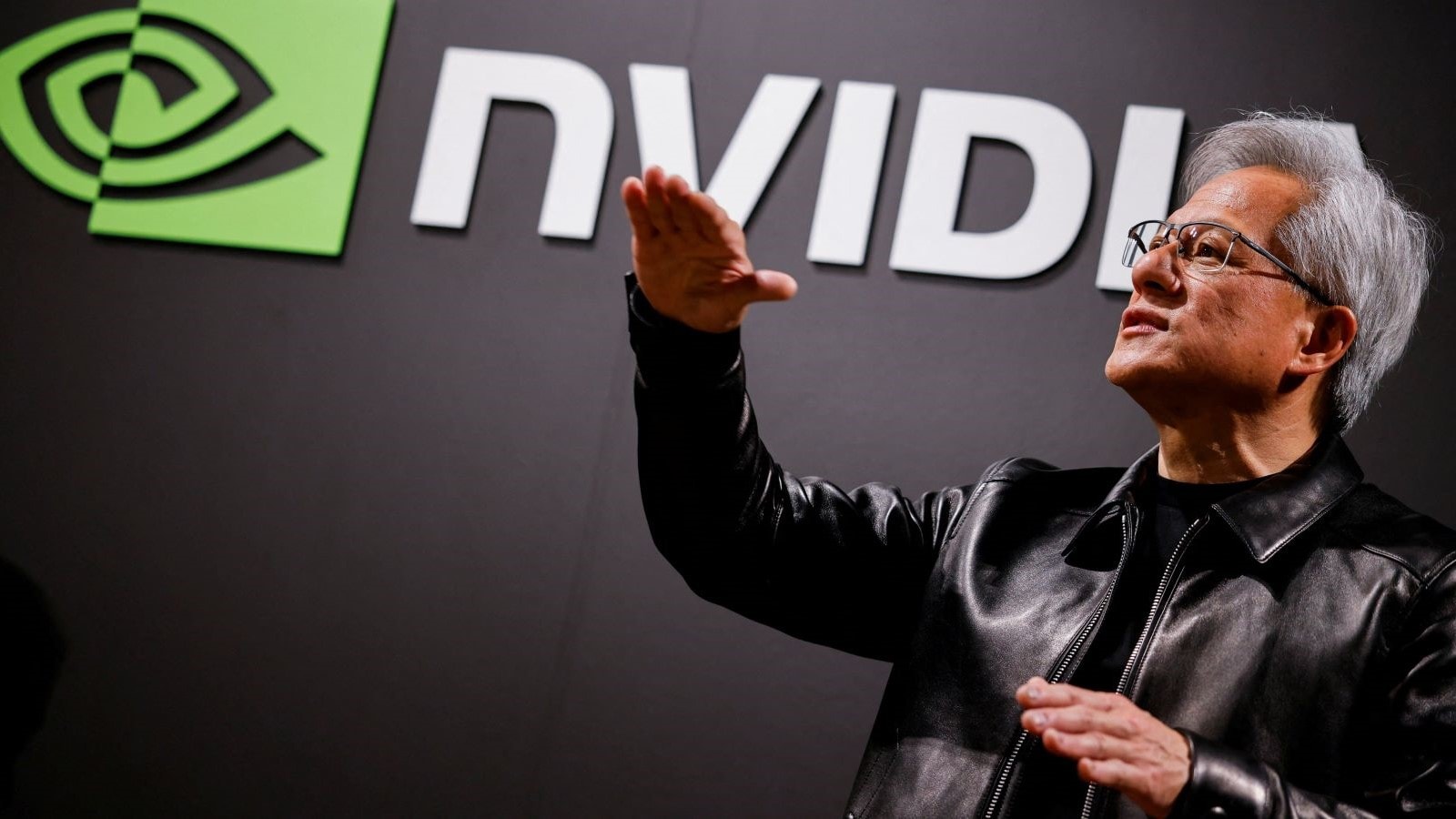
Nvidia chief executive Jensen Huang recently argued that artificial intelligence companies can bypass prescriptive new regulations and still build safely through rigorous internal testing. When the man selling the engines for the machine tells you that traffic laws are optional because the brakes are good, it pays to look under the hood.
The core debate centers on whether Washington and Brussels should legislate artificial intelligence development or leave risk management to the engineering teams coding the models. Huang contends that traditional regulatory frameworks move too slowly for an industry doubling its compute capacity every few months. He points to internal safety protocols, red-teaming exercises, and iterative deployment as sufficient substitutes for statutory oversight. But this perspective ignores a fundamental commercial incentive structure that rewards speed above all else. Don't forget to check out our recent article on this related article.
Silicon Valley operates on a simple premise. Move fast, break things, and deal with the fallout once you have market dominance. For artificial intelligence, breaking things carries a distinct set of externalities. When social media algorithms broke social norms, the damage was measured in polarization and attention fragmentation. When generative models hallucinate dangerous chemical formulas, leak proprietary corporate source code, or automate targeted disinformation campaigns at scale, the stakes scale with the capability.
The semiconductor titan commands the market for high-end accelerators, making Huang one of the most influential voices in the modern technology ecosystem. His stance is not entirely detached from operational reality. Writing rigid compliance mandates for a medium that shifts its capabilities every six months is a fool's errand. Bureaucrats drafting legislation in Washington or Brussels inevitably misunderstand the underlying mathematics, locking in outdated standards while nimble startups bypass them. If you want more about the history here, Engadget provides an informative breakdown.
Yet, treating internal corporate governance as an adequate replacement for public oversight invites disaster. Corporations have a fiduciary duty to maximize shareholder value, not to protect the public commons. When safety costs money, slows down product launches, or cedes market share to a rival, safety compromises. Expecting private labs to voluntarily throttle their own progress out of civic-minded caution defies decades of corporate history.
Consider the history of financial derivatives before the 2008 crash. Wall Street firms argued that internal risk models were far more sophisticated than anything regulators could devise. They insisted that self-regulation preserved innovation while preventing systemic collapse. The models worked until they didn't, and the public absorbed the shock. Artificial intelligence carries a parallel risk profile, where catastrophic failures may be rare, low-probability events with catastrophic, irreversible impacts.
A viable path forward requires separating the technical standards from political bureaucracy. Instead of prescribing specific code limits or licensing models, governments can establish strict liability frameworks and mandatory auditing standards. If a company deploys a model that causes measurable economic or physical harm, the legal penalties must outweigh the commercial upside of the launch. This shifts the burden from predicting every theoretical harm in advance to holding creators accountable for actual failures.
Technical auditing requires independent third-party verification. Just as public companies undergo independent financial audits by certified public accountants, artificial intelligence labs should submit their frontier models to accredited security audits before public release. These auditors do not need to write the code; they need to test it against standardized stress benchmarks for vulnerability, bias, and alignment drift.
Huang is right that prescriptive statutory laws will struggle to keep pace with engineering breakthroughs. He is wrong to assume that corporate self-interest will fill the vacuum. The race for artificial general intelligence is a high-stakes geopolitical contest where the penalty for finishing second is commercial irrelevance. In that environment, ethics become a luxury item discarded at the first sign of competition.
The industry cannot be trusted to police its own ambitions simply because its leaders wear leather jackets and preach optimism. Innovation without guardrails is not freedom; it is an externality machine shifting the cost of failure onto everyone else.