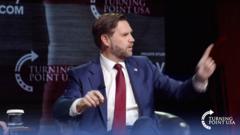
JD Vance went to Pennsylvania expecting a friendly crowd of supporters. He left with the sound of boos ringing in his ears after he decided to take a public swipe at Pope Francis. It was a bold move, or maybe just a reckless one, considering the heavy Catholic presence in the Rust Belt. Religion and politics have always been messy roommates, but Vance’s decision to chide the head of the Catholic Church on American soil felt different. It felt like a gamble that didn't pay off.
The moment happened during a campaign stop where the Vice Presidential candidate was discussing immigration and border policy. Usually, this is red meat for the base. But when Vance pivoted to criticize the Pope's comments regarding the treatment of migrants, the atmosphere shifted. You could feel the air leave the room before the noise started. People didn't just disagree; they felt insulted.
The Pennsylvania Backlash Nobody Expected
Pennsylvania isn't just any state. It's a place where "Catholic" isn't just a box you check on a census; it's an identity tied to labor, family, and history. When Vance started lecturing the Pope on what constitutes "Christian charity," he stepped on a landmine. The heckling started small—a few shouts from the back—but it grew into a sustained chorus of disapproval that forced him to pause.
Vance tried to play it off. He leaned into the microphone and doubled down, suggesting that the Pope’s perspective was disconnected from the reality of American communities. That only made it worse. For many in that audience, the Pope isn't a political figure you debate like a pundit on a Sunday morning talk show. He's the Vicar of Christ. Vance’s attempt to "correct" him came across as arrogant to the very voters he needs to win over.
Why Attacking Religious Leaders is a Dangerous Game
Politicians usually try to wrap themselves in the mantle of faith. They want the endorsement of the pulpit. Vance did the opposite. By positioning himself as a better arbiter of morality than the Vatican, he created a friction point that wasn't there before. The Pope has been vocal about the moral obligation to welcome the stranger, a core tenet of the Gospel that often clashes with the "America First" platform.
Usually, Catholic Republicans find a way to dance around these disagreements. They talk about "prudential judgment" or focus on areas where they agree, like abortion or religious liberty. Vance didn't do that. He went for the throat. He argued that the Pope was essentially wrong about the application of faith in the modern world. It’s a risky strategy when you're trying to build a coalition in a swing state.
The Border Policy vs the Pulpit
The heart of the disagreement lies in how one views the migrant crisis. To Vance, it’s a matter of national sovereignty and law. To Francis, it’s a humanitarian crisis of the highest order. When the Pope calls the exclusion of migrants "sinful," he isn't talking about policy papers. He's talking about the soul.
Vance’s rebuttal centered on the idea that a nation's first duty is to its own citizens. He's not the first person to say that. But saying it as a direct "correction" to the Pope in a room full of Catholics is a unique kind of political theater. The hecklers weren't necessarily "liberal plants." Many were lifelong Republicans who simply don't think a politician has the standing to chide their spiritual leader.
Faith in the Rust Belt
You can't understand the intensity of this reaction without looking at the demographics. Pennsylvania has one of the highest percentages of Catholics in the country. These aren't just "cultural" Catholics. These are people whose lives revolve around the parish. They see the Church as an institution that has stood for 2,000 years, while political parties change their platforms every four.
When a candidate like Vance—a convert to Catholicism himself—enters that space and starts throwing stones at the Vatican, it looks like a lack of humility. Humility is a big deal in these communities. People expect their leaders to be strong, sure, but they also expect them to respect the hierarchy of the faith they claim to share.
A Pattern of Confrontation
This wasn't an isolated slip of the tongue. Vance has shown a willingness to engage in high-stakes confrontations with anyone he perceives as an obstacle to his movement’s goals. But there’s a difference between taking on a member of the press and taking on a global religious leader. The press doesn't have a billion followers who view them as the voice of God on earth.
The heckling was a physical manifestation of a growing divide. There are "MAGA Catholics" who are perfectly happy to prioritize their political identity over the Pope’s teachings. Then there are the "Traditional Catholics" who might be conservative but find the disrespect toward the Holy Father to be a bridge too far. Vance is trying to navigate that split, and in Pennsylvania, he hit a wall.
The Impact on the Catholic Vote
For decades, the Catholic vote has been the "holy grail" of American politics. It’s the ultimate swing demographic. They went for Reagan, then Clinton, then Bush, then Obama. They are the bellwether. If you lose them by even a few percentage points because you couldn't keep your criticisms of the Pope to yourself, you might lose the state.
Vance’s team likely thought this would show strength. They thought it would signal that he isn't afraid of anyone, not even the Vatican. Instead, it signaled a disconnect. It showed a candidate who might be more interested in winning a segment of the base than in building the broad majority needed to actually win an election.
What This Means for the Rest of the Campaign
Expect the opposition to lean into this. You'll see ads. You'll hear about it from the pulpit in some of the more liberal parishes. But more importantly, you'll see a shift in how Vance is received in other Catholic-heavy areas like Michigan and Wisconsin. He's created a "litmus test" that didn't need to exist.
Vance has to decide if he's a political leader or a theological one. If he keeps trying to be both, he’s going to keep running into people who think he’s unqualified for the latter. The heckling in Pennsylvania was a warning shot. Whether he listens to it or not will determine how the next few months go in the "Blue Wall" states.
If you're watching this play out, pay attention to the local parish halls. That's where the real fallout happens. It's not about the headlines; it's about the conversations over coffee after Sunday Mass. If those conversations turn against Vance, no amount of polished campaigning will fix the damage.
Watch the polling in the Scranton and Erie areas over the next two weeks. If there's a dip among churchgoing voters, you'll know exactly why. Politics is about addition, not subtraction. Rebuking the Pope is a very fast way to subtract a lot of people from your column.
Keep an eye on the upcoming Catholic charity events where Vance is scheduled to speak. If the reception remains cold, he’ll have to pivot fast or risk losing the state entirely. The smartest move right now would be a quiet meeting with a few local bishops to smooth things over, but that doesn't seem to be his style. He prefers the fight. The problem is, some fights aren't worth winning.