The wellness industry has successfully convinced millions of people that stress can be washed out of their hair follicles for $200 an hour.
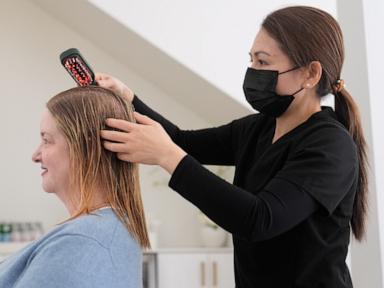
Walk into any major city’s trendy commercial district and you will find a "Japanese head spa." The marketing copy is identical across the board. They promise deep detoxification of the scalp, intense microcirculation boosts, and the magical eradication of stress through targeted pressure point manipulation. They show you a horrifying, highly magnified before-and-after video of your clogged hair follicles, use a specialized waterfall hoop to drench your skull, and send you on your way smelling like rosemary and eucalyptus.
It is a masterful illusion.
As someone who has spent over a decade auditing wellness trends, analyzing cosmetic formulations, and consulting with clinical trichologists, I can tell you exactly what you are actually buying: a hyper-inflated shampoo session. The sudden obsession with Japanese scalp massages in the West is not a breakthrough in dermatological science. It is a triumph of experiential packaging over biological reality.
We need to stop pretending these elaborate rinses are medical-grade scalp therapy. They are high-end sensory distractions.
The Myth of the "Suffocating" Follicle
The entire economic engine of the head spa relies on a single weapon: the scalp microscope.
Before your treatment begins, a technician will invariably press a digital lens against your part line. On the screen, you will see a landscape of sebum pools, dead skin flakes, and what looks like a toxic wasteland. The technician will sigh, shake their head, and declare that your hair follicles are "suffocating." They claim this buildup causes everything from premature graying to chronic hair thinning.
This is a fundamental misunderstanding of basic human physiology.
Your scalp is supposed to have sebum. Sebum is a sophisticated lipid matrix that forms a protective barrier against pathogenic microbes and environmental moisture loss. It is not concrete blocking a pipe; it is a dynamic, self-regulating ecosystem.
Unless you suffer from a clinical dermatological condition like severe seborrheic dermatitis or psoriasis—which a salon worker is legally and medically unqualified to treat anyway—your follicles are doing just fine. The skin cells on your head naturally desquamate (shed) every 28 days. Your daily or bi-weekly shampoo is more than capable of managing this turnover.
When a head spa technician uses an aggressive salicylic or glycolic acid peel on your scalp, followed by vigorous physical scrubbing, they are not unlocking some hidden growth potential. They are stripping your acid mantle. Imagine a scenario where you stripped the skin on your face with a heavy chemical peel and a stiff brush every single week. Your skin barrier would crack, inflame, and overproduce oil to compensate for the trauma. Yet, when a salon does it to your head under a cloud of lavender steam, we call it "detoxification."
The Scalp Waterfall is Pure Theater
Let us talk about the centerpiece of the modern head spa: the halo water ring. This device arches over your forehead, cascading a continuous, gentle stream of warm water across your hairline. It dominates social media feeds. It looks incredibly peaceful.
It also accomplishes absolutely nothing for your health.
The human skin barrier is remarkably waterproof. If it were not, you would bloat like a sponge every time you stepped into a swimming pool. Running warm water over the top of your head for twenty minutes does not hydrate the deeper layers of the dermis. In fact, prolonged exposure to water causes the hair shaft to swell and forces the cuticle open. This state, known as hygral fatigue, actually weakens the structural integrity of the hair over time, making it more prone to breakage and protein loss.
Furthermore, the obsession with "increasing blood flow to stimulate hair growth" via massage is based on a massive distortion of medical literature.
True, minoxidil—the gold standard for hair regrowth—functions as a vasodilator. But it achieves this through a specific intracellular chemical pathway, opening ATP-sensitive potassium channels. Mechanical rubbing does not replicate this mechanism. While a manual massage does cause brief localized vasodilation (which is why your skin turns pink), the effect dissipates within minutes after the hands leave your head.
To actually alter hair growth cycles through mechanical stimulation, you would need to apply precise, highly uncomfortable levels of mechanical stress for hours every single day, not a gentle, relaxing rubdown once a month.
The Cost of the Illusion
People frequently ask if there is any real harm in treating oneself to a head spa. If you have the disposable income, why not indulge?
The answer lies in the displacement of genuine care. I have seen clients spend thousands of dollars on monthly head spa packages to combat hair thinning, only to watch their hairline continue to recede. They chose a luxury aesthetic ritual over a trip to a board-certified dermatologist.
Hair loss is almost always driven by systemic, internal factors:
- Androgenetic alopecia (hormonal sensitivity to DHT)
- Telogen effluvium (triggered by severe psychological stress or nutritional deficiencies)
- Autoimmune responses (alopecia areata)
- Thyroid dysregulation
A scalp massage cannot fix an iron deficiency. A steam halo cannot block dihydrotestosterone. By framing hair thinning as a "dirty scalp" issue that can be washed away, head spas exploit the anxieties of consumers while delaying the clinical interventions that actually work, such as low-level laser therapy, topical finasteride, or spironolactone.
If you enjoy the sensation of someone washing your hair, go to a head spa. Acknowledge it as an expensive form of entertainment. But do not mistake it for healthcare, and do not let a salon worker diagnose your skin conditions with a glorified webcam.
If you want real scalp health, fire your head spa specialist and buy a $15 bottle of ketoconazole shampoo from the pharmacy. Wash your hair regularly with lukewarm water. See a doctor if your hair is falling out. Keep the theater out of your medicine cabinet.