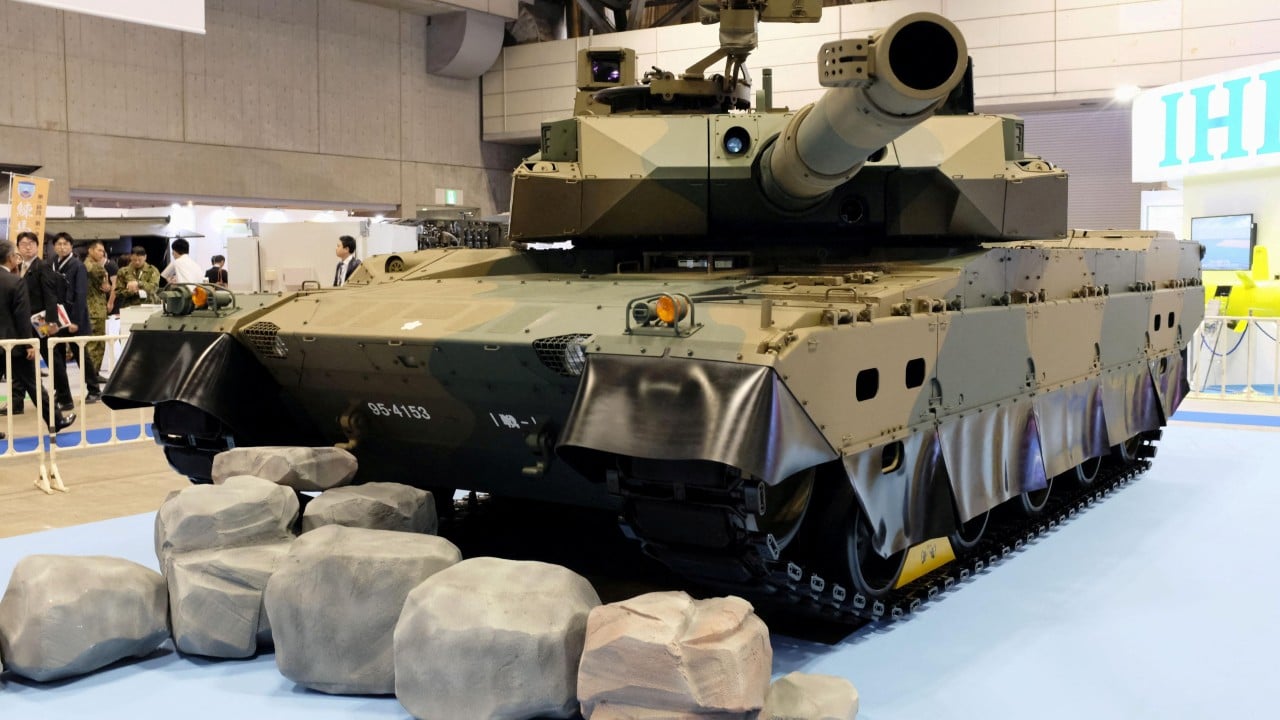
The era of Japan as a "silent arsenal" is officially over. On April 21, 2026, the administration of Prime Minister Sanae Takaichi dismantled the final remnants of a decades-old self-imposed embargo, scrapping the restrictive "five categories" that limited exports to non-lethal equipment. For the first time since the end of World War II, Tokyo can legally market lethal hardware—destroyers, missile batteries, and fighter jets—to a list of 17 strategic partners. This is not merely a policy tweak; it is a desperate attempt to rescue a domestic defense industry that has been cannibalizing itself for thirty years.
But the promised "high-end defense boom" is hitting a wall of industrial reality that policy papers cannot fix. While the regulatory gates are open, the factories behind them are not ready. Japan is discovering that being capable of building world-class hardware is not the same as being capable of selling it in a cutthroat global market dominated by the United States and a surging South Korea.
The Mirage of Immediate Growth
Policymakers in Tokyo talk about "Equipment Alliances" as if they are ready-made revenue streams. The logic is simple: by selling to partners like Australia, India, and the Philippines, Japan can achieve economies of scale, lowering the exorbitant per-unit costs of the equipment it buys for its own Self-Defense Forces.
The reality is more sobering. Japan’s defense industrial base is a collection of "boutique" operations. Mitsubishi Heavy Industries (MHI) and Kawasaki Heavy Industries (KHI) have spent half a century building highly specialized, gold-plated equipment designed for one customer: the Japanese government. These systems are often over-engineered for the specific geography of the Japanese archipelago and, more importantly, they are staggering in price.
Take the Global Combat Air Programme (GCAP). This sixth-generation fighter project with the UK and Italy is the primary driver behind the new export rules. Without the ability to sell the finished jet to third-party countries, Japan would have been a junior partner, unable to justify the development costs. Even with the rules changed, Japan enters a market where the F-35 already holds a near-monopoly among allies. To compete, Japanese firms must transition from a "cost-plus" mindset—where the government covers all R&D and guarantees a profit—to a competitive bidding environment where they have zero experience.
The Production Capacity Crisis
The most significant hurdle isn't legal; it's physical. Japan lacks the floor space and the man-hours to become a global arms hub. For two decades, more than 100 suppliers have quietly exited the defense sector because they couldn't make a profit. The companies that remain have integrated defense into much larger civilian conglomerates.
At a typical Japanese shipyard or aerospace plant, defense work often accounts for less than 10 percent of total revenue. When a new order comes in, companies frequently move workers from the civilian side to the military side temporarily. This "accordion" workforce model works for low-volume domestic orders, but it fails the moment a foreign government asks for 50 tanks or three frigates on a strict delivery schedule.
The Workforce Deficit
- Aging Engineers: The core expertise for high-end systems is held by a demographic nearing retirement.
- Zero Recruitment Surge: The 2023 Act on Enhancing Defense Production provided subsidies for technology, but it did nothing to address the shortage of skilled labor.
- Facility Constraints: Most Japanese defense lines are not set up for mass production. They are artisanal workshops by global standards.
The Shadow of the United States
Japan remains tethered to American technology through the Foreign Military Sales (FMS) program. Many of Japan's most "advanced" systems are built under license from US firms like Lockheed Martin or Raytheon. The December 2023 "reverse export" of Patriot missiles back to the US was a landmark moment, but it also highlighted a trap.
Japan can now ship licensed parts back to the licensor, but it still cannot easily sell those same systems to a third country without Washington’s explicit—and often elusive—permission. The US International Traffic in Arms Regulations (ITAR) act as a digital and physical fence. If a Japanese-made missile contains even a handful of US-designed sensors, the State Department effectively holds a veto over the sale. This makes Japan a reliable "sub-contractor" for the US military-industrial complex rather than a true sovereign competitor.
The Australian Test Case
The most watched deal in the region is the potential sale of 11 modified Mogami-class frigates to Australia. This is a "must-win" for Tokyo. If MHI can secure this contract and successfully manage a hybrid build—where some ships are made in Nagasaki and others in Australia—it will prove that Japan can handle the complexity of international defense exports.
However, the Mogami is competing against seasoned exporters from Spain and Germany. These competitors have spent decades refining their export versions, stripping out unnecessary proprietary "gold-plating" to meet foreign budgets. Japan is trying to learn these lessons in real-time. The risk is that Japan wins the contract on political merit but fails on industrial execution, leading to the same cost overruns and delays that have plagued its domestic procurement for years.
The Security Paradox
Tokyo is banking on the idea that "transferring equipment contributes to regional stability." There is a calculated risk here. By arming Southeast Asian nations, Japan is moving from a provider of "Coast Guard" diplomacy to a provider of "Lethal Deterrence."
The 2026 revisions include a "special circumstances" clause that allows lethal exports to countries at war if it serves Japan’s national security. This is a thin veil for supporting allies in active hotspots. While this aligns Japan more closely with US strategic goals, it also makes Japanese defense firms a target for corporate espionage and state-sponsored cyberattacks on a scale they have never encountered. The security of the supply chain—from the smallest bolt-maker in Osaka to the MHI headquarters—is now a national vulnerability.
The government is considering a "Government-Owned, Contractor-Operated" (GOCO) model to subsidize the expansion of factories. This is an admission that the private sector is too terrified of the risks to invest its own capital. If the taxpayer is the one buying the machines and the buildings, the "boom" isn't a market success—it's a state-funded life support system for an industry that forgot how to compete.
Japan’s defense industry is finally being pushed into the sunlight. It is discovering that the "pacifist" rules were not just a moral choice, but a comfortable shield that hid a deep lack of commercial competitiveness. The gates are open, but the world is not waiting with open wallets. It is waiting with a stopwatch and a calculator.
Buy the frigate. Fix the factory. Or go back to being a silent arsenal.


