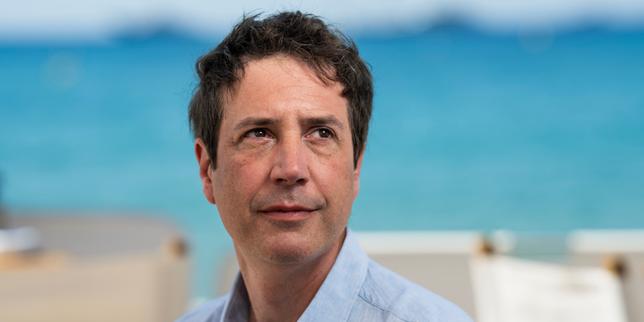
Late-night comedy rarely moves the political needle anymore, yet NBC’s Studio 8H just pulled off a booking that has Washington and Austin talking in equal measure. James Talarico, fresh off his upset victory as the senator-elect of Texas, walked straight onto the Saturday Night Live stage during the cold open to deliver a direct message to Donald Trump.
It wasn't a standard political cameo. Usually, politicians show up on SNL to read a stiff cue card, laugh at a mild impression of themselves, and look relatable for ninety seconds before the cast screams "Live from New York." Talarico didn't play that game. Instead, he used one of the biggest pop-culture megaphones in the country to frame his Texas win as a warning shot to the White House ahead of the upcoming congressional term.
What Actually Happened in the SNL Cold Open
If you missed the broadcast, the sketch opened on a familiar satirical setup mocking the post-election scramble in Washington. Cast members were trading barbs about shifting party dynamics when the doors opened and James Talarico stepped onto the floor—not as a punchline, but as himself.
The studio audience erupted for a solid ten seconds before he could even get a word out. That reaction alone told you something about how quickly a former Texas state representative and Presbyterian seminarian has crossed over from regional political curiosity to national figure.
Once the applause died down, Talarico looked straight down the barrel of the camera and addressed Donald Trump directly. He didn't rely on cheap insults or scripted slapstick. Instead, he leaned into the exact populist, plain-spoken cadence that carried him across Texas during his Senate campaign, reminding Trump that the political map in the Lone Star State isn't fixed in concrete and that voters in Texas expect results rather than endless partisan theater.
Why SNL Chose James Talarico Over Bigger National Names
You might wonder why Lorne Michaels and the SNL writers tapped a newly minted senator-elect from Texas instead of a veteran Senate leader or a splashier media personality. The answer comes down to cultural momentum and timing.
For years, Democrats have treated Texas like a mirage—always five minutes away from turning purple, yet reliably red every November. Talarico broke that streak by running a campaign that baffled traditional consultants on both sides. He didn't sound like a cable news pundit, and he didn't run away from faith or working-class economic grievances. When he actually pulled off the win to become senator-elect of Texas, it instantly became the biggest political upset of the cycle.
SNL thrives on capturing the exact person everyone is Googling at Sunday brunch. By Sunday morning, clips of Talarico's cold open message to Trump were circulating across TikTok, X, and Instagram faster than any political ad buy could ever achieve.
The Long History of Politicians Using Studio 8H
Talarico steps into a very specific tradition, though he played it differently than most of his predecessors. Consider how past political appearances on the show have landed:
- Barack Obama (2007): Appeared at a Halloween party sketch wearing a mask of himself, using self-deprecating humor during a tight primary.
- Sarah Palin (2008): Stood next to Tina Fey during Weekend Update, a moment that drew massive ratings even as Fey's impression defined Palin's public image.
- Donald Trump (2015): Hosted an entire episode during his first presidential run, a decision that drew intense scrutiny over equal-time rules and media normalization.
- Hillary Clinton (2015): Played a bartender named "Val" opposite Kate McKinnon's version of Clinton to soften her public persona.
Notice the pattern? Almost every one of those appearances was designed to make a polarizing figure seem more likable through self-mockery. Talarico didn't need to soften his image because voters had just elected him on the strength of his authenticity. His appearance wasn't an apology tour or a rebrand. It was a victory lap with a sharp political edge.
The Real Message Behind Talarico's Words to Trump
Strip away the studio lights and the laugh track, and Talarico's appearance signals a major strategic shift in how Democrats plan to confront Trump over the next two years.
For a decade, opposition messaging toward Trump fell into two predictable buckets: moral outrage from establishment figures or wonky policy lectures that glazed people's eyes over. Neither approach worked particularly well in places like suburban Houston, the Rio Grande Valley, or rural central Texas.
Talarico represents a third lane. As a former middle school teacher from Round Rock who studied at Austin Presbyterian Theological Seminary, he talks about healthcare costs, public schools, and corporate power using moral and everyday language rather than D.C. jargon. When he looked into the camera on SNL and delivered his message to Trump, he wasn't auditioning for MSNBC. He was demonstrating to national Democrats how you talk to Trump without sounding panicked or elitist.
Honestly, it was a smart play. Trump understands television ratings and cultural dominance better than almost any modern politician. A dry press release from a senator-elect in Austin wouldn't even register on Trump's radar. A viral cold open on Saturday Night Live guarantees he hears about it before Monday morning.
Did the Sketch Actually Land With Viewers
Comedy is subjective, and political sketches on SNL always split the room. Die-hard supporters of the president immediately blasted the segment online as proof that NBC remains in the tank for Democrats, pointing out that the show rarely gives Republican newcomers an unvarnished platform to lecture Democratic presidents. That criticism isn't entirely baseless—late-night television has leaned heavily left for years, and conservatives have plenty of ammunition when arguing that network comedy shows pick sides.
At the same time, even skeptical television critics noted that Talarico's timing was surprisingly natural. Most politicians freeze up on live television because they're terrified of flubbing a line in front of millions of viewers. Talarico looked like a guy who had spent years commanding a classroom of eighth graders and a crowded Texas legislative floor. He hit his beats, paused cleanly for the audience reaction, and avoided the wooden stiffness that ruined plenty of celebrity cameos before him.
What People Get Wrong About Political Cameos
Here's the mistake most political analysts make when evaluating an SNL spot like this: they assume the goal is to change the minds of angry partisan commenters on social media. It isn't.
Nobody who already despises Talarico is going to watch a five-minute comedy sketch and suddenly change their voter registration. And nobody who already supports him needed a late-night appearance to validate their vote. The real audience is the massive middle of casual, low-information voters who don't watch cable news, don't read political newsletters, and barely pay attention to Senate races until something pops up in their social feed on a Sunday morning.
For millions of Americans outside Texas, Saturday night was the very first time they ever heard James Talarico's voice or saw his face. In sixty seconds, he introduced himself to the entire country on his own terms before his political opponents could spend millions of dollars defining him through attack ads.
How This Sets Up the Next Battle in Washington
When Talarico officially takes the oath of office in January, he won't arrive in Washington as an anonymous freshman senator waiting quietly in the back row for committee assignments. His SNL cold open guaranteed that every camera on Capitol Hill will follow him during his first week on the job.
That kind of instant national spotlight cuts both ways. On one hand, it gives Texas's new senator-elect enormous leverage when negotiating legislation, raising money, and shaping national messaging for his party. On the other hand, it paints a massive target on his back. Trump doesn't ignore people who call him out on national television, and conservative media outlets will scrutinize every vote, floor speech, and social media post Talarico makes from day one.
If you want to track how this plays out over the coming months, watch three specific indicators rather than getting distracted by daily social media noise:
- Committee assignments in January: See whether Senate leadership rewards Talarico's viral momentum with high-visibility seats on judiciary, finance, or education panels.
- Trump's direct response: Pay attention to whether Trump counter-attacks Talarico by name on Truth Social or at upcoming rallies—doing so only elevates Talarico's national profile further.
- Crossover messaging in Texas: Watch how Talarico balances his sudden national celebrity with the local, kitchen-table issues that actually won him Texas in the first place.
If he loses touch with Austin and San Antonio while chasing New York and Washington cameras, his rise will stall just as fast as it started. If he keeps that exact same grounded voice while stepping onto bigger stages, Saturday night's cold open will look like the opening chapter of a much bigger political story.