Most coverage of Italy's legislative move on antisemitism falls into one of two predictable traps. Either it frames the law as a historic triumph that will finally curb anti-Jewish hatred, or it sounds the alarm that Parliament has just criminalized legitimate criticism of the Israeli government. Both narratives miss the legal reality of what Rome actually passed and how European speech jurisprudence functions in practice.
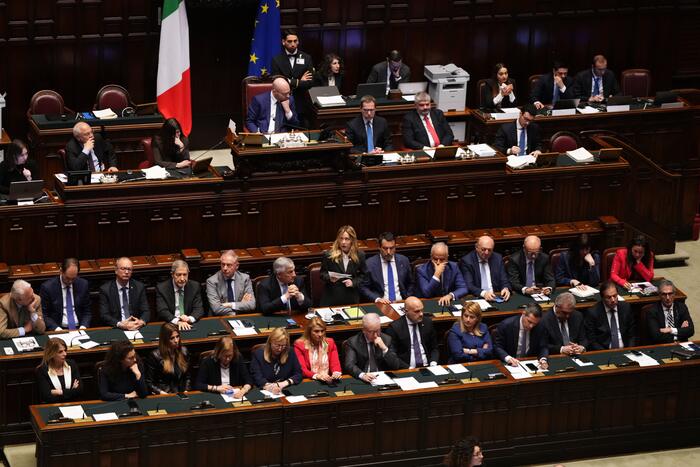
When Italy's Senate and Chamber of Deputies moved to adopt a formal statutory framework anchored to the International Holocaust Remembrance Alliance (IHRA) working definition of antisemitism, headlines immediately framed the debate around a binary clash between combating hate and protecting political dissent. That framing makes for tidy news copy, yet it obscures the far messier constitutional, legal, and political mechanics at work.
The Myth of the Instant Speech Ban
Critics of the bill—including several opposition lawmakers from the Democratic Party (PD) and the Five Star Movement (M5S), alongside civil liberties advocates—argued that embedding the IHRA definition into national law would automatically chill campus protests, boycott campaigns, and sharp critiques of Israeli military policy. According to these critics, equating certain forms of anti-Zionism with antisemitism hands prosecutors a blunt instrument to silence political opposition.
On the surface, that fear seems plausible. The IHRA working definition includes eleven illustrative examples, several of which touch directly on the State of Israel—such as denying the Jewish people their right to self-determination, applying double standards not expected of any other democratic nation, or drawing comparisons between contemporary Israeli policy and that of the Nazis.
Yet legal scholars who examine Italian constitutional law point out a critical distinction that casual observers overlook. Italy already possesses strict hate speech and anti-discrimination statutes—most notably the 1975 Reale Law and the 1993 Mancino Law—which penalize incitement to discrimination and violence on racial, ethnic, national, or religious grounds. At the same time, Article 21 of the Italian Constitution provides robust protection for freedom of expression, and Italian courts have consistently required a concrete threshold of incitement to hatred or violence before restricting political speech.
Adopting a working definition as a policy, educational, and monitoring benchmark does not rewrite the Italian Penal Code overnight. According to legal analysts tracking European implementations of the IHRA text, the definition itself is explicitly non-legally binding in its original 2016 formulation. When parliaments incorporate it into national frameworks, its primary operational effect is administrative: guiding police training, standardizing data collection on hate crimes, and setting criteria for public funding or institutional oversight. Treating an administrative definition as an automatic criminal speech code misreads how Italian statutory enforcement actually operates.
The Illusion of Legislative Protection
On the other side of the aisle, supporters of the measure—led by Prime Minister Giorgia Meloni's Brothers of Italy (FdI) and coalition partners—presented the legislation as an essential shield for Italian Jewish communities facing a documented surge in antisemitic incidents since October 2023. The Union of Italian Jewish Communities (UCEI) and the Milan-based Contemporary Jewish Documentation Center (CDEC) have repeatedly highlighted sharp increases in online harassment, vandalism, and physical intimidation.
Here lies the second major misconception: the belief that passing a definitional law meaningfully deters street-level or digital antisemitism.
I have watched European governments pass dozens of resolutions, action plans, and definitional frameworks over the past decade, only to watch antisemitic incident reports climb year after year. Laws do not patrol synagogues, moderate encrypted messaging apps, or alter the social dynamics driving radicalization. When lawmakers celebrate a definitional vote as a decisive victory against hatred, they often substitute symbolic consensus for the harder, less glamorous work of consistent prosecution under existing statutes, improved digital platform accountability, and sustained civic education.
Worse, turning a consensus monitoring tool into a partisan legislative battleground can backfire. As Kenneth Stern, the lead drafter of the original IHRA working definition, has repeatedly warned in public testimony and essays, the text was designed as a data-collection tool for European monitors—not as a speech code to adjudicate campus disputes or legislative loyalty tests. When politicians weaponize the definition to score points against domestic rivals, they erode the broad cross-party consensus that makes minority protection durable in the first place.
What People Actually Get Wrong About the IHRA Debate
If you look closely at public questions surrounding Italy's vote, three recurring assumptions distort the discussion:
- "Does the law make criticizing the Israeli government illegal?" No. Under both the text of the IHRA definition—which explicitly states that criticism of Israel similar to that leveled against any other country cannot be regarded as antisemitic—and Article 21 of the Italian Constitution, harsh criticism of Israeli policies, leadership, or military actions remains lawful political expression. The gray zone emerges only when rhetoric crosses into racialized tropes, collective blame of Jewish citizens, or explicit incitement.
- "Why did the debate become so polarized in Rome?" Because the vote became a proxy war over domestic Italian politics and foreign policy alignment. Center-right coalition parties used the bill to underscore their pro-Israel credentials and fracture the center-left opposition, while segments of the opposition split between lawmakers sympathetic to Jewish community security concerns and factions aligned with pro-Palestinian protest movements.
- "Does Italy's approach differ from the rest of Europe?" Not fundamentally. Over 30 countries—including Germany, the United Kingdom, France, and Austria—have endorsed or adopted the IHRA definition in varying administrative capacities. Italy's move brings its statutory framework closer in line with European Union guidelines established under the EU Strategy on Combating Antisemitism and Fostering Jewish Life (2021–2030), which recommends the definition as a practical reference point for member states.
The Real Tension Nobody Wants to Own
Stripped of partisan spin, Italy's antisemitism law exposes a genuine, unresolved tension in modern liberal democracies: how to draw a bright legal line between protected anti-nationalist or anti-state political speech and unlawful harassment targeting an ethno-religious minority.
Supporters of the law must confront a legitimate concern: when administrative guidelines tied to the IHRA examples are applied by university administrators, municipal councils, or grant committees rather than judges, risk-averse bureaucrats frequently over-comply. They cancel events or withhold funding not because a court found incitement, but because no institution wants to be accused of tolerating hate. That chilling effect is indirect and administrative, not criminal—which makes it harder to challenge in court and easier for proponents of the law to dismiss.
Conversely, opponents of the law must confront an equally uncomfortable reality: contemporary antisemitism rarely announces itself using 1930s racial vocabulary. According to monitoring reports from CDEC and the European Union Agency for Fundamental Rights (FRA), modern anti-Jewish hostility frequently travels through coded political language, conspiracy theories about global control, and the holding of local Jewish institutions collectively responsible for events in the Middle East. Pretending that hate speech enforcement can ignore how political rhetoric mutates into targeted intimidation leaves minority communities exposed.
Measuring Impact Beyond the Headlines
If observers want to know whether Italy's law actually changes anything over the next two years, watching parliamentary speeches will tell them nothing. Three concrete indicators will determine its real-world effect:
- Prosecutorial conversion rates: Under existing Italian hate-crime statutes, hundreds of reported incidents never reach a courtroom. Whether police and prosecutors use clearer definitional guidance to build stronger evidentiary files—or whether reports continue to stall—will show if the law has teeth.
- Administrative overreach on campuses: Watching whether Italian universities use the framework to restrict academic panels or student protests, and how administrative courts rule when those decisions are challenged, will reveal whether Article 21 speech protections hold firm under institutional pressure.
- Cross-party durability: Minority protections survive government transitions only when they command broad institutional legitimacy. If the law remains viewed as a partisan wedge rather than a shared civic standard, its practical authority will weaken the moment Rome's political coalition shifts.
Italy's vote neither extinguished free debate on the Middle East nor solved the rise in anti-Jewish hostility. It simply moved an unresolved European argument from the streets and universities into the administrative machinery of the Italian state—where the real test of constitutional balance is only just beginning.