Salt crusted the windshield of the bridge wing, stinging the eyes of a second mate who had not seen a proper night's sleep in six days. Below him, the vast, bruised expanse of the Gulf of Oman rose and fell in heavy, greasy swells. The container vessel beneath his boots—a floating monolith carrying four thousand steel boxes of consumer goods, spare parts, and raw materials bound for a dozen different ports—was a sitting duck.
He didn't need the radar screen's jagged, hostile blips to tell him that. He could feel it in the air. A static charge of tension that had been building for months, thickening with every mile the ship clawed through the narrow bottleneck of the Middle East.
Then came the flash.
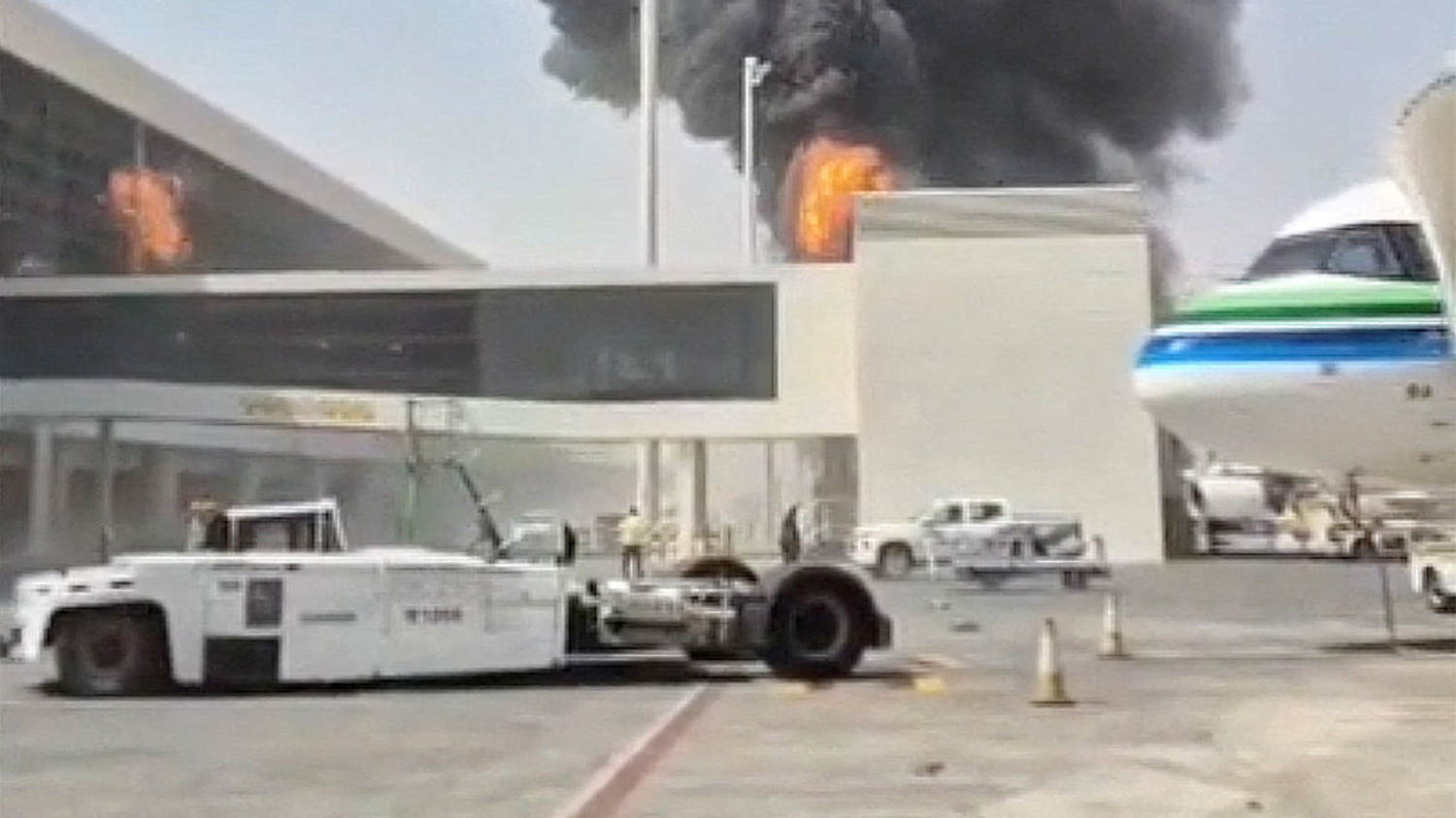
It was not a distant star. It was a searing, magnesium-white glare that tore across the horizon, followed a heartbeat later by a concussive thud that rattled the ship's massive diesel heart. A United States fighter jet, banking hard and fast through the darkening sky, had just delivered a strike against a rogue cargo vessel suspected of ferrying contraband weaponry to fuel a widening proxy war.
Silence rushed back in, heavier than before. The cargo ship limped on, trailing a plume of thick, dark smoke, while thousands of miles away, an ordinary shopper browsing an aisle in a suburban supermarket remained blissfully unaware that the price of their morning coffee, their next smartphone, and their heating oil had just spiked in the span of a single second.
This is what a blockade looks like in the twenty-first century. Not a neat line of gray steel warships flying flags of empire, but a slow, strangulating pressure applied to the world's most vulnerable arteries.
The Anatomy of a Bottleneck
To understand why a single jet strike in the Gulf of Oman matters to someone sitting in a quiet kitchen in Ohio or a crowded cafe in Berlin, you have to look at a map not as a collection of countries, but as a circulatory system.
The Strait of Hormuz and the adjacent Gulf of Oman form the jugular vein of global energy and trade. Through these narrow corridors pours a staggering percentage of the petroleum that keeps industrial nations humming. When geopolitical friction turns into active interdiction—when Iran tightens its grip on maritime traffic and major powers like the United States respond with kinetic force—the entire global supply chain experiences an immediate, violent spasm.
Let us be clear about the mechanics of this friction. As maritime trade analysts and naval intelligence reports have documented, the modern blockade is rarely total from day one. It begins with harassment. It starts with speedboats buzzing commercial tankers, radio warnings broadcast on international distress frequencies, and the quiet, terrifying mining of choke points.
(Note: When we speak of a blockade tightening, we are describing a progressive escalation of control, where transit rights are superseded by coercion, forcing shipping companies to make an agonizing choice: sail into a potential war zone or anchor and bleed money.)
Imagine the captain of a supertanker sitting in a leather chair that smells faintly of stale coffee and fear. On his desk lies a corporate directive from London: Proceed with caution. On his radar lies a warning from the Iranian Revolutionary Guard Corps: Alter course or face consequences. And hovering above, unseen but felt, are the surveillance pods of American carrier strike groups monitoring every digital whisper in the ether.
The captain is not a politician. He is a mariner. His primary concern is whether the steel hull beneath him will hold if a drone strikes the bridge.
The Invisible Tax on Everyday Life
We live in an age of astonishing illusion. We touch a screen, and a package appears on our doorstep three days later. We flip a switch, and the lights come on. We turn a key, and the engine roars to life.
We treat these miracles as laws of nature. They are not. They are fragile agreements maintained by millions of people working across thousands of miles of open ocean.
When a cargo ship is struck in the Gulf of Oman, or when shipping lanes are forced to close due to escalating conflict, the illusion shatters. Insurance rates for vessels navigating the region skyrocket overnight—sometimes doubling or tripling in a matter of hours. Shipowners refuse to enter the danger zone. Routes must be recalculated, adding thousands of miles and weeks of travel time around the southern tip of Africa instead of through the Suez Canal.
Every extra mile burns bunker fuel. Every extra day ties up capital. Every disrupted schedule creates a domino effect that reaches deep into the logistics chain.
Consider the manufacturer in Stuttgart waiting for microchips, or the farmer in Iowa waiting for specialized fertilizer components. They do not see the fighter jet. They do not hear the explosion off the coast of Oman. What they see is an email from a supplier: Due to unforeseen maritime disruptions, delivery is delayed indefinitely, and prices are adjusted upward by thirty percent.
That is the hidden cost of the blockade. It is paid in quiet boardrooms, in inflation reports, and in the slow, creeping anxiety of small business owners who watch their profit margins evaporate because a choke point half a world away has been squeezed.
The Calculus of Force
Why did the jet strike happen? To answer that requires stepping into the cold, calculation-heavy world of military strategy.
When a nation like Iran attempts to assert dominance over a crucial maritime corridor—whether through direct threats, proxy seizures, or the clandestine movement of advanced weaponry aboard disguised cargo vessels—global superpowers face a terrible dilemma. Do nothing, and the blockade becomes normalized, handing a hostile actor the power to turn off the economic spigot of the world at will. Strike too hard, and you risk sliding down the slippery slope of regional escalation into a full-scale conflagration.
The strike in the Gulf of Oman was a surgical message written in fire. It was an assertion that international waters cannot be sealed off without a price. But military force is a blunt instrument when applied to complex economic systems. You can destroy a smuggling vessel, but you cannot easily bomb away the underlying tensions that birthed the conflict in the first place.
Every action generates an equal and opposite reaction in the theater of geopolitics. A strike deters, but it also provokes. It hardens positions. It makes the next cargo ship that attempts the passage an even more tempting target for retaliation.
The Human Cost Behind the Statistics
It is easy to talk about Brent crude futures, freight index numbers, and geopolitical leverage as if they were abstract chess pieces moving across a frictionless board.
They are not.
Behind every detained tanker is a crew of twenty or thirty men—Filipinos, Indians, Ukrainians, Britons—who left their families behind to earn a living on the water. They are fathers who miss birthdays over grainy satellite phone connections. They are cooks who prepare meals while listening to the distant drone of military aircraft.
When a blockade tightens, these ordinary sailors become the hostages of statecraft. They are the ones who bear the physical risk while politicians posture and markets panic.
I spoke once with an engineer who had survived an engine-room fire after a missile strike in a different regional conflict. He didn't talk about politics. He talked about the smell of scorched wire, the sudden pitch-black darkness when the generators failed, and the frantic scramble to find a life vest while the ship listed dangerously to port. He told me that once you have looked at the ocean while clinging to a railing, wondering if the next wave will be your last, the news on television never looks the same again. You realize how paper-thin the boundary is between our comfortable modern routines and absolute chaos.
The Horizon
The smoke clears slowly over the Gulf of Oman. The damaged cargo vessel is towed toward a neutral port, its hull scarred by an encounter that will occupy a single paragraph in tomorrow's financial papers before being buried by the next crisis.
Yet the blockade remains. The choke point remains narrow. The tensions remain unyielding.
Somewhere out in the dark water, another ship is weighing anchor, its captain staring into the salt-spray, calculating the risk of the miles ahead, knowing that the world expects him to deliver its goods through the eye of a needle.