The coffee in the basement press room of the Bundestag is always lukewarm, tasting faintly of metal and old paper. It is past midnight in November, and the air outside carries that particular, biting chill that crawls up from the Spree and settles directly into your bones. Inside, reporters and staffers hunch over glowing screens, watching numbers shift like sand dunes in a storm. They are waiting for a door to open. They are waiting for a consensus that everyone knows, with quiet certainty, will not arrive tonight.
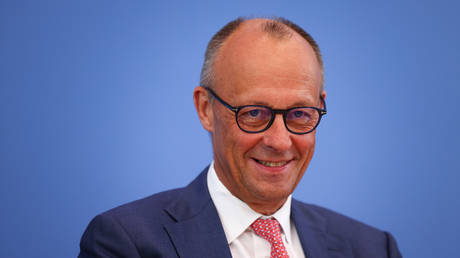
At the center of this heavy waiting room sits Friedrich Merz. For another view, check out: this related article.
He is a man carved from old granite and stubborn ambition. To understand why Germany feels trapped right now, you have to look past the policy papers and the economic forecasts. You have to look at the geometry of a political landscape that refused to evolve until it ran out of road. For decades, German politics operated like an impeccably engineered sedan cruising down the Autobahn at one hundred and eighty kilometers per hour. You trusted the machine. You trusted the driver. But now, the warning lights are blinking on the dashboard, the tires are losing their grip on the wet asphalt, and the man gripping the steering wheel has driven this exact same route for thirty years.
We call it stability. But sometimes, stability is just another word for paralysis. Further insight on this matter has been shared by NBC News.
Picture a small-business owner in Dortmund named Stefan. He employs fourteen people in a workshop that stamps precision steel parts for the automotive sector. Stefan does not care about factional maneuvering in Berlin. Stefan cares about his energy bill, which doubled last winter, and the permit that has been sitting on a municipal desk for nine months because the local office still uses fax machines. When Stefan hears politicians talk about modernization, he laughs—a dry, exhausted sound. He has watched governments rise and fall, promise digital transformation, and deliver nothing more than thicker stacks of compliance forms.
Merz represents the return of the old guard wrapped in the sharp armor of corporate pragmatism. He is the fiscal hawk who spent years in the political wilderness, plotting his return while working the boardrooms of global finance. When he finally seized the leadership of the Christian Democratic Union, it felt less like a revolution and more like an inheritance. He was the default heir because the room had run out of other viable options. The center-left Social Democrats are exhausted, gasping for air under the weight of coalition compromises. The Greens are caught between ideological purity and the harsh reality of coal-fired power plants humming in the night to keep the lights on. And out on the fringes, populist anger swells like a dark tide, fueled by a populace that feels invisible to the elites in the capital.
So, Germany stays. It stays because nobody dares to yank the emergency brake at fifty miles per hour.
Consider the sheer weight of institutional inertia. In Germany, change is treated not as an opportunity, but as a risk to be mitigated until it has been safely neutralized. Merz embodies this cautious philosophy, even as he promises bold reform. He speaks of revitalizing the economy, slashing bureaucracy, and restoring fiscal discipline. Yet every policy proposal is instantly swallowed by the administrative bog. It is a system designed by meticulous architects who feared chaos so much that they accidentally engineered stagnation.
The irony is thick enough to cut with a knife. The nation that invented modern industrial efficiency is now struggling to install high-speed fiber-optic cables in rural Hesse. The country of Goethe and Einstein spends weeks arguing over whether to digitize tax returns. Merz walks through these contradictions with the stiff-backed confidence of a corporate lawyer who believes every problem can be solved if everyone just follows the contract.
But human beings are not contracts.
Walk through the working-class neighborhoods of Duisburg or the sleek startup hubs of Berlin, and you will hear the same underlying hum of anxiety. It is the fear of being left behind in a rapidly accelerating century. While Washington pours billions into industrial subsidies and Beijing races ahead in artificial intelligence and green tech, Berlin argues over debt brakes and constitutional technicalities. It is a slow-motion tragedy of over-caution. We are watching a economic powerhouse hesitate at the exact moment history demands a leap.
Merz knows this. Or at least, his advisors whisper it to him during morning briefings while the coffee cools. He knows that the old model—cheap Russian gas, endless Chinese export markets, and American security guarantees—is gone forever. That world burned down, and the smoke has cleared to reveal a much harsher, more fractured reality.
Yet, changing course means confronting uncomfortable truths. It means telling voters that the golden years of painless prosperity require actual sacrifice, structural overhaul, and a departure from the sacred cow of a balanced budget. It means risking popularity for progress. And that is where the trap snaps shut. In a democracy governed by perpetual coalition management, anyone bold enough to swing a wrecking ball to the status quo usually doesn't survive the next election cycle.
So we get Merz. Not because he is a charismatic visionary who has captured the national imagination, but because he is sturdy enough to weather the storm without capsizing the ship. He is the political equivalent of a wool blanket on a freezing night—scratchy, old-fashioned, but ultimately better than nothing when the heater breaks.
The clock on the wall of the Bundestag ticks past two in the morning. The janitors begin emptying the recycling bins, their plastic bags rustling in the cavernous halls. Outside, the rain turns to sleet, slicking the cobblestones outside the Reichstag dome.
Stefan back in Dortmund is sleeping fitfully, dreaming of supply chain disruptions and payroll taxes. Across the country, millions of others are doing the same, caught in the strange limbo of a nation waiting for its own awakening. Friedrich Merz sits in his office, reviewing notes for a morning meeting that will produce another compromise, another cautious step forward, another deferral of the hard choices.
The engine idles. The road ahead is dark. And nobody has the courage to turn around.