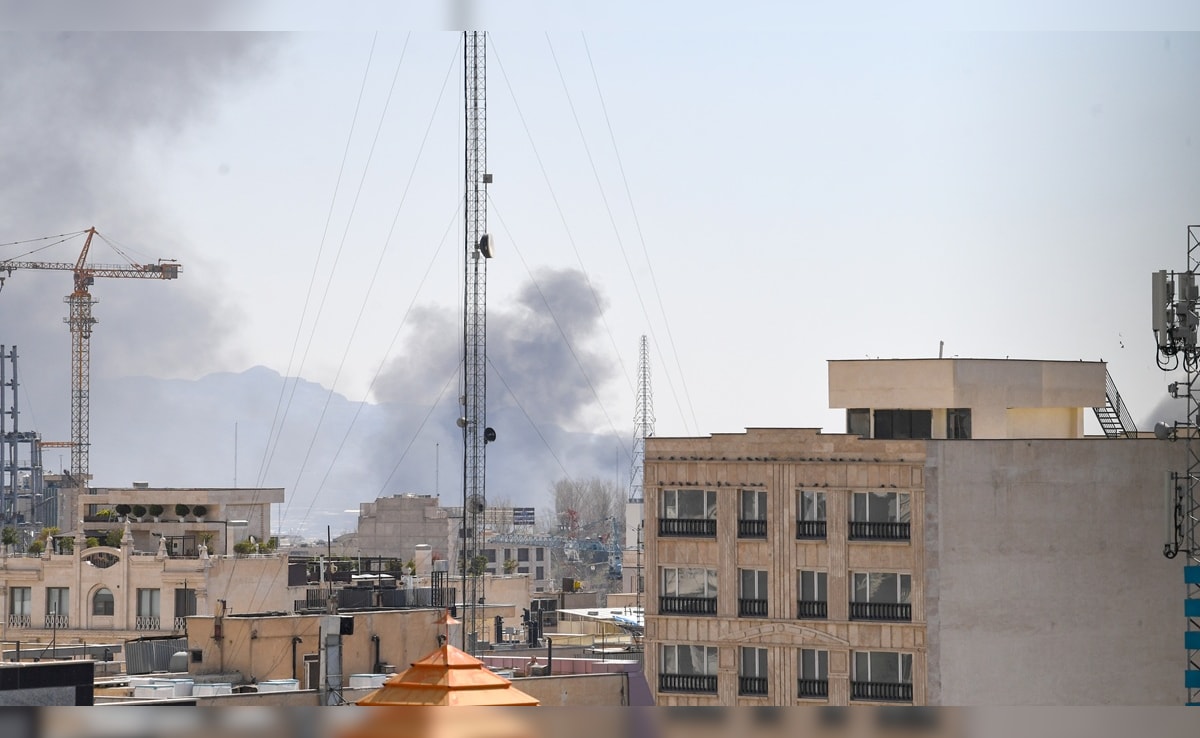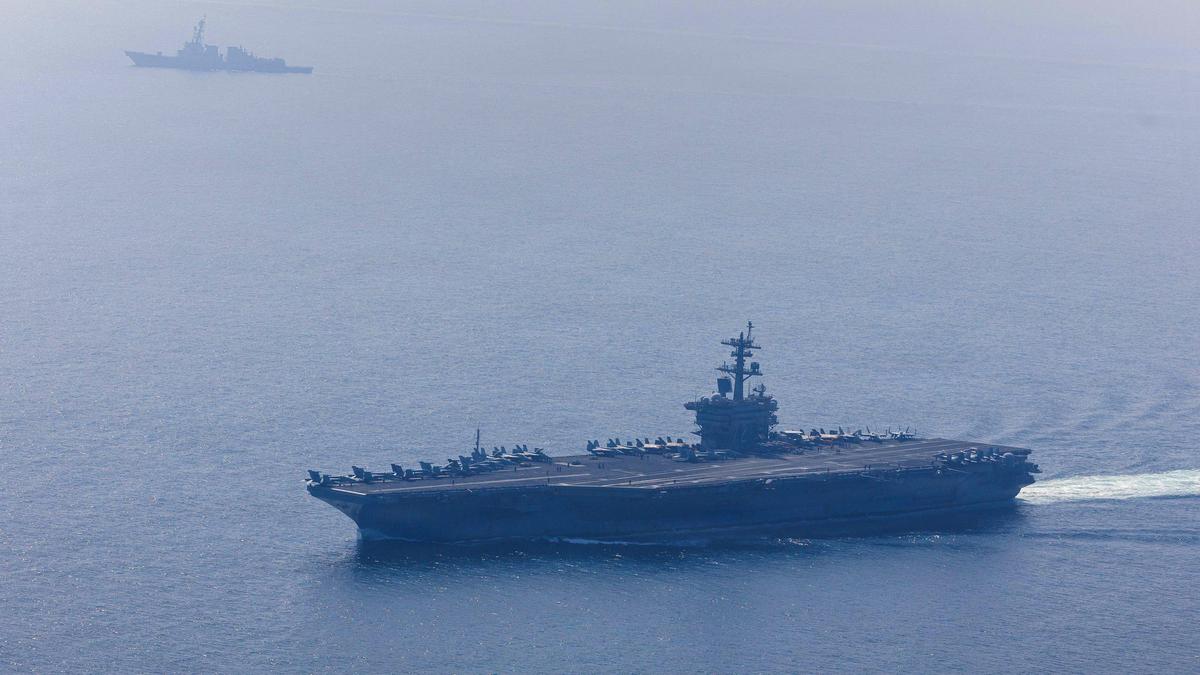
The Iranian Revolutionary Guard Corps (IRGC) just claimed they "struck" the USS Abraham Lincoln. It sounds like a headline that should start a world war. But if you've followed Persian Gulf brinkmanship for more than a week, you know the drill. State media outlets like Fars and Tasnim are buzzing with the news, painting a picture of a crippled American giant. Yet, the reality on the water tells a much different story.
When Tehran talks about "striking" a carrier, they aren't always talking about a direct hit with a missile that puts a hole in the hull. They’re often talking about "harassment" or "proximity strikes" involving one-way attack drones and fast-attack craft. It’s a game of perception. For the IRGC, a drone exploding within a mile of a carrier group is a victory worth broadcasting to the world. For the U.S. Navy, it's a Tuesday.
The Gap Between State Media and Satellite Imagery
The biggest problem with these reports is the lack of physical evidence. We live in an era where private companies like Maxar and Planet Labs provide high-resolution satellite imagery to anyone with a credit card. If a Nimitz-class or Ford-class carrier takes a hit, the world sees it in hours. There’s no hiding smoke, scorched flight decks, or a sudden change in the ship’s list.
In previous "strikes" claimed by Iran, the IRGC used a literal floating movie prop. They built a wooden and steel mockup of a U.S. carrier, towed it into the Strait of Hormuz, and filmed themselves blowing it up. It looked great for the nightly news in Mashhad. It didn't mean much to the 5th Fleet in Bahrain. This latest claim involving the USS Abraham Lincoln follows that same pattern of high-decibel rhetoric with zero visible wreckage.
What Actually Happens During These Encounters
I've talked to enough veterans and analysts to know that these "strikes" are usually multi-layered psychological operations. Here is how the IRGC typically operates in these high-tension moments. They wait for the carrier to transit a choke point like the Strait of Hormuz. They swarm the strike group with dozens of fast boats. These boats are basically speedboats with rocket launchers bolted to the front.
While the speedboats buzz around, they launch reconnaissance drones. Sometimes, they’ll fire a missile into a "target area" where the carrier was recently located. If that missile splashes anywhere near the horizon of an American ship, the IRGC press office types up a press release saying they "successfully targeted" the vessel.
The U.S. Navy's defensive envelope is insane. You have the Aegis Combat System, Phalanx CIWS, and a screen of destroyers that make getting a "strike" on the carrier itself nearly impossible for anything short of a massive, coordinated saturation attack. If Iran truly "struck" the Lincoln, we’d be looking at a regional conflict that would make the current tensions look like a playground spat.
Why the Timing Matters Right Now
The IRGC doesn't just pick dates out of a hat. These claims usually surface when Iran feels backed into a corner or needs to project strength to its domestic audience. Whether it's pressure from sanctions or a response to Israeli operations in the region, the "tough on America" narrative is a reliable tool for the regime.
By claiming a hit on a symbol of American power like the USS Abraham Lincoln, the IRGC bolsters its image as the "vanguard of the resistance." It’s meant to signal to their proxies—Hezbollah, the Houthis, and militias in Iraq—that the "Great Satan" isn't invincible. It's a morale booster. It’s also a way to test the reaction speed and diplomatic tone of the White House.
The Houthi Connection and Red Sea Tensions
We can't look at the Abraham Lincoln in a vacuum. The carrier has been operating in a theater where Houthi rebels in Yemen are actively lobbing missiles at commercial shipping. Iran provides the tech for those missiles. When the IRGC claims a strike, they're often trying to take credit for the "pressure" their proxies are applying.
The Houthis have actually been more aggressive than the IRGC itself lately. They’ve managed to hit several commercial tankers. But hitting a carrier? That’s a whole different league of electronic warfare and physical defense. The Lincoln isn't just a ship; it’s a mobile fortress surrounded by a ring of steel.
Logistics of an Actual Carrier Strike
If you want to know if a report like this is real, look at the oil prices. If a U.S. carrier is actually hit and damaged, the price of Brent crude doesn't just go up a dollar—it spikes through the roof. Markets are much better at detecting truth than state-controlled news agencies.
Look at the flight deck activity. A "struck" carrier cannot launch or recover aircraft effectively. If the Abraham Lincoln continues its scheduled flight ops, the "strike" was a fantasy. Tracking sites often show the C-2 Greyhound "COD" (Carrier Onboard Delivery) flights moving back and forth. If those planes are flying, the deck is fine.
Moving Past the Propaganda
Don't take these headlines at face value. The IRGC has a long history of "technically true" statements that are functionally lies. They might have "struck" the water near the ship. They might have "struck" the ship with a laser rangefinder. They might have "struck" it in a simulation.
To stay informed, cross-reference these claims with independent maritime tracking and official Pentagon briefings. While the Pentagon is tight-lipped, they don't hide casualties or major hull damage for long—it's impossible in the age of the smartphone.
Keep a close eye on the USNI News fleet tracker. It’s the gold standard for knowing where these ships actually are and what they’re doing. If the Lincoln stays on station and continues its mission, you can safely assume the IRGC's "strike" was nothing more than a loud firework in a very big ocean.