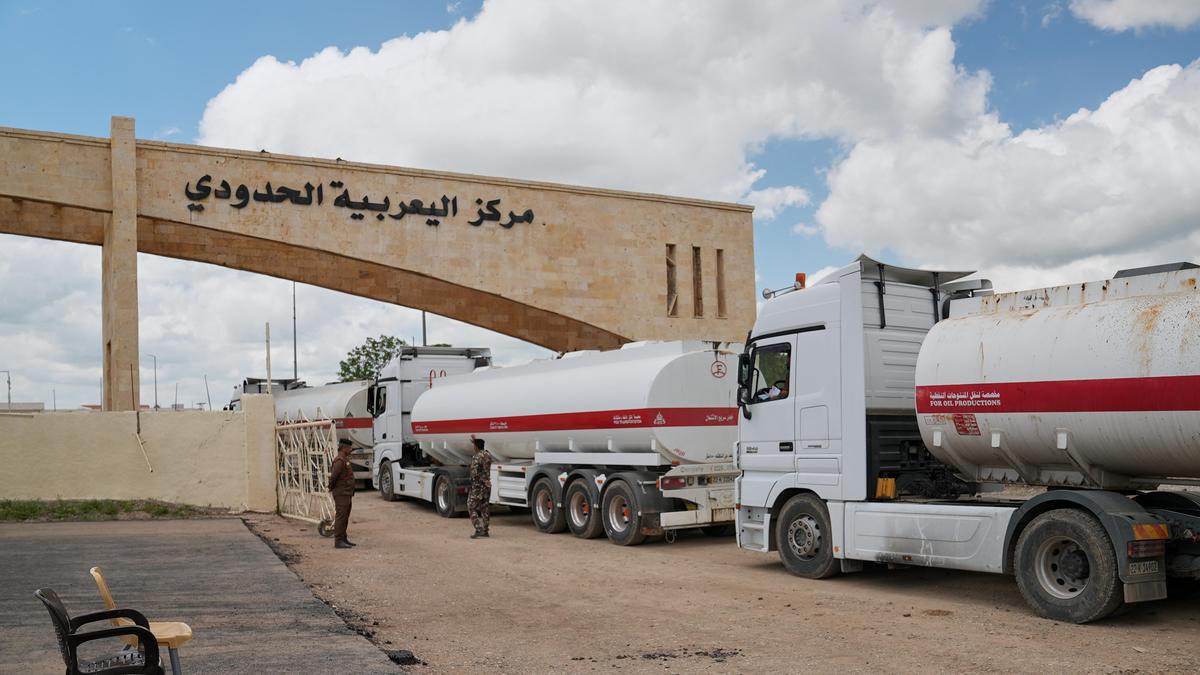
Washington just slapped sanctions on Iraq’s Deputy Oil Minister, Laith al-Shaher. The mainstream press is running the same tired script: a victory for "maximum pressure," a blow to Iranian influence, and a signal that the U.S. treasury holds the keys to Baghdad’s kingdom.
They are dead wrong.
Sanctioning a high-ranking official in the middle of a global energy transition isn't a power move. It is a confession of irrelevance. While the beltway pundits cheer for another entry on the Specially Designated Nationals (SDN) list, they ignore the reality on the ground. These sanctions don’t stop the flow of oil; they merely reroute the profits into the shadows where Western eyes can’t track them. We are witnessing the intentional blindness of American foreign policy, and the cost will be paid in the collapse of the dollar’s influence over the world’s most vital resource.
The Myth of "Maximum Pressure"
The "lazy consensus" suggests that by blacklisting Iraqi officials, we squeeze Iran’s wallet. This assumes the global oil market is a transparent, linear machine. It isn't. It is a sprawling, hydra-headed creature that thrives on friction.
When you sanction a figure like al-Shaher, you aren't cutting off the pipe. You are shifting the transaction from a bank in London or New York to a ledger in Dubai, Tehran, or Beijing. I have watched this play out for two decades in the Middle East. Every time a bureaucrat is "isolated," a new network of front companies and "ghost armadas" emerges.
The Treasury Department claims al-Shaher helped Iran evade sanctions by obfuscating the origin of Iraqi oil shipments. Let’s be honest: in the Mesopotamian basin, the line between "Iraqi" and "Iranian" molecules is a political fiction. The geology doesn't care about borders. Shared reservoirs like the Badra and Majnoon fields make "origin" a matter of whoever owns the nearest pump. By demanding a clean separation that physically cannot exist, the U.S. is setting Baghdad up for a failure it cannot avoid.
The Collateral Damage of Virtue Signaling
The real tragedy isn't the political career of one deputy minister. It is the systematic destruction of Iraq’s technocratic class.
For years, Iraq has struggled to build a functional state. The Oil Ministry is the only thing standing between the country and total economic collapse. By weaponizing sanctions against its leadership, Washington forces Iraqi officials into an impossible choice: defy your neighbor (and primary electricity supplier) or lose your access to the Western financial system.
When you alienate the technocrats, you don't get "pro-Western" replacements. You get political hacks. You get people who are already so deep in the pocket of non-Western powers that a U.S. sanction is a badge of honor, not a deterrent. We are effectively firing the only people who still speak our language and replacing them with shadows.
Why the "People Also Ask" Sections Get it Wrong
- "Do sanctions on Iraq affect gas prices?" The short-sighted answer is no. The real answer is that they increase the "risk premium" on every barrel produced in the Gulf. Uncertainty is the mother of volatility.
- "Is Iraq an ally of the U.S. or Iran?" This is a flawed question. Iraq is a country trying to survive. It shares a 900-mile border with Iran and a bank account with the U.S. Federal Reserve. Asking it to "choose" is like asking a man which lung he wants to keep.
- "How do ghost tankers work?" They work because the U.S. has turned the legal market into a bureaucratic nightmare. If it’s easier to sell oil through a dark fleet than to navigate a thousand pages of Treasury compliance, the oil will go dark. Every time.
The China Factor: The Quiet Winner
Every time a U.S. official signs a sanction order, a desk officer in Beijing gets a promotion.
While we use the dollar as a stick, China is using the yuan as a bridge. Iraq is currently the third-largest supplier of crude to China. Baghdad isn't stupid. They see the writing on the wall. If the U.S. continues to treat the Iraqi energy sector as a laboratory for its failed Iran policy, Iraq will simply stop looking West.
We are handing the keys to the most strategic oil reserves on the planet to our primary global competitor because we can't stop playing the same losing hand from 1996. The "logic" of these sanctions is a relic of a unipolar world that died ten years ago.
The Mechanics of Failure
Let’s talk about the actual math of oil smuggling. Suppose Iran wants to move $500 million worth of condensate. In a world without sanctions, this happens through clear channels with oversight. In the "sanctioned" world, that oil is blended at sea, rebranded as "Middle East Sour," and sold at a $10 discount to a private refiner in Shandong.
$$Profit = (Global Price - Sanction Discount) \times Volume$$
The discount is the "sanction tax." It doesn't stop the sale; it just changes who gets the cut. The money that used to flow through the IMF or World Bank now flows through illicit money changers. We haven't stopped the Iranian nuclear program; we’ve just funded a massive, unregulated underground economy that the U.S. can no longer tax, track, or influence.
The Counter-Intuitive Truth
If Washington actually wanted to curb Iranian influence in Iraq, it would do the opposite of what it just did.
Instead of blacklisting officials, we should be flooding Iraq with infrastructure investment that makes them less dependent on Iranian gas and electricity. We should be fast-tracking American technology to capture flared gas in the Basra fields. That would do more to decouple Baghdad from Tehran than a thousand SDN listings.
But that requires a long-term strategy. Sanctions are the fast food of foreign policy: cheap, satisfying in the moment, and devastating to the long-term health of the organism.
We are addicted to the "click-clack" of the sanction machine. It makes us feel powerful while our actual leverage evaporates. We are burning the house down to prove we own the matches.
The End of the Dollar Hegemony
The most dangerous part of this "crude diplomacy" is what it does to the U.S. Dollar. The dollar’s status as the global reserve currency is predicated on the idea that it is a neutral tool for trade. By turning it into a political weapon, we are forcing the rest of the world to build an alternative.
Iraq is the canary in the coal mine. If the deputy oil minister of a "strategic partner" can be wiped off the financial map on a Tuesday afternoon, no one is safe. Central banks from Brasilia to Jakarta are watching this. They are diversifying. They are looking for the exit.
Stop pretending this is about "holding bad actors accountable." This is about a fading superpower using its last remaining tool to scream into a void. Al-Shaher will be fine. The Iranian oil will continue to flow. The only thing that truly got "sanctioned" today was the credibility of the United States as a rational economic actor.
The market doesn't care about your moral grandstanding. It only cares about the flow. And the flow always finds the path of least resistance. Currently, that path leads straight away from Washington.
Go ahead, print another press release. The tankers are already over the horizon.