You’d think a massive U.S. naval presence would be enough to keep the Strait of Hormuz wide open. It isn't. Despite months of "Operation Epic Fury" and targeted strikes that gutted Iran’s conventional navy, the real threat hasn't gone anywhere. The big warships—the ones that look impressive in a parade—were easy targets. They’re mostly at the bottom of the Gulf now. But the Islamic Revolutionary Guard Corps (IRGC) never cared about those ships. They bet their entire strategy on a "mosquito fleet" of tiny, fast, and lethal boats, and right now, that bet is paying off.
The Strait of Hormuz is barely 21 miles wide at its narrowest point. It’s shallow, crowded, and perfectly suited for guerrilla warfare at sea. While the world watches for massive destroyers, it's the hundreds of 15-meter speedboats and midget submarines that are actually choking global trade. If you think a carrier strike group can easily swat away 50 motorboats attacking from ten different directions at 70 knots, you haven't been paying attention to how asymmetric warfare works in 2026.
The math of the swarm
The IRGC doesn't try to win a fair fight. They use "swarm saturation." It’s a simple, brutal numbers game. If Iran launches 40 fast attack craft at a single U.S. destroyer, the ship’s sophisticated defense systems might pick off 30 of them. But the 31st boat? That one is carrying a pair of C-704 anti-ship missiles or a deck-mounted rocket launcher. It only takes one hit to cause a billion dollars in damage and a PR nightmare.
These boats are cheap. Most are built domestically in Iranian shipyards or even modified from civilian designs like the British Bladerunner 51 racing hull. They’re fast—the newer Heydar 100 models can hit 110 knots. That’s faster than a torpedo. When you have 1,500 of these things hidden in sea caves, tunnels, and jagged coastal coves along 1,000 miles of coastline, you don't need a "real" navy.
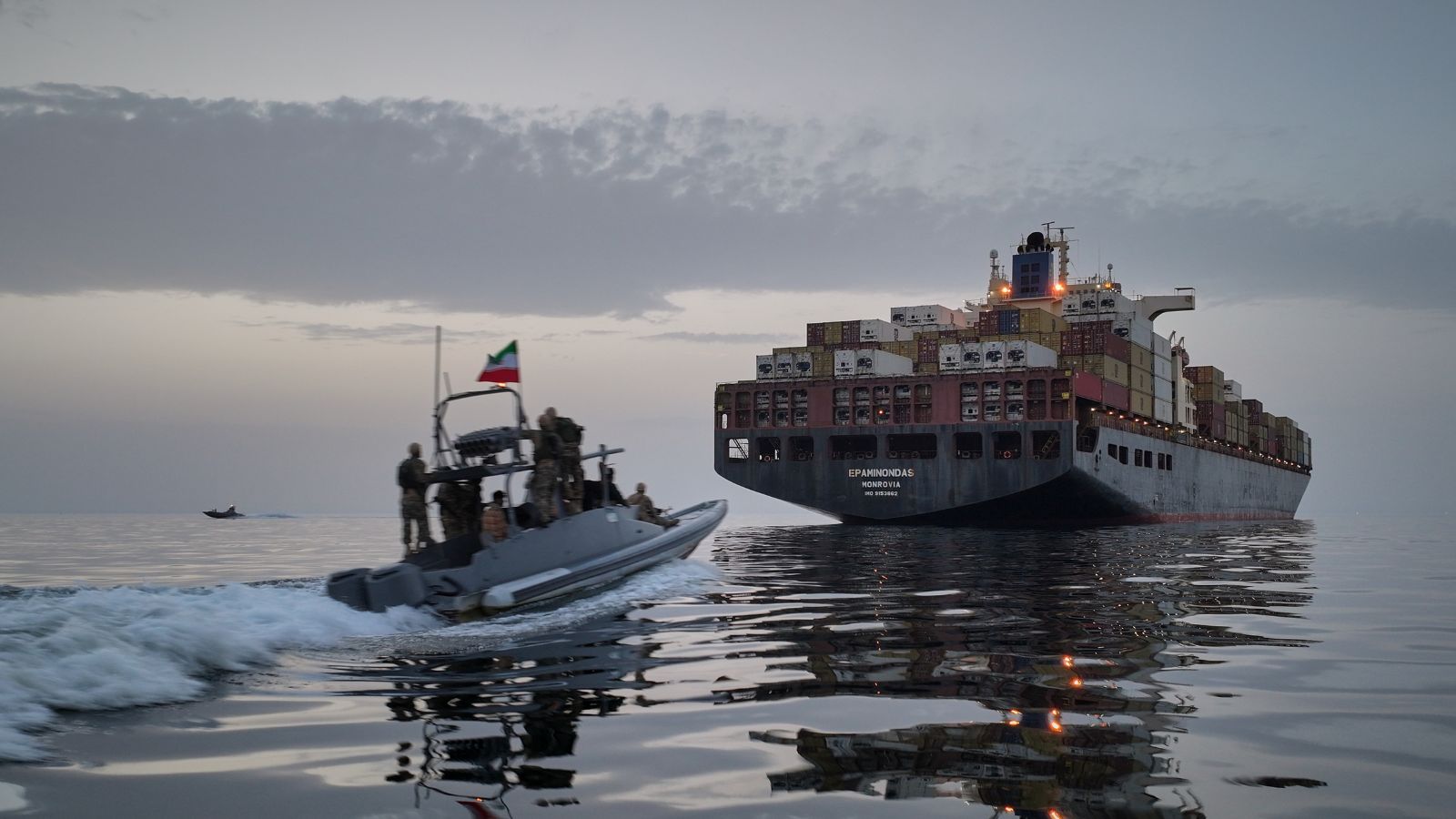
The real genius of the mosquito fleet is its invisibility. They sit low in the water, often below the radar horizon of larger ships. By the time a tanker's crew sees the wake of an incoming IRGC pack, it's already too late. On May 4, 2026, we saw this play out when six fast boats seized two container ships near the Strait. The U.S. Navy was nearby, but they couldn't intervene without risking a massive escalation that would’ve spiked oil prices to $200 a barrel instantly.
Midget submarines and the silent threat
While the speedboats get the headlines, the Ghadir-class midget submarines are the ones that keep naval commanders awake at night. These things are tiny—about 29 meters long. They only carry a crew of maybe seven to eighteen people. In the deep ocean, they'd be useless. In the shallow, noisy waters of the Persian Gulf, they’re ghosts.
The Ghadir subs can sit silently on the seafloor, waiting for a target to pass overhead. They’re equipped with 533mm torpedo tubes and can launch Jask-2 cruise missiles while submerged. Because they’re so small, they don't produce the massive thermal or acoustic signature of a nuclear sub. They’re basically mobile minefields.
- Stealth: Hard to detect in shallow coastal waters.
- Armament: Two torpedoes or several naval mines.
- Mission: Coastal defense and "hit-and-run" harassment.
Critics say these subs have "limited endurance." That’s true. They can't stay out for weeks. But they don't need to. They only need to stay out for 48 hours to sink a tanker or lay a dozen mines in the middle of a shipping lane.
Geography is the ultimate weapon
Iran’s biggest advantage isn't technology—it's the map. The Iranian coastline is a maze of islands and inlets. This isn't just about military hardware; it’s about "geographical depth." Even if the U.S. manages to clear a path through the Strait, they have to maintain that presence 24/7. Iran just has to wait for a gap.
We're seeing a shift in how the IRGC operates. They aren't just attacking; they're "regulating." Tehran recently launched a new regulatory body to impose tolls on ships passing through the Strait. If you don't pay, the mosquito fleet shows up. It’s state-sponsored piracy disguised as maritime law. The U.S. can't be everywhere at once, and the insurance companies know it. War-risk premiums have tripled since March, and that’s a victory for Iran without firing a single shot.
What happens next
If you're tracking maritime security, don't look at the big carrier movements. Watch the "dark fleet" activity and the loitering patterns of small craft near Bandar Abbas. The mosquito fleet's goal isn't to sink the U.S. Navy; it's to make the Strait of Hormuz so expensive and dangerous that the world gives up on using it.
For anyone involved in global logistics or energy markets, the takeaway is clear. The threat in the Gulf has moved from "high-end" naval clashes to "low-end" persistent harassment. You need to prepare for a "permanent temporary" closure of the Strait.
- Reroute where possible: Reliance on the Strait is a massive liability in 2026.
- Invest in "dark" tracking: Traditional AIS (Automatic Identification System) is being manipulated by both sides. Use satellite imagery to verify vessel locations.
- Harden merchant defenses: While crews can't fight off an IRGC boarding party, better early-warning drones can give ships time to call for help before they're surrounded.
The mosquito fleet is small, but it’s biting hard. And right now, there's no easy way to stop the itch.