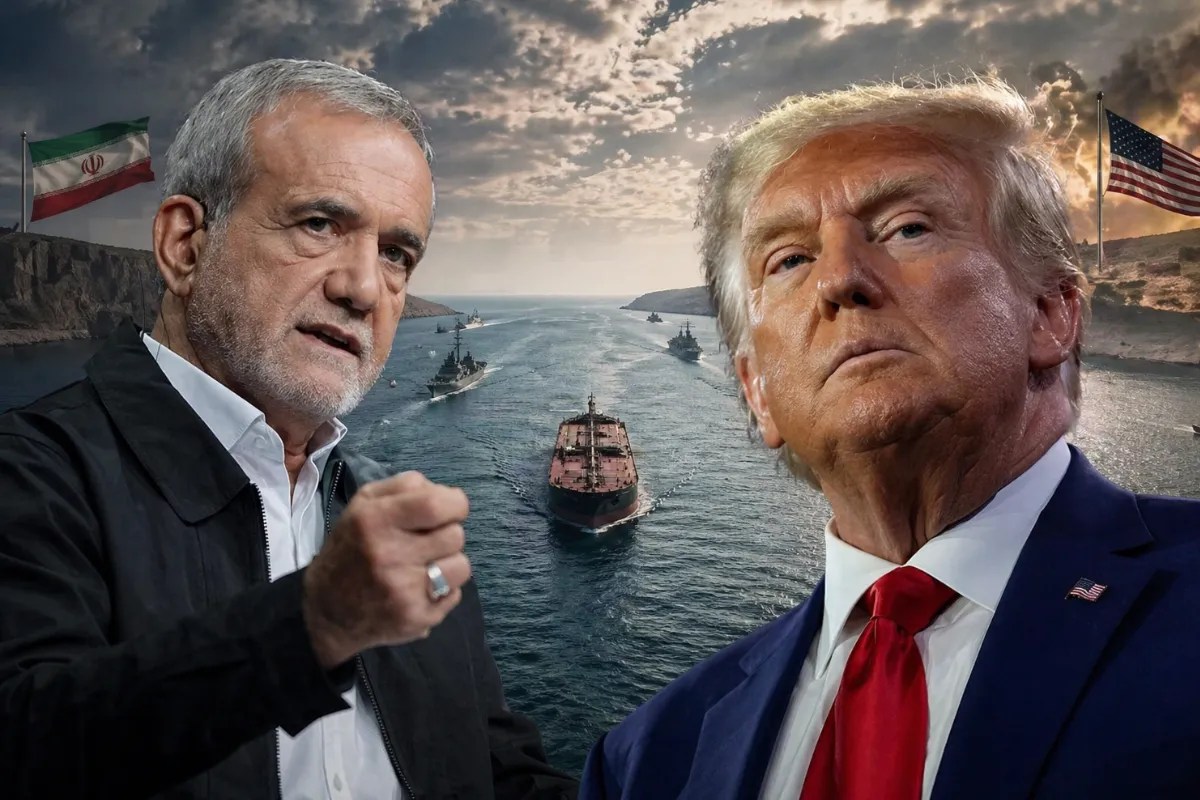
The headlines are screaming again. Tehran is rattling its sabers, Washington is moving carrier groups, and the "experts" are dusting off their maps of the Strait of Hormuz. The narrative is always the same: we are one "foolish mistake" away from a regional conflagration that resets the global order.
It is a lie.
The media loves the theater of the "imminent clash" because fear sells subscriptions and justifies defense budgets. But if you look at the cold, hard mechanics of Middle Eastern power dynamics, you realize that both Iran and the United States are currently trapped in a symbiotic performance of hostility. Neither side wants a war, and more importantly, neither side can afford one. The "straight response" promised by Iranian generals isn't a threat of total war; it’s a desperate attempt to maintain a status quo that is slowly suffocating them from within.
The Myth of the Accidental War
The most common misconception in modern geopolitics is that wars happen by "accident" or through a "miscalculation" by a mid-level commander. History suggests otherwise. Major powers only go to war when the cost of peace becomes higher than the cost of combat.
For Iran, the cost of a full-scale war with the United States is the immediate and total collapse of the Islamic Republic. For the United States, the cost is a trillion-dollar quagmire that would make Iraq look like a weekend retreat and handed the global hegemony to China on a silver platter.
When the Iranian army warns of a "crushing response" to American "folly," they are talking to their own base. They are trying to project strength to a domestic population that is increasingly disillusioned by a failing economy and social unrest. It’s a classic distraction technique. If you can’t provide bread, you provide the promise of fire.
Iran’s Strategic Weakness is Their Greatest Shield
Conventional wisdom says Iran is a regional powerhouse capable of shutting down 20% of the world’s oil flow. The reality is that Iran’s military infrastructure is a museum of 1970s technology supplemented by modern drones and missiles. They are a "mosquito" power—capable of drawing blood and causing irritation, but fundamentally unable to win a knockout fight.
The Iranian leadership knows this. Their entire "Axis of Resistance" strategy—using proxies like Hezbollah, the Houthis, and various militias—is designed specifically to avoid direct state-on-state conflict. Why would they risk their own survival in a direct confrontation when they can bleed the U.S. through a thousand paper cuts across the region?
The "warning" issued by the Iranian army is actually a sign of their limited options. When you have the capability to actually destroy your enemy, you don't talk about it; you do it. The louder the rhetoric, the emptier the silos.
The US Carrier Group Deception
On the flip side, the United States sends carrier strike groups to the Persian Gulf not to start a war, but to prevent the appearance of weakness. It is a $13 billion piece of signaling.
I have watched the Pentagon play this game for decades. The goal isn't to "strike Iranian nuclear sites"—that would require a massive, sustained air campaign and a subsequent ground occupation that the American public has zero appetite for. The goal is "integrated deterrence," which is a fancy way of saying "please don't make us do something we don't want to do."
The U.S. is currently pivot-heavy toward the Indo-Pacific. Every Tomahawk missile fired at a regional militia is a resource diverted from the real theater: the South China Sea. Washington isn't looking for a "hard answer" to Iran; they are looking for an exit strategy that doesn't look like a retreat.
Why the Strait of Hormuz is a Paper Tiger
Every time tensions rise, the "Hormuz Panic" begins. "Iran will block the Strait!" "Oil will hit $200 a barrel!"
Let’s look at the logistics. Blocking the Strait of Hormuz would be an act of economic suicide for Iran. They rely on those same waters to export what little oil they can still sell to China. Furthermore, the U.S. Navy’s Fifth Fleet is specifically designed to keep those lanes open.
Even if Iran managed to sink a few tankers or sow mines, the disruption would be temporary. The global oil market has become significantly more resilient than it was in the 1970s. With U.S. domestic production at record highs and alternative routes through Saudi Arabia, the "oil weapon" is more of a decorative antique than a functional tool of war.
The Proxy Paradox
The real danger isn't the Iranian Army or the U.S. Navy. The danger is that the proxies—the groups Iran claims to control—have developed their own agendas.
The competitor's article focuses on the "state-level" warnings. This is the wrong place to look. The status quo is disrupted when a militia in Iraq or a Houthi commander in Yemen decides to escalate without Tehran’s explicit blessing.
Iran has spent years building these "lions," and now they are finding that the lions are hungry and don't always listen to their trainers. This is the "nuance" the mainstream media misses: Iran is often just as terrified of their proxies starting a war as the U.S. is. They are riding a tiger they can’t easily dismount.
The Economic Reality No One Mentions
Wars are fought with money, not just missiles. Iran’s inflation rate has been hovering between 40% and 50% for years. The rial is in a tailspin. You cannot sustain a high-intensity conflict against a superpower when your citizens are struggling to buy eggs.
The Iranian leadership's primary goal is "Nezam"—the survival of the system. A war with America is the fastest way to end the Nezam. Therefore, every "warning" and "red line" is a choreographed move in a long-running theater piece designed to keep the regime in power without actually having to fight.
Stop Asking if War is Coming
The question "Is war coming to the Middle East?" is the wrong question. The war is already happening, and it has been for twenty years. It’s a war of intelligence, cyber-attacks, assassinations, and proxy skirmishes.
This low-boil conflict is the "new normal." It is profitable for the military-industrial complexes of both nations, it provides political cover for domestic failures, and it keeps the geopolitical stakes high enough to keep everyone relevant.
The next time you see a headline about "Iran’s final warning" or "America’s crushing response," ignore the adjectives. Look at the bank accounts. Look at the logistics. Look at the domestic polling.
The two "enemies" are currently leaning against each other to stay upright. If one falls, the other loses their best excuse for their own failures. They don't want to destroy each other; they need each other.
The saber-rattling isn't a prelude to a symphony of destruction. It’s the sound of two tired actors performing the same play for the ten-thousandth night in a row because they don’t know how to do anything else.
Stop waiting for the explosion. The smoke you see is just stage craft.
Go back to work.