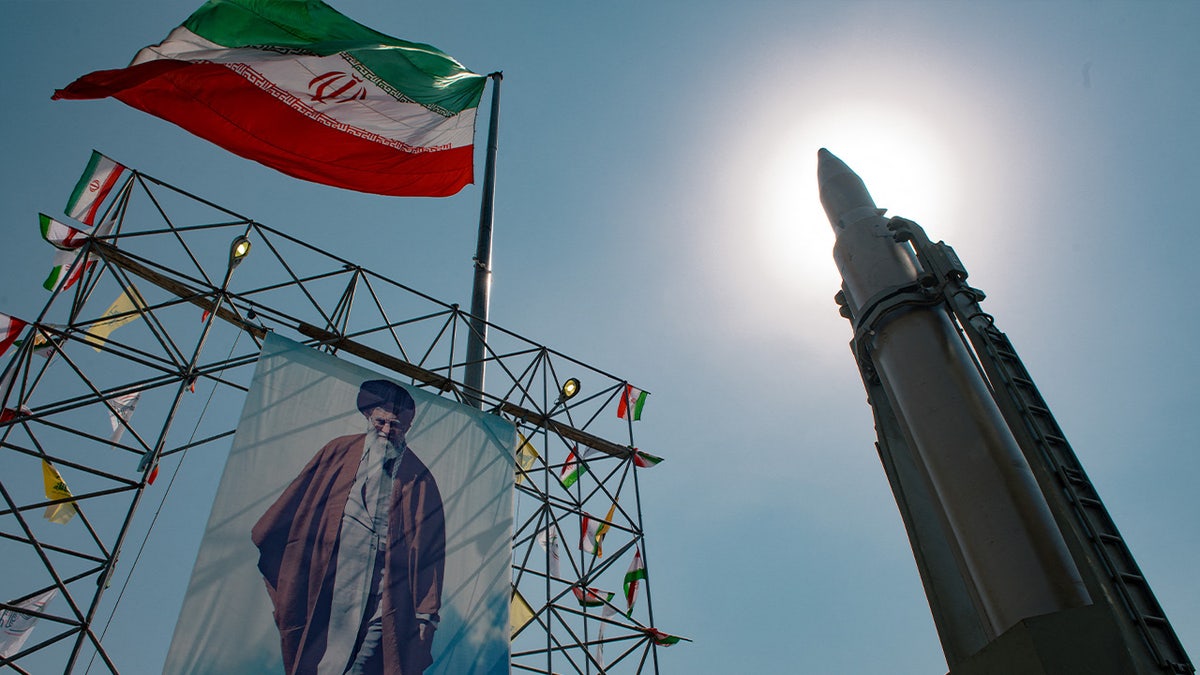
The headlines are screaming again. Tehran is rattling the saber. U.S. bases are in the crosshairs. Warships are supposedly sitting ducks. The mainstream media treats these threats like a fuse burning toward a powder keg. They want you to believe we are one wrong move away from a regional inferno.
They are wrong. They are falling for the oldest trick in the Persian playbook.
When Iran threatens to strike American assets, they aren't preparing for war. They are avoiding it. These threats aren't a prelude to a kinetic conflict; they are a sophisticated, high-stakes form of market stabilization and diplomatic signaling. In the world of realpolitik, a loud threat is often a substitute for a quiet bullet. If you want to understand the Middle East, stop listening to the rhetoric and start looking at the structural reality of "Escalation to De-escalate."
The Myth of the Suicidal State
The lazy consensus suggests that Iran is an irrational actor, driven by ideology to the point of national suicide. This perspective is not just wrong; it’s dangerous. It ignores forty years of calculated survival.
The Iranian leadership knows exactly what happens to conventional militaries that go toe-to-toe with the United States. They watched the Iraqi army—once one of the largest in the world—evaporate in weeks during the Gulf War. They aren't looking to repeat that experiment.
Instead, Iran uses "Threat Theater." By loudly proclaiming their ability to hit the Fifth Fleet or level bases in Qatar, they create a psychological "no-go zone." This is about establishing a deterrent on the cheap. Why build a hundred-billion-dollar navy when you can just buy enough news cycles to make the other guy's insurance premiums go through the roof?
The Mathematics of the Strait of Hormuz
Every time tensions rise, the "Oil Weapon" gets mentioned. The threat to close the Strait of Hormuz is the geopolitical equivalent of a "break glass in case of emergency" hammer.
Critics argue that closing the Strait would be an act of war. It would. But more importantly, it would be economic suicide for Iran. They need those lanes open to export their own crude and receive imports. The threat isn't that they will close it; the threat is the uncertainty of what happens if they try.
Consider the cost-benefit analysis:
- The Cost: A few fiery speeches and a video of a missile test. Total cost: Negligible.
- The Benefit: Oil prices spike. The global economy shudders. Diplomatic channels—backdoor and otherwise—suddenly fly open as everyone from Brussels to Beijing begs for "restraint."
Iran isn't trying to start a fight; they are trying to gain a seat at a table they’ve been kicked away from. Threatening a strike is the only way they can force the U.S. to acknowledge their regional interests. It’s a brutal, ugly form of diplomacy, but in a world of sanctions, it’s the only currency they have left.
The Proxy Buffer: War by Remote Control
The Siasat Daily and others focus on direct strikes. This misses the point of Iranian doctrine entirely. Iran has mastered the art of "Strategic Depth."
They don't need to fire a missile from Iranian soil to hit a U.S. interest. They have spent decades building a network of partners—Hezbollah, the Houthis, various militias in Iraq and Syria—that act as a multi-layered shield.
- The First Layer: Proxy harassment. Low-level, deniable, and irritating.
- The Second Layer: Targeted strikes on logistical hubs.
- The Third Layer: The direct threat from Tehran.
By the time you get to the third layer—the direct threat—the goal has usually already been achieved. The threat itself is the pressure release valve. It satisfies domestic hardliners who demand "harsh revenge" while giving the international community enough "warning" to scramble for a diplomatic off-ramp.
I’ve seen analysts track these threats as if they were weather patterns. They aren't. They are choreographed performances. When a "strike" is announced with a 72-hour lead time, that isn't a military operation. It’s a memo.
The Asymmetric Advantage: Why US Bases are Safe
Let’s talk about those "vulnerable" bases. Yes, a swarm of Iranian drones or a barrage of ballistic missiles could, in theory, cause significant damage to Al-Udeid or bases in the UAE.
But look at the hardware. The U.S. presence in the region is a dense thicket of Integrated Air and Missile Defense (IAMD).
$$P_d = 1 - (1 - p)^n$$
In this simplified formula for the probability of detection/destruction ($P_d$), where $p$ is the kill probability of a single interceptor and $n$ is the number of interceptors fired, the math heavily favors the defender in a localized engagement. Between Patriot batteries, THAAD, and Aegis-equipped destroyers, the "strike" Iran threatens would have to be so massive to succeed that it would guarantee the total destruction of the Iranian state in the counter-response.
The Iranians know this math. The Americans know this math. The threats continue because both sides find the status quo of "managed tension" more predictable than the chaos of an actual vacuum.
The Real Danger: The Accidental Spark
The contrarian truth is that the greatest threat isn't a planned Iranian strike. It’s a mistake.
When you maintain a high-decibel environment of threats and counter-threats, the "Margin for Error" shrinks to zero. A nervous radar operator, a rogue militia commander, or a mechanical failure on a drone can turn a theater performance into a real-world tragedy.
This is the downside of the "Insurance Policy" strategy. If you pretend you’re going to blow up the house long enough to lower your taxes, eventually someone might drop a match by accident.
Stop Asking "Will They Strike?"
People ask the wrong question. They ask if Iran is going to attack tomorrow. The answer is almost certainly "no."
The right question is: "What is Iran trying to trade this threat for?"
Usually, it’s one of three things:
- Sanctions Relief: Using the threat of instability to make the cost of economic pressure too high for the West to maintain.
- Regional Legitimacy: Proving to their neighbors that the U.S. "security umbrella" is full of holes.
- Internal Stability: Distracting a young, restless population with a "foreign enemy" narrative.
If you treat the threat as a military event, you've already lost the argument. It’s a psychological operation designed to exploit the short attention spans and risk-aversion of Western democracies.
The Proxy Paradox
The irony of the situation is that the United States and Iran actually share several regional goals, from the stability of energy flows (at different price points) to the containment of certain radical Sunni extremist groups. But neither side can admit this.
Instead, we get the dance. Iran threatens a strike. The U.S. moves a carrier group. The media goes into a frenzy. Oil ticks up two dollars. Then, quietly, through an intermediary like Oman or Qatar, a message is passed. The tension simmers down. The "threat" served its purpose. It was a tool of communication, not an instrument of war.
The sophisticated observer looks past the "fire and fury" of the headlines. They see a regime that is survivalist, not suicidal. They see a superpower that is overextended and looking for an exit, not an entry.
The threats are the music. The real movement is happening under the floorboards.
Iran won't strike because the threat of the strike is more powerful than the strike itself. Once you fire the missile, you lose your leverage. You become a target. As long as the missile stays on the rail, you are a player.
Don't mistake the rattle for the bite. The rattle is there so the snake doesn't have to use its venom.