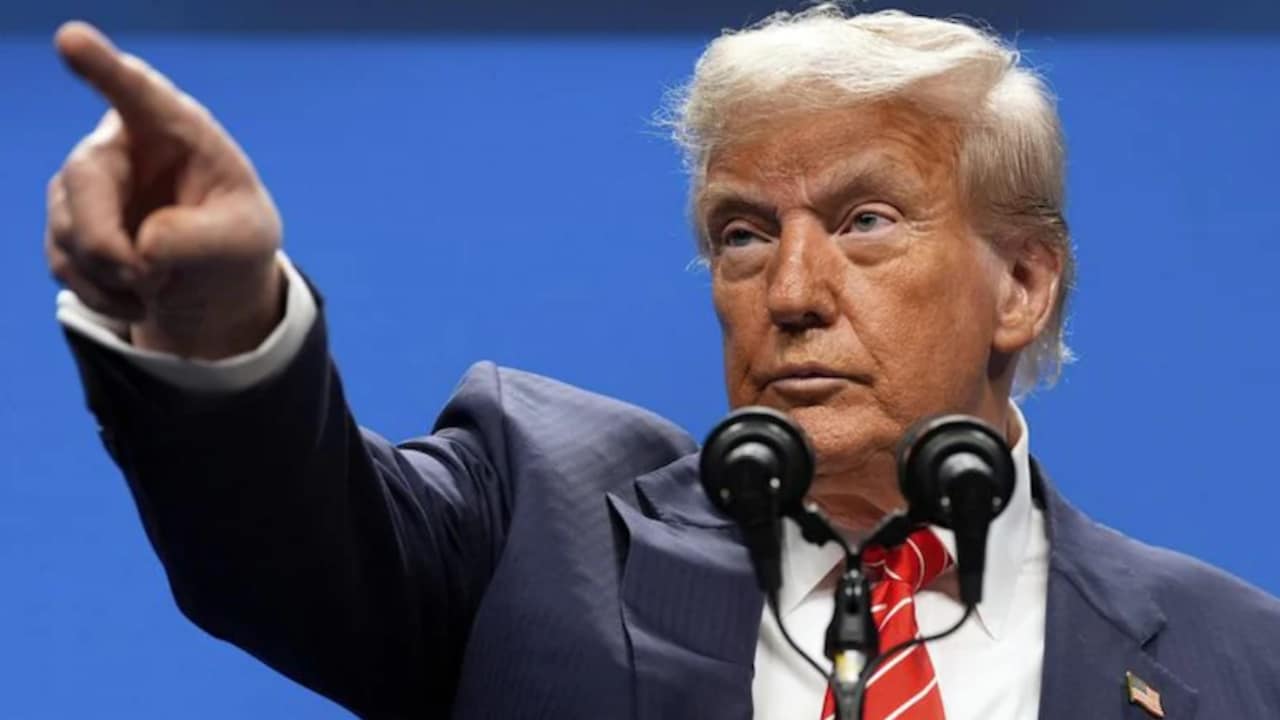
The illusion of Middle East stability just evaporated in a single social media blast. Donald Trump shattered a fragile, weeks-old interim ceasefire by declaring it officially over, backing up the declaration with an explicit military threat. He claims 1,000 missiles are locked, loaded, and pointed directly at Iran.
This isn't just typical late-night rhetoric. According to Trump, formal orders have already been given to the Pentagon. The directive authorizes the US military to completely decimate and destroy all areas of Iran if Tehran attempts to assassinate him.
The timeline for this standing order is one year, subject to extension. It's an unprecedented, pre-authorized mandate for total war, bypassed through standard congressional debates and laid bare on Truth Social.
The Assassination Threat Driving the Escalation
Tehran's hostility isn't new, but the immediate trigger for this flare-up is highly specific. Tensions surged following the recent death of Iran's Supreme Leader Ayatollah Ali Khamenei. During the funeral proceedings, coordinated Friday sermons and official statements from Iran’s Friday Prayer Policy Council openly demanded blood. They explicitly called for the assassination of the sitting US president.
Trump responded to these threats with characteristic bluntness, telling the New York Post he left explicit, standing instructions on what to do if he's killed. He told the paper he ordered the military to bomb them at levels they've never seen before.
While intelligence reports have been conflicting, the threat matrix is real. Reports surfaced that Israeli intelligence flagged a specific, fresh plot by hardliners within the Islamic Revolutionary Guard Corps (IRGC), specifically naming commander Ahmad Vahidi as a key instigator. Trump publicly downplayed the specific Israeli report, stating he has simply been number one on Iran's kill list for a long time.
The root animosity traces back to the 2020 drone strike that killed top Iranian general Qasem Soleimani. Iran has openly hunted for vengeance ever since.
The Tanker War and the Hormuz Deadline
Look past the assassination threats and you'll find the actual flashpoint of this conflict: global energy supply lines. The rhetorical war coincided with a hot shooting war in the Strait of Hormuz.
Iran recently launched attacks on commercial tankers flying flags from Saudi Arabia and Qatar. The US retaliated fast, hitting more than 150 targets inside southern Iran to strip away their ability to harass shipping lanes with drones and speedboats. Tehran fired back, launching missiles at US military facilities in Bahrain, Jordan, Kuwait, and Qatar.
The White House drew a hard line in the sand, setting a strict deadline for Iran to publicly declare the Strait of Hormuz open to international transit and halt all maritime aggression. Iran has privately tried to walk things back, telling US officials the ship attacks were carried out by an errant faction. Publicly, however, they are singing a completely different tune.
Iranian Foreign Minister Abbas Araghchi hit back on X, claiming the US violated the existing Memorandum of Understanding (MoU). Specifically, Tehran claims Washington breached Paragraph 9 by deploying additional troops to the region and adding fresh economic sanctions. Parliamentary Speaker Mohammad Baqer Qalibaf echoed this defiance, warning that Iran is fully prepared for an all-out defense.
Deciphering the Mixed Signals
The current situation is chaotic because both sides are talking out of both sides of their mouths. Trump claimed Iran reached out to resume diplomatic talks, and while Washington agreed to listen, he explicitly told them the truce is dead.
Senior US officials tell reporters that behind-the-scenes channels remain open and have even been productive. The US position hasn't shifted: any lasting deal requires Iran to accept strict limits on its nuclear program and physically ship out its enriched nuclear material. Meanwhile, regional players like Qatar and Oman are frantically playing mediator to prevent a full-scale regional war.
If you want to understand where this goes next, keep your eyes on the Strait of Hormuz rather than the social media feeds. Watch for whether Iran blinks at the US maritime deadline or if another tanker gets hit. Track the movements of US naval assets in the Gulf; if more strike groups deploy despite Iranian warnings, the chances of those 1,000 missiles launching goes up exponentially. Keep tabs on diplomatic dispatches coming out of Doha and Muscat over the next 48 hours, as those backchannels are the only things preventing a catastrophic miscalculation.



