In a dusty logistics warehouse on the outskirts of Shenzhen, a manager named Chen watches a crate of high-end GPUs sit motionless under fluorescent lights. These are not just components. They are the neurons of the modern world. But today, they are frozen. Across the ocean, in a sterile office in Washington, a mid-level analyst signs off on a memo that effectively turns those chips into paperweights.
This is the silent friction of a world reordering itself.
As the clock ticks toward the high-stakes meeting between Xi Jinping and Donald Trump, the air isn't filled with the usual diplomatic niceties. It is thick with the scent of leverage. The United States is not merely participating in a trade dispute; it is tightening a digital and economic noose, ensuring that by the time both leaders sit across from one another, the terms of surrender are already written in the fine print of export controls and oil tankers.
The Silicon Siege
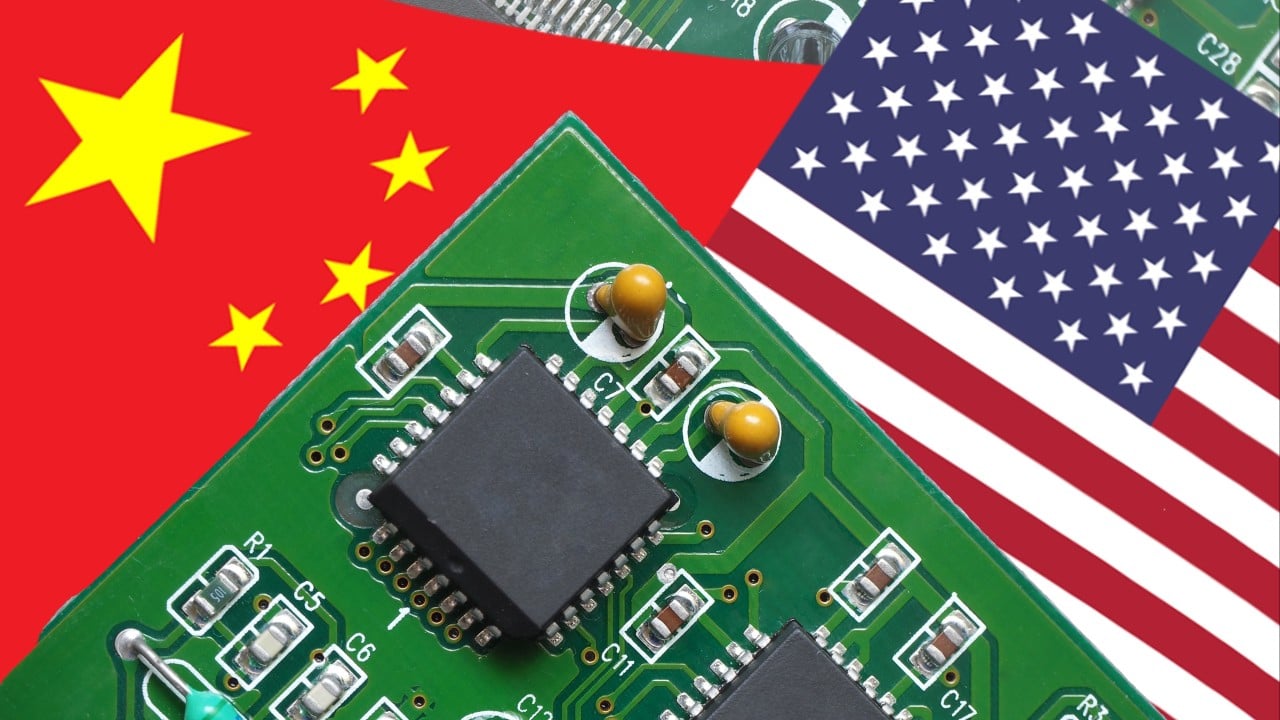
Consider the life of a semiconductor. It is a marvel of human ingenuity, etched with patterns smaller than a virus. For decades, these chips flowed across borders like water. Now, they are the frontline. The U.S. has identified that China’s rapid ascent in Artificial Intelligence isn't just a business threat—it is a military one.
The strategy is simple: starvation.
By blocking the specialized equipment needed to make the smallest, fastest chips, the U.S. is attempting to freeze China’s technological clock. Imagine trying to build a skyscraper when someone has banned the sale of steel and cranes to your city. You can try to innovate, you can try to find workarounds, but the physics of the problem remain. The U.S. knows that every day China spends trying to reinvent the "lithography wheel" is a day they aren't leaping ahead in autonomous weaponry or encryption-breaking algorithms.
This isn't just about corporate profits for Nvidia or Intel. It is about who owns the future’s infrastructure. If you control the chips, you control the data. If you control the data, you control the narrative of the twenty-first century.
The Oil Pipeline to Tehran
While the battle for the future happens in clean rooms, the battle for the present is being fought in the dark, choppy waters of the Persian Gulf. This is where the narrative shifts from silicon to crude.
China is the world’s largest importer of oil. Iran, under heavy U.S. sanctions, needs a buyer. They are a match made in a geopolitical storm. For years, a "ghost fleet" of aging tankers has ferried Iranian oil to Chinese ports, often switching off their transponders to avoid detection. It’s a game of cat and mouse played with millions of barrels of "black gold."
Washington is now moving to end the game.
By increasing pressure on the financial institutions that facilitate these "dark" trades, the U.S. is hitting China where it hurts most: its energy security. Think of it as a chess player not just taking a knight, but threatening the opponent’s very ability to stay in the room. If the U.S. can successfully choke off the flow of illicit Iranian oil, China’s industrial engine begins to sputter.
The timing is far from accidental.
Xi Jinping is heading into these talks with a domestic economy that is already fragile. Property markets are wobbling. Youth unemployment is a persistent shadow. By squeezing the energy supply and the tech sector simultaneously, the U.S. ensures that Xi arrives at the table not as an equal partner in a global duopoly, but as a leader looking for an exit ramp.
The Trump Variable
Donald Trump does not view trade through the lens of traditional diplomacy. To him, it is a zero-sum game. There are winners, and there are losers, and the "art" is in making sure the other side knows they’ve lost before the first word is spoken.
His return to the center stage has accelerated the pace of these pressures. The threat of 60 percent tariffs isn't just a campaign slogan; it is a tactical nuclear option in the world of macroeconomics. The current administration, perhaps sensing the shift in the political wind, has doubled down. They are pre-emptively clearing the brush, setting the stage so that when the two men meet, the U.S. position is one of absolute, unyielding strength.
But there is a human cost to this high-level maneuvering.
Back in Shenzhen, Chen’s warehouse is a microcosm of a global stalling. The "Made in China 2025" dream is hitting a wall of Western policy. Meanwhile, in the American Midwest, a farmer wonders if his soybeans will once again become a pawn in a retaliatory strike. We often talk about these shifts in terms of "geopolitical pivots" or "macro-trends," but for the people on the ground, it feels like the ground itself is shifting.
The Ghost of Interdependence
For thirty years, the world operated on the assumption that if our economies were tangled enough, war—economic or otherwise—would be impossible. We believed that a chip designed in California, manufactured in Taiwan, and assembled in Suzhou was a bond that couldn't be broken.
We were wrong.
The "tangled" nature of our world is now being used as a weapon. Interdependence has become a vulnerability. The U.S. is betting that it can survive a "decoupling" better than China can. It is a massive, generational gamble.
The pressure isn't just about getting a better deal on cars or corn. It is about a fundamental disagreement on how the world should be governed. Is the future one of open, Western-aligned standards, or one where Beijing sets the rules for the "Global South"?
The U.S. is using every lever—chips, oil, sanctions, tariffs—to ensure the answer remains the former.
As the motorcades prepare to roll and the flags are ironed for the photo ops, the real story isn't in the handshake. It’s in the silent warehouses. It’s in the dark tankers. It’s in the microscopic circuits that power our lives. The pressure isn't just rising; it is reaching a boiling point.
Xi and Trump will talk. They will smile for the cameras. But beneath the surface, the invisible walls are already being built, stone by digital stone, barrel by barrel, until the map of the world looks nothing like the one we grew up with.
The chips are down. The oil is heavy. The world is waiting to see who blinks first.