A Shipping Container Drops in the Harbor
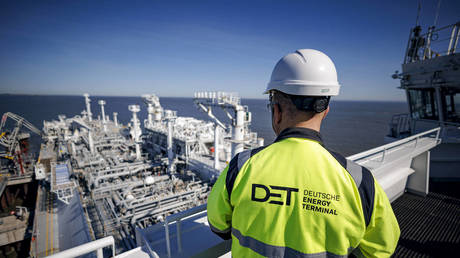
The steel box groaned as the crane lowered it onto the dock. Inside, ten thousand stainless steel coffee mugs sat in darkness, manufactured six thousand miles away, waiting to be unpacked by a small family business in Ohio.
By morning, the math behind those mugs had shifted entirely.
When a sweeping announcement of new global tariffs hits the news feeds, the headlines focus on grand political rhetoric, diplomatic friction, and international trade balances. The language of economic policy is intentionally cold. Terms like reciprocal duties, border adjustments, and import levies sound like abstract levers pulled in air-conditioned rooms in Washington.
They are not abstract.
They are the price tag on the coffee mug. They are the cost of a new pair of work boots. They are the quiet, creeping tax paid by ordinary people long after the TV cameras turn off.
The Ledger on the Workbench
To understand what happens when broad trade barriers are erected overnight, consider a hypothetical shop owner named Arthur. Arthur runs a precision machining business employing fourteen people. He buys specialized alloy steel because American mills either do not forge the specific grade he needs or do not produce it in sufficient volume.
When tariffs hit dozens of nations simultaneously, Arthur does not receive a polite letter asking him to support national trade policy. He receives an updated invoice from his supplier.
The price of his raw material spikes overnight by twenty percent.
Now, Arthur faces a choice that keeps him awake at 2:00 AM, staring at the ceiling fan. He can swallow the cost, destroying his already thin profit margins and threatening his ability to meet payroll by autumn. He can pass the cost onto the local tractor repair shop that relies on his parts, forcing them to raise their prices on farmers. Or he can cancel his planned equipment upgrades and freeze hiring.
Multiply Arthur by millions of small businesses across the country. That is the true architecture of broad-based tariffs.
The Illusion of the Border Wall
There is a tempting logic to trade restrictions. The core argument rests on a simple premise: if foreign goods are made more expensive through import taxes, buyers will naturally pivot to domestic alternatives. Industry returns, factories reopen, and American labor wins.
It sounds clean. It sounds protective.
The reality is far messier.
In a hyper-connected global economy, raw materials, component parts, and finished assembly move back and forth across borders like blood through capillaries. A single automobile assembled in Michigan contains parts that may have crossed international boundaries half a dozen times before the vehicle leaves the line.
Taxing those inputs along the way does not simply penalize foreign exporters. In fact, foreign governments do not pay these tariffs at all; the importing companies inside the domestic border pay them directly to customs officials upon arrival.
When those costs accumulate, the burden trickles down through every layer of the supply chain until it lands squarely in the lap of the consumer.
Consider what happens next. Foreign nations rarely accept sweeping tariffs without taking action. They respond in kind. They target agricultural exports, aerospace equipment, or regional manufacturing hubs. The farmer in Iowa who never bought a foreign component in his life suddenly finds his soybean exports stranded at the port because foreign buyers flipped the switch to competitors elsewhere.
The Human Element in the Balance Sheet
Trade policy is ultimately a study in human behavior under pressure.
When uncertainty settles over the market, capital freezes. A factory supervisor delays buying new machinery because nobody knows if the tariffs announced today will be doubled tomorrow or dismantled next month. Uncertainty acts as a brake on growth far more effectively than the tax itself.
Economics often loses its soul when trapped inside charts and percentages. But look closer at those spreadsheets. Beneath every percentage shift in import costs lies a real human trade-off.
It is the young couple postponing their home renovation because building materials jumped fifteen percent. It is the regional grocery store raising prices on staple goods because packaging materials became significantly more expensive. It is the shop floor worker whose overtime hours vanished to offset higher freight fees.
The Quiet Reality
For decades, the global trading system operated on a mandate of efficiency, seeking the lowest possible cost for every bolt, circuit board, and fabric blend. Reversing that machinery by regulatory decree is not like flipping a light switch. It is like trying to redirect a river with a shovel.
The debate over tariffs is not merely about who wins a trade war or which political platform triumphs in the midterms. It is about how a nation chooses to balance national security and domestic industry against the daily cost of living for its citizens.
Arthur stands in his workshop as the morning sun cuts through the dusty windows. The machines hum their regular, rhythmic tune. On his desk lies the new price list from the steel distributor, alongside the payroll schedule for his fourteen workers.
The policy was written thousands of miles away. The signatures were captured on high-definition cameras. But the actual work of paying for it happens right here, on the concrete floor, one invoice at a time.