A Wall Falls in Riyadh
Silence inside a clandestine operations room carries a distinct weight. It is the hum of server racks, the faint clicking of keyboards, and the quiet tension of officers monitoring real-time satellite telemetry thousands of miles from home.
Then comes a low, terrifying buzz.
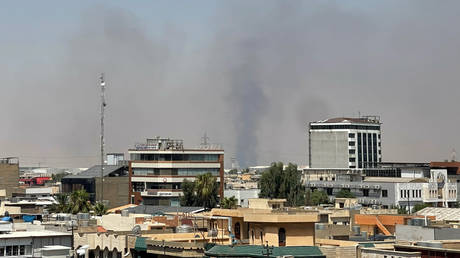
In March, inside the heavily fortified United States Embassy compound in Riyadh, that quiet vanished. An Iranian-designed Shahed suicide drone—a delta-winged weapon built for low-cost, high-impact destruction—streaked through the night sky. It did not hit the main administrative gate. It did not detonate harmlessly in the courtyard.
It struck a specific, vulnerable section of an exterior wall.
Directly behind that breached barrier sat the Central Intelligence Agency’s regional station. Seconds after the first impact tore open the structural envelope, a second drone followed through the newly created breach, detonating deep within the interior.
No lives were lost in that precise strike, but the psychological impact reverberated through the intelligence community. CIA safe houses, logistics hubs, and operational stations across the Gulf are among the most strictly guarded secrets in modern statecraft. Their locations are compartmentalized even within the agency itself.
Yet, within a span of weeks, drone strikes hit multiple CIA-linked sites across at least three countries, including a classified installation in eastern Iraq.
How did weapons once considered noisy, imprecise flying lawnmowers suddenly acquire surgical precision against targets that officially do not exist?
The Geometric Trap
To understand how a cheap drone pierces a black-site shield, look at the mathematics of navigation.
For years, low-cost loitering munitions relied on civilian-grade GPS receivers. They were effective against wide-area targets like oil refineries or airfields, but vulnerable. Electronic warfare units can flood the sky with noise, blinding a drone or tricking its internal compass into flying off course.
Standard GPS signals reaching Earth are faint. Overcoming them with jamming towers is relatively easy.
Imagine trying to hear a whisper across a crowded stadium. If the crowd roars, the whisper disappears. That was the primary defense protecting hidden assets in high-risk zones.
Then came an upgrade.
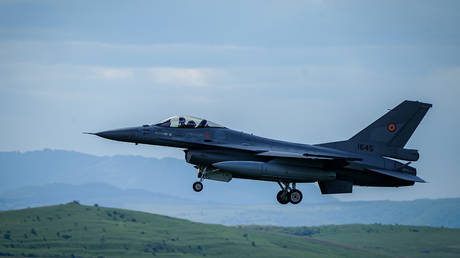
Analysts examining the wreckage of recent strikes identified a critical component added to the Iranian Shahed-136 fleet: the Kometa-M anti-jamming satellite navigation system. Developed in Moscow, the system uses controlled reception pattern antennas. Instead of listening blindly to the entire sky, the receiver uses specialized spatial filtering to ignore signals coming from the ground—where jammers sit—while listening exclusively to satellite signals overhead.
The crowd can scream all it wants. The receiver only listens to the sky.
This technical evolution turned rough artillery drones into precision weapons capable of striking specific rooms within complex structures.
The Triangulation of Shadow Warfare
Technology alone does not reveal secret addresses. A weapon can hit a ten-inch circle, but someone still has to draw the target.
That reality drove American intelligence analysts to launch a quiet, urgent investigation into a deeper partnership unfolding behind closed doors. Sources familiar with the probe indicate that investigators are examining whether Moscow provided Iran with the high-resolution satellite imagery and electronic intelligence required to map classified CIA locations across the Gulf.
The logic guiding the investigation is straightforward. Few nations possess the constellation of radar-imaging satellites, signal-intercept platforms, and human intelligence networks necessary to unmask hidden intelligence hubs. Fewer still have the motivation to hand that map to an active belligerent.
Moscow has repeatedly dismissed these assessments as unsubstantiated claims. Yet, the strategic incentives aligning the two nations have shifted dramatically.
For years, the intelligence relationship between Russia and Iran was cautious and transactional. Today, it has evolved into a deeply integrated exchange. Iran supplies thousands of loitering munitions and technical schematics for use in Eastern Europe; in return, Moscow offers advanced electronic warfare hardware, satellite data, and air defense expertise.
When state-level satellite surveillance marries low-cost autonomous weapons, the historical advantage of secrecy vanishes.
Beyond the Horizon
Consider the operational reality for an officer stationed in a safe house today.
Historically, defense meant concrete walls, armed perimeter guards, and strict operational security. You kept your lights low, varied your travel routes, and relied on the assumption that your location was unknown to the outside world.
That assumption is obsolete.
When autonomous systems can navigate jammed airspace and hit specific coordinates guided by space-based radar, physical concealment offers little protection. The battle space has flattened. High-altitude satellites identify micro-patterns—a sudden cluster of encrypted satellite dishes, specific vehicle armor signatures, or unusual diplomatic courier visits—and feed those coordinates directly to a factory floor halfway across the world.
Hours later, the coordinates become a flight path burned into a circuit board.
The investigation into the strikes across the Persian Gulf remains active. Intelligence agencies continue to analyze radar logs, circuit boards recovered from strike debris, and intercepted signal data to confirm the full scope of foreign assistance.
As night falls over the Gulf, the sky above secret installations looks calm. But high above the clouds, silent eyes circle in orbit, mapping coordinates, waiting for the next signal to flash across the grid.