In a dimly lit apartment on the outskirts of Kyiv, a young programmer named Mykola watches a flickering screen. It isn't a game. It isn't a movie. It is a live feed of a sky he used to find beautiful, now a canvas for the low, buzzing hum of "mopeds"—the grim nickname for the Iranian-made Shahed drones that have become a permanent fixture of Ukrainian nights. The sound is mechanical, insistent, and terrifyingly cheap. But as Mykola tracks the telemetry, he notices something different. The drones are getting smarter. Their paths are more erratic, their jamming resistance more sophisticated.
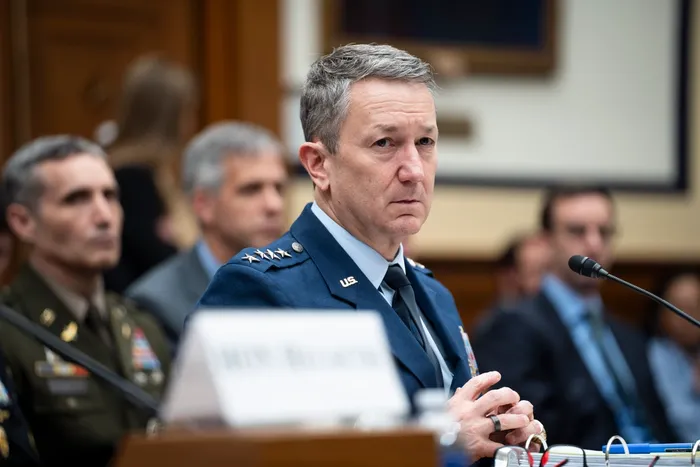
Thousands of miles away, in the marble halls of Washington, General Christopher Cavoli, the top U.S. commander in Europe, is staring at a different kind of screen. The data he sees tells the same story Mykola feels in his bones. The relationship between Russia and Iran has shifted from a desperate transaction into a lethal, high-tech partnership. This is no longer just a trade of drones for cash. It is a fundamental rewiring of the global threat map. For another look, see: this related article.
The Barter of Desperation
When the invasion began, the Kremlin found itself in an embarrassing position for a self-proclaimed superpower. They were running out of precision-guided munitions. They had the ambition of an empire but the supply chain of a failing department store. Iran, a nation that has spent decades perfecting the art of "asymmetric warfare" under the crushing weight of international sanctions, saw an opening.
Initially, the deal looked simple. Iran provided the Shahed-136, a "suicide drone" built with off-the-shelf parts that costs less than a used sedan. Russia provided the target. But gravity eventually pulls everything down, and the weight of this alliance has shifted. Russia is now paying its debts in ways that should keep every defense minister in the West awake at night. Similar analysis on the subject has been provided by USA Today.
Consider the hypothetical, yet highly probable, scenario of an Iranian engineer named Hassan. For years, Hassan worked with smuggled components and reverse-engineered scrap. Now, he receives a shipment from Moscow. Inside aren't just rubles, but captured Western technology—missile components, electronic warfare suites, and perhaps most dangerously, the blueprints for advanced fighter jets. This isn't just a sale. It is a masterclass in modern warfare, taught by a nuclear-armed state to a regional disruptor.
The Tech Exchange Nobody Is Watching
General Cavoli’s recent signals indicate that Russia is providing "direct support" to Iran's military capabilities. This goes beyond hardware. We are talking about cyber-cooperation and satellite intelligence. Imagine the implications for a merchant ship in the Persian Gulf or a civilian center in the Middle East. If Russia shares its sophisticated jamming technology with Tehran, the "invisible shield" that protects global shipping lanes begins to crack.
The stakes are invisible until they aren't. We focus on the explosion, but the real story is in the code. Russia has spent years testing its electronic warfare (EW) capabilities against NATO systems in the Baltics and now in Ukraine. When they share that data with Iran, they aren't just helping a friend; they are creating a second front. They are ensuring that if the West tries to intervene in one region, the tools used to stop them will be the same tools perfected on the battlefields of the Donbas.
This is a feedback loop of destruction. Iran sends the hardware; Russia provides the "live-fire" testing environment. The data flows back to Tehran, the drones are upgraded, and the cycle repeats. Each iteration makes the "moped" hum a little more lethal.
The Human Weight of Geopolitics
It is easy to get lost in the talk of "strategic depth" and "bilateral defense agreements." But for people like Mykola, these aren't abstract terms. They are the reason he has to decide between finishing his work or moving his sleeping daughter to the bathtub when the sirens start. The "human element" here is the erosion of safety in places that were supposed to be far removed from the Kremlin’s reach.
The U.S. intelligence community isn't just worried about Ukraine. They are looking at the Su-35 fighter jets Russia has promised Iran. They are looking at the sophisticated air defense systems that could make any future diplomatic solution in the Middle East nearly impossible to enforce. We are witnessing the birth of a new kind of "Axis," one built not on shared ideology, but on a shared necessity to break the rules of the existing world order.
There is a certain irony in the situation. Russia, once the patron of the sophisticated S-300 and S-400 missile systems, is now reliant on a country that has been a pariah for forty years. It is a marriage of the sanctioned. They have realized that while they may not be able to out-spend the West, they can out-clutter it. They can flood the zone with cheap, effective tech that forces the U.S. and its allies to spend millions of dollars on interceptor missiles to shoot down drones that cost five figures.
The Quiet Erosion of Certainty
When General Cavoli speaks, he is usually measured. Generals are paid to be calm. But the subtext of his recent warnings is a profound sense of urgency. The "rules of the road" are being rewritten in real-time. The technology that Russia is handing over—specifically in the realms of space and cyber—is a force multiplier that Iran could never have achieved on its own in such a short window.
Think of it as a dark version of an open-source project. In the tech world, developers share code to build better software. In this theater, these two nations are sharing the "code" of modern conflict. They are learning how to bypass GPS, how to blind sensors, and how to overwhelm integrated air defense systems.
This cooperation isn't a temporary fix for a stalled war. It is a long-term investment. Even if the guns fell silent in Ukraine tomorrow, the technological genie is out of the bottle. Iran will walk away from this conflict with a military-industrial complex that is decades ahead of where it was in 2021. Russia will walk away with a partner that is no longer just a client, but a co-developer of the next generation of chaos.
The Sound in the Dark
Back in Kyiv, Mykola hears the hum fade. The air defense battery a few miles away has done its job. For now. But he knows that tomorrow, or the day after, the hum will return. And he knows that every time it does, it carries with it a little bit more of Moscow’s expertise, a little bit more of the world’s redirected anger.
We often think of war as a series of borders being crossed or cities being taken. We look for the big, cinematic moments. But the most dangerous shifts are often the ones that happen in shipping containers, in encrypted data transfers, and in the quiet handshakes between men who have nothing left to lose but their grip on power.
The invisible pipeline between Moscow and Tehran is flowing. It isn't just carrying oil or drones. It is carrying the blueprints for a future where the sky is never truly quiet, and the "human element" is the only thing left to stand against the hum of the machine.
The buzzing starts again. Mykola doesn't look at his screen this time. He looks at his daughter, still asleep, unaware that the world outside her window is being traded, piece by piece, for a few more months of a dictator’s relevance.