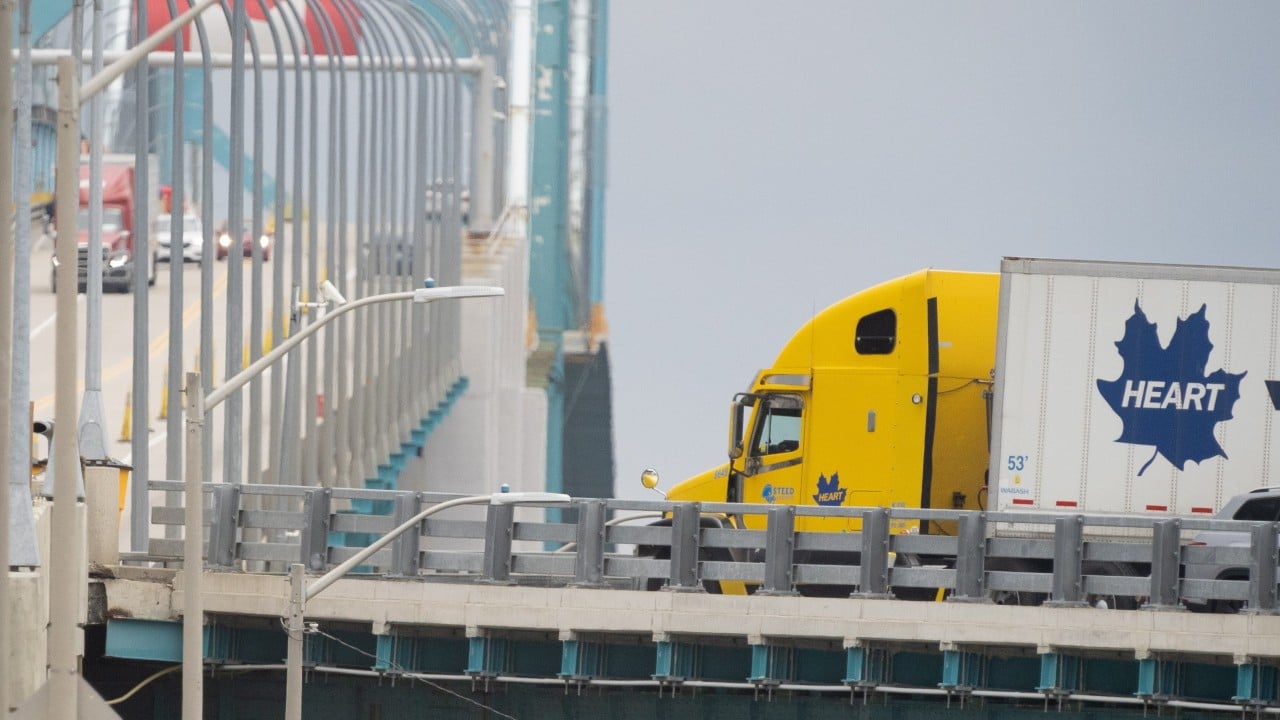
The metal assembly plant in Ontario hums with a familiar, rhythmic vibration. It is a mechanical heartbeat that has dictated the rhythm of local life for decades. Here, thousands of workers weld, bolt, and test components that will eventually cross an international boundary, sliding seamlessly into vehicles driven on highways thousands of miles away. The border on the map is a dotted line of ink. On the shop floor, it does not exist at all.
Parts move north and south across the frontier multiple times before a single car ever rolls off a dealership lot. This is the miracle of modern industrial integration. It is also a system built entirely on trust, proximity, and predictable rules.
Consider what happens next: that trust is currently experiencing a historic rupture.
Following the collapse of high-stakes trade negotiations in Washington, the economic weather across the northern half of the continent has turned glacial. President Donald Trump announced that the United States will slam Canadian automotive manufacturing, trucks, parts, and steel with a staggering 50 percent tariff, slated to take effect on January 1, 2027. The justification from the administration points to long-standing trade deficits and agricultural grievances, framing the policy as a long-overdue correction. But down on the ground, far from the polished halls of diplomacy, the news lands like a physical blow.
To understand why this number—50 percent—matters so profoundly, imagine a hypothetical machinist named Dave. Dave has spent twenty-two years on the line in Windsor, tightening bolts on heavy-duty truck frames. His mortgage is tied to this plant. His daughter’s college fund is funded by overtime shifts that rely entirely on the seamless pipeline of steel moving across the Detroit River. When trade policies shift by fractional percentages, budgets tighten. When a punitive wall of protectionism rises to half the value of the product itself, the math stops working altogether. The entire architecture of cross-border commerce shatters.
The collapse of the talks did not happen in a vacuum. Days prior to the tariff announcement, discussions between Washington and Ottawa unraveled over stubborn disagreements concerning sectoral protections, agricultural supply-management systems, and access to critical minerals. The United States Trade Representative argued that Canadian negotiators introduced unexpected demands and walked back prior commitments, while Canadian officials countered that the proposed terms would gut domestic manufacturing independence.
The political fallout was swift and severe. Canadian Prime Minister Mark Carney did not mince words, characterizing the sudden U.S. actions as a hostile act and declaring that Canada is effectively at war on trade. Ottawa has already signaled plans to retaliate with dollar-for-dollar tariffs targeting American steel, electronics, dairy, and agricultural equipment.
Ontario Premier Doug Ford added fuel to the fire, suggesting that provincial resources like electricity and critical minerals could eventually be restricted if the standoff deepens. The rhetoric is sharp, but the human cost is sharper.
The administration’s message to automakers is clear and stark: build within the United States, and face zero tariffs. It is an explicit invitation to reroute capital, dismantle decades-old supply chains, and relocate factories southward. Yet, building an automotive ecosystem is not like turning on a light switch. You cannot simply pick up a foundry, a trained workforce, and a century of specialized component engineering and drop them across a border overnight. The friction of relocation takes years, costs billions, and leaves profound economic devastation in its wake for the communities left behind.
We are watching the redrawing of economic geography in real time. For generations, the U.S.-Canada border was treated as a speed bump for commerce, an administrative nuisance easily cleared by Just-In-Time delivery schedules. Now, it threatens to become a formidable economic wall.
The months leading up to January 2027 will not just be a period of tense legal maneuvering between trade lawyers and cabinet ministers. They will be a nervous waiting game for millions of families whose livelihoods depend on the quiet, uncelebrated magic of things crossing the line together. When the heavy gates of protectionism finally drop, the echoes will be heard in every showroom, every union hall, and every kitchen table from Michigan to Ontario.