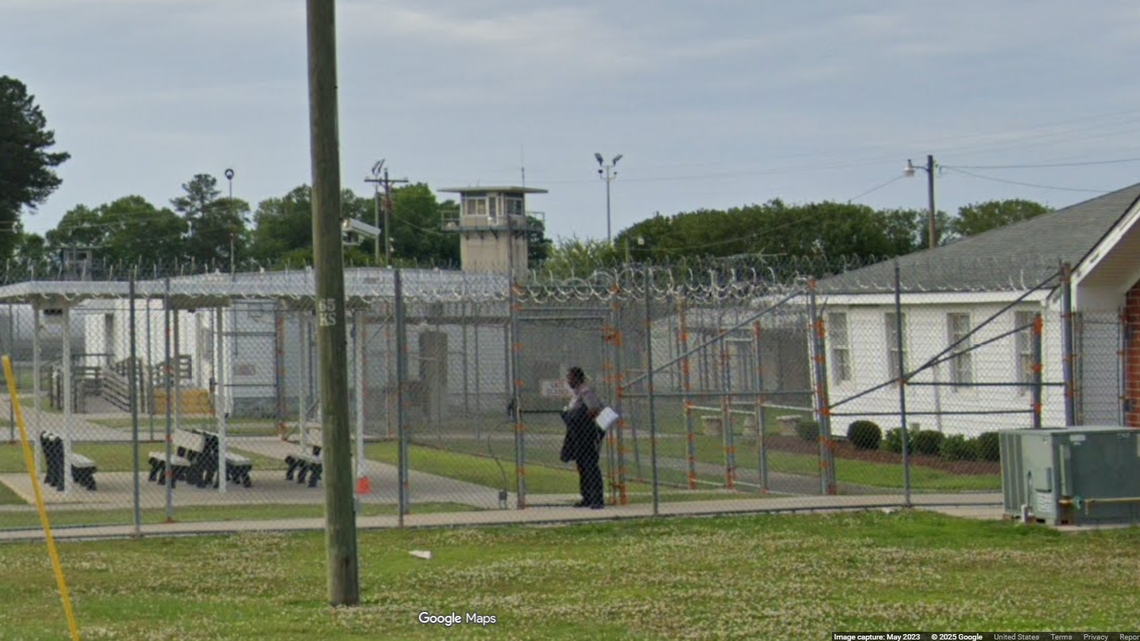
A light stays on past midnight in a nondescript concrete building just outside Tbilisi, Georgia. Inside, a technician in a positive-pressure suit adjusts a pipette, working with pathogens that the human immune system has not encountered in generations. Thousands of miles away, in Washington, D.C., a bureaucratic pen strokes a line across a ledger, approving a routine wire transfer for "biological threat reduction."
Most people never think about these buildings. They blend into the gray infrastructure of suburban landscapes or sit tucked away behind high security fences in developing nations. But they are there. More than 120 of them scatter across the globe, funded by the United States government.
For years, the existence of these laboratories remained buried under layers of dense, clinical jargon—the kind of language designed to make the eyes glaze over. Then, a single political figure pulled back the curtain, and the quiet reality of global biosecurity collided head-on with public anxiety.
When former Congresswoman Tulsi Gabbard released declassified intelligence detailing the sheer scale of the U.S. foreign biolab footprint, it triggered an immediate, polarized firestorm. To some, the revelation felt like the unmasking of a global conspiracy. To others, it was an alarming validation of risks they had long suspected. But away from the political talking points and the frantic cable news chyrons, the truth requires looking closely at the fragile, terrifying, and deeply human reality of researching deadly diseases on foreign soil.
The Geography of Risk
Imagine living next door to a facility holding the secrets to an outbreak.
Consider a hypothetical citizen—let us call her Olena—living on the outskirts of Kyiv in early 2022. For Olena, the laboratory down the road was just a building where scientists in white coats went to work every morning. She did not know that inside those walls sat active samples of anthrax, tularemia, and dangerous strains of influenza. She certainly did not expect her neighborhood to become an active war zone.
When Russian artillery began shelling Ukrainian infrastructure, the abstract concept of "biosecurity" suddenly transformed into a terrifyingly concrete crisis. If a stray shell struck the facility, what would escape into the wind? If the power grid failed and the backup generators died, how long could the freezers keep those pathogens dormant?
This is the exact nightmare scenario that Gabbard’s declassified disclosures forced into the light. The U.S. Department of Defense, through its Defense Threat Reduction Agency, has spent decades funding and upgrading these laboratories in post-Soviet states, Southeast Asia, and Africa. The official mission is noble on paper: to secure legacy Soviet biological weapons caches, detect emerging disease outbreaks before they reach American shores, and help developing nations build modern scientific infrastructure.
But the geography of these sites introduces an undeniable paradox. By placing laboratories in volatile regions—areas prone to political instability, civil unrest, or outright military invasion—the very program designed to reduce biological threats inadvertently creates new, highly concentrated vulnerabilities.
The Jargon of Denial
When the news broke, the institutional pushback was swift. Government spokespeople and mainstream media fact-checkers rushed to the microphones to clarify that these were not "biological weapons facilities," but rather "public health laboratories."
To the average person, this distinction feels like semantic gymnastics.
Biosecurity operates in an uncomfortable space known as dual-use research. The exact same equipment, the identical training, and the very same pathogens used to develop a vaccine can also be weaponized. A freezer containing African swine fever does not care if the funding came from a health ministry or a defense department. The risk of an accidental leak, a pathogen theft, or a structural breach remains identical.
The defense establishment speaks in acronyms and sanitizing phrases to minimize public panic. They talk about "biosafety level upgrades" and "collaborative epidemiologic surveillance."
But strip away the terminology. Look at the raw mechanics. The United States government has established a network of over 120 facilities operating in foreign jurisdictions, far beyond the direct oversight of the American public or standard domestic regulatory bodies. When a system grows that large, spread across dozens of countries with varying levels of regulatory enforcement and local corruption, the probability of a human error or a security failure climbs dramatically.
The Human Friction in the System
Systems are only as strong as the people running them.
Think of a young scientist working in one of these U.S.-funded facilities in a developing nation. He is highly educated but poorly compensated compared to his Western counterparts. He operates complex, high-maintenance containment equipment in a city plagued by routine blackouts. Every day, he follows strict decontamination protocols, but he is tired. His child is sick at home. The political climate in his country is fracturing.
One afternoon, a minor protocol is skipped to save time. A seal is checked half-heartedly. A ledger entry is rushed.
History shows that this is not paranoia; it is historical precedent. The world’s most catastrophic biological scares rarely stem from cinematic villainy. They happen because of mundane human fatigue. The 1979 Sverdlovsk anthrax leak in the Soviet Union—which killed at least 66 people—occurred simply because a technician forgot to replace a crucial filter in a biological research facility, and the next shift started the machines anyway.
By funding and expanding over 120 laboratories globally, the U.S. has multiplied the number of points where human friction can cause a catastrophic system failure. It creates 120 opportunities for a tired technician, a corrupt local official, or a security guard looking the other way to alter the course of human history.
The Question of Trust
The deepest fracture exposed by the declassified intelligence is not logistical or military. It is a profound crisis of trust.
When citizens discover that their government is funding high-consequence pathogen research across the globe—and that this information was only clearly detailed through declassified pressure rather than proactive transparency—it breaks something fundamental in the social contract. People begin to ask uncomfortable, entirely justifiable questions.
Why are these laboratories placed abroad rather than on American soil? If the research is entirely safe and benevolent, why not conduct it under the strict, watchful eye of domestic regulators in Kansas or Maryland?
The uncomfortable truth, one that officials rarely say out loud, is that foreign laboratories allow for a level of experimentation and risk-taking that would face paralyzing legal, environmental, and political hurdles inside the United States. It shifts the burden of geographic risk away from the funding nation and onto populations that often have no say in the matter.
Admitting this is uncomfortable. It forces us to confront the cold, transactional nature of global geopolitics. The United States desires the data, the early warning systems, and the scientific leverage, but it prefers to keep the physical danger at arm's length, across an ocean, over the horizon.
The Unbroken Circle
Disease does not recognize national borders. It does not halt at checkpoints or respect sovereign territory.
If a pathogen escapes a laboratory in Tbilisi, Tashkent, or Phnom Penh, it is not contained by geography. In an era of hyper-globalization, where thousands of international flights cross the skies every hour, a localized outbreak in an overseas facility can reach a major Western metropolis in less than twenty-four hours. The geographic distance that policy writers use to comfort themselves is an illusion.
The declassified intelligence brought forward by Tulsi Gabbard ultimately forces a reassessment of how safety is defined in the modern age. True security cannot be bought by building more walls, funding more hidden laboratories, or accumulating samples of the world's deadliest diseases in the name of defense.
The lights will continue to burn late into the night in those 120 concrete buildings around the world. Scientists will continue their quiet work, handling vials that hold immense destructive power, funded by distant taxpayers who are only now beginning to understand what their money has built. The risk remains, humming quietly in the background of a world too busy to notice, waiting for a single broken seal, a single missed protocol, or a single falling missile to turn the abstract into the catastrophic.