The fluorescent lights in the Taipei neighborhood association office hum with a low, persistent vibration that you only notice after midnight.
Stacks of glossy campaign flyers smell faintly of fresh ink and damp cardboard, piled beside half-empty cups of cold oolong tea. Outside, scooters whine past on wet asphalt, their tires hissing through the humid autumn air just weeks before local elections. Inside, a campaign volunteer—let us call her Mei-ling, representing the thousands of ordinary citizens who stuff envelopes and knock on doors every election cycle—checks a spreadsheet of neighborhood wardens. Everything looks routine. Mundane. Local.
Then the news breaks on the muted television mounted in the corner.
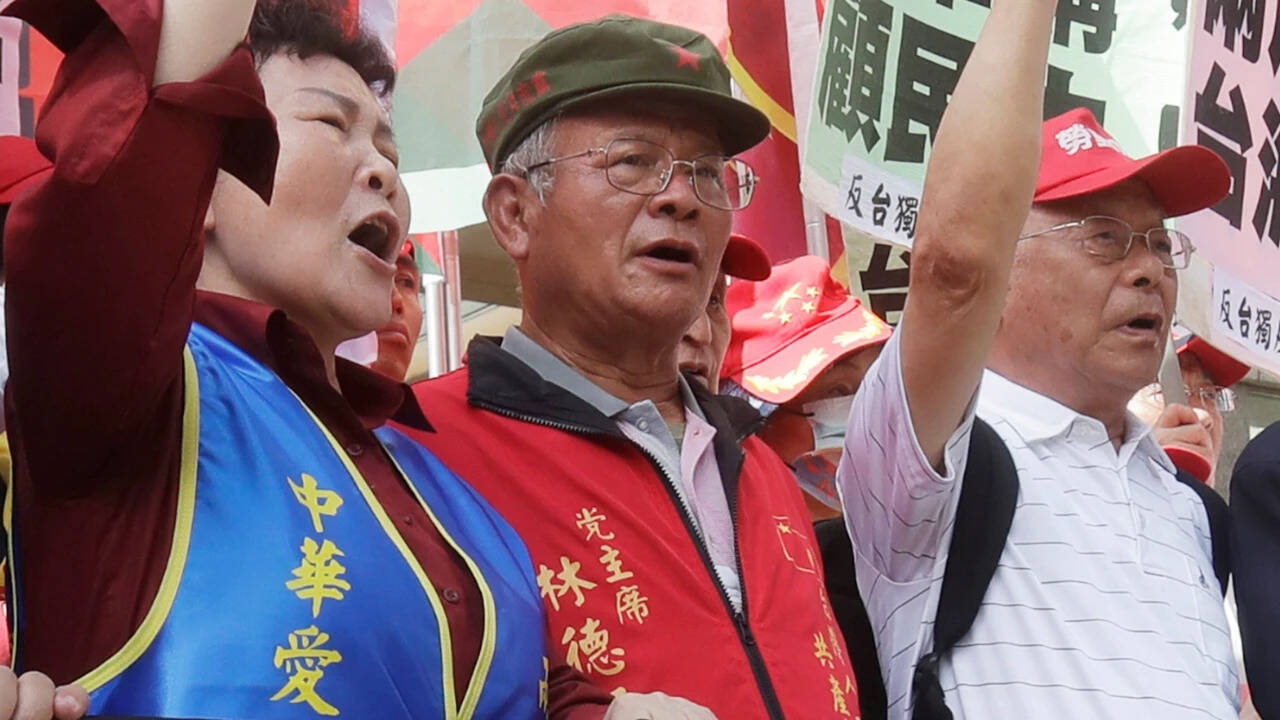
Taiwanese prosecutors have detained the leader of a domestic pro-unification political party—specifically, the head of a small, fringe communist organization operating legally under Taiwan’s democratic constitution—over allegations of accepting illicit funding and directives from Beijing ahead of the local polls.
Silence.
To an outsider scrolling past a wire headline on a morning commute, this reads like standard geopolitical friction. Another arrest. Another accusation across the Taiwan Strait. You skim it, register the familiar tension between Taipei and Beijing, and move on to coffee.
But standing under those humming fluorescent lights in Taipei, the air changes instantly. The arrest is not merely a legal footnote about campaign finance or fringe politics; it is the sudden, visible crack in a dam holding back an ocean of quiet, relentless pressure.
When Democracy Becomes Its Own Vulnerability
To understand why the detention of a minor party leader sends tremors through an entire island, you have to understand the paradox at the heart of Taiwanese democracy.
Taiwan is one of Asia’s freest societies. Since lifting martial law in 1987—a period known as the White Terror, when speaking the wrong political opinion could vanish you into a prison cell—the island has guarded freedom of speech and political association with fierce, almost sacred devotion. That devotion is so absolute that Taiwan legally permits the existence of communist parties on its soil, even while living under the constant military and political threat of the Chinese Communist Party just one hundred miles across the water.
Think of it like a homeowner who refuses to lock the front door because they believe hospitality is the highest moral virtue, even while a neighbor stands on the sidewalk loudly claiming ownership of the house.
For years, that openness worked. Small pro-Beijing groups waved red flags outside Taipei 101, shouted through megaphones, and registered as official political parties. Most Taiwanese citizens walked past them with the same bored indifference New Yorkers reserve for Times Square street preachers. Democracy, the prevailing wisdom went, was strong enough to absorb noise.
Except the noise was never the real weapon.
Consider what happens when political freedom is used not to persuade voters in the open square, but to build an underground plumbing system for foreign cash and coordinated influence. In recent years, Taiwanese intelligence and prosecutorial units—specifically the Investigation Bureau and district prosecutors operating under the Anti-Infiltration Act—have uncovered a pattern that looks far less like ideological debate and far more like covert logistics.
The Architecture of Quiet Influence
Let us step back and look at the mechanics of how this actually works on the ground, stripped of diplomatic euphemisms.
Imagine a local election in a mid-sized Taiwanese township. Voters here are not debating grand theories of international law or cross-strait sovereignty. They are arguing about garbage collection schedules, zoning permits for a night market, subsidies for elderly care, and potholes on the main road. Local elections—the nine-in-one polls that decide mayors, county magistrates, and neighborhood chiefs—are intimate affairs. A few hundred votes, sometimes a few dozen, can swing a ward.
Now introduce a hypothetical scenario grounded in real prosecutorial patterns documented across Taiwan over the past several election cycles. A local community leader struggles to fund a neighborhood banquet or a temple pilgrimage. An intermediary—often affiliated with a registered political association, a cultural exchange group, or a fringe party with deep ties to mainland United Front Work Department officials—steps in with a generous offer. Subsidized travel to Fujian or Shanghai. All-expenses-paid banquets where local officials are toasted as "compatriots." Direct cash infusions disguised as business consulting fees or charitable donations, routed through underground banking networks or digital payment platforms to evade financial regulators.
No one asks the neighborhood warden to stand on a stage and praise Beijing. That would be clumsy, and Taiwanese voters would reject it immediately.
Instead, the nudge is subtle. Amplify narratives that Taiwan’s democratic government is corrupt or incompetent. Frame defensive preparations as reckless warmongering. Sow exhaustion. Convince ordinary people that resistance is futile and accommodation is simply common sense.
When prosecutors detained the communist party leader ahead of the local polls, they were pulling on a single thread of this exact tapestry—no, let us call it what it actually is: a sprawling, subterranean root system. Under Taiwan’s Anti-Infiltration Act, passed in late 2019, accepting instructions, financial support, or entrustment from "hostile external forces" to interfere in elections, organize rallies, or lobby politicians is a criminal offense carrying prison sentences of up to five years and heavy fines.
Prosecutors alleged that the detained leader had traveled repeatedly to China, met with officials tied to Beijing’s political warfare apparatus, and channeled funds back into Taiwan to support specific local candidates and influence voter sentiment.
Suddenly, the guy with the megaphone outside the skyscraper wasn't just a harmless eccentric anymore. He was a conduit.
Living Inside the Gray Zone
I remember sitting in a cramped noodle shop in Kaohsiung during a previous election cycle, talking with a retired high school teacher who had spent his youth protesting authoritarian rule. He stirred his beef noodle soup slowly, looking out at a campaign truck blasting music down the boulevard.
"When I was twenty," he told me, "we knew who the enemy was because they wore uniforms and carried batons. Today, the threat arrives wearing a suit, offering a business grant, or sharing a funny video on Line."
Line—the ubiquitous messaging app that serves as Taiwan’s digital town square—is where much of this battle plays out every single morning. Before a voter even steps into a voting booth at an elementary school gymnasium, their phone has already buzzed dozens of times with forwarded messages in family group chats.
Some are harmless good-morning graphics decorated with lotus flowers. Others are carefully crafted rumors questioning the integrity of election ballots, claiming secret deals have already been struck behind closed doors, or painting local leaders as puppets. When investigators trace the origins of coordinated political funding and illicit party networks, they repeatedly find that offline money fuels online amplification. Cash pays for banquets; banquets build loyalty; loyalty turns into trusted voices sharing curated narratives inside private chats where fact-checkers cannot reach.
This is what military strategists call "gray zone" warfare—coercion that stays deliberately below the threshold of open armed conflict. There are no landing craft on the beaches of Tainan. There are no paratroopers dropping onto Taipei. Instead, there is a slow, persistent drip of capital, patronage, and legal exploitation designed to hollow out democratic institutions from the inside until the shell collapses on its own.
And yet, fighting back carries its own perilous trap.
The Tightrope Over an Abyss
Every time Taiwanese authorities raid a party office, freeze bank accounts, or detain a political figure over alleged links to China, a fierce debate erupts across the island.
It is an uncomfortable, deeply human anxiety that anyone who cares about civil liberties will recognize immediately. Where is the line between defending a democracy from foreign subversion and becoming the very authoritarian state you swear to resist?
Opposition politicians and civil libertarians frequently warn that laws like the Anti-Infiltration Act could be wielded as a political cudgel by whichever party holds executive power. If prosecutors detain a fringe communist leader today, skeptics ask, what stops a future administration from targeting business owners who trade with mainland China, religious groups visiting ancestral temples in Fujian, or opposition campaigners advocating closer cross-strait ties?
Taiwan’s economic lifeblood is deeply intertwined with China. Hundreds of thousands of Taiwanese citizens—known as Taishang—live, work, and run factories on the mainland. Millions more have family ties, cultural roots, and business partnerships spanning the strait. Criminalizing contact with Chinese entities is impossible; criminalizing infiltration requires proving intent, directive, and illicit funding—a high evidentiary bar in Taiwan’s independent court system.
I have watched prosecutors and legal scholars wrestle with this tension in real time, and honestly, there is no clean, painless formula. If the courts set the bar for proof too high, covert operatives walk free, laughing at a legal system paralyzed by its own procedural niceties. If the state lowers the bar too far, paranoia creeps back into public life, chilling legitimate political dissent and resurrecting ghosts of the martial law era that older generations fought so hard to bury.
Walk through any night market in Taichung or Tainan and ask ten people about the detention, and you will hear that exact tug-of-war play out in their voices. One vendor frying oyster omelets will nod grimly, insisting that anyone taking Beijing’s money during an election is committing treason and belongs behind bars. Two stalls down, an elderly man sipping herbal tea will wave a dismissive hand, muttering that politicians always drag out "national security" right before an election to distract voters from stagnant wages and high housing prices.
Both instincts come from lived experience. Both carry a grain of truth. That is precisely what makes cognitive warfare so effective: it attaches itself to real domestic grievances, feeding on genuine cynicism until citizens no longer know whether to trust their own courts, their own media, or their own neighbors.
Why Local Polls Are the Real Prize
To grasp why Beijing invests so heavily in local Taiwanese elections—and why Taipei’s security apparatus treats a minor party leader’s arrest as an urgent national security priority—you have to flip the map upside down.
International observers obsess over Taiwan’s presidential elections. Every four years, foreign correspondents fly into Taipei, file dramatic dispatches about missiles and semiconductors, and leave the day after the inauguration.
Beijing plays a much longer, quieter game.
In Taiwan’s political ecosystem, local elections are the bedrock of national power. County magistrates, city mayors, councilors, and village chiefs (lizhang) control municipal budgets, police deployments, civil defense shelters, and grassroots voter mobilization networks. More importantly, local factions are the training ground and logistical engine for national campaigns. If an external power can cultivate sympathetic networks at the grassroots level—helping friendly candidates win local seats, funding community associations, and embedding loyalists inside neighborhood councils—it gains leverage that persists regardless of who sits in the Presidential Office in Taipei.
Consider what happens during a crisis. If an earthquake strikes, or a blockade tightens around Taiwan’s ports, citizens do not look to diplomats in Washington or Brussels for water, power, and shelter. They look to their borough chief. They look to their mayor. They look to the local civic leaders they trust.
By targeting the connective tissue of local politics through fringe parties and proxy organizations, external intelligence services are not merely trying to tilt a single municipal vote. They are mapping the social terrain, identifying vulnerabilities, and building dormant networks that can be activated when the stakes turn existential.
When Taiwanese investigators detained the communist party leader, seized financial records, and questioned dozens of witnesses across multiple counties, they were disrupting an operational node before ballots were cast. They were sending an unmistakable signal to every local broker, fringe organizer, and intermediary weighing the temptation of easy offshore money: the financial trails are being watched, the encrypted chats are not invisible, and the cost of serving as a proxy is no longer theoretical.
The Weight of a Paper Ballot
Still, arrests alone cannot immunize a democracy.
Police can detain a party leader. Prosecutors can indict financial couriers. Courts can hand down sentences. Yet the ultimate defense of Taiwan’s political system does not sit inside the Ministry of Justice or the National Security Bureau. It sits in the hands of millions of ordinary people walking into brightly lit school classrooms on election Saturday, dipping a small brass stamp into red ink, and pressing it onto a strip of paper.
In Taiwan, there are no electronic voting machines. No mail-in ballots. Every single vote is cast in person, counted by hand in front of public observers, and held aloft one by one while poll workers call out the candidate’s name in a rhythmic, unmistakable chant that echoes across every town from the northern coast of Keelung to the southern tip of Pingtung.
It is slow. It is fiercely transparent. And it is deeply personal.
Think back to Mei-ling under those humming fluorescent lights in Taipei, sorting flyers as the midnight news ticker updates the details of the prosecutor’s investigation. The arrest does not erase the anxiety hanging over the island, nor does it magically silence the relentless hum of disinformation vibrating through millions of phones. The legal battle over the detained leader will grind through indictments, defense motions, and courtroom arguments long after the campaign banners are taken down from streetlamps.
Yet as morning breaks over Taipei, the neighborhood association doors open again. Coffee brews. Voters stop by to argue passionately—and loudly—about bus routes, park renovations, and who deserves their trust for the next four years.
A single red ink stamp pressed onto paper looks fragile against the machinery of a superpower, right up until twenty million people refuse to let anyone else hold the stamp.