Silence.
That is the first thing that vanishes when a rumor of radiation hits a city, replaced instantly by a high-pitched, collective static that hums behind every conversation on the Metro, every glance at a stray backpack on the National Mall, and every late-night scroll through breaking news alerts. You cannot see ionizing radiation, you cannot smell it, and you cannot taste it on your tongue, which is precisely why the phrase "dirty bomb" carries a psychological weight far heavier than the conventional explosives inside it. For a closer look into similar topics, we recommend: this related article.
When headlines surface asking whether U.S. intelligence has uncovered Iranian plots to detonate a radiological dispersal device in Washington, the public mind immediately leaps to mushroom clouds and flattened city blocks. We are conditioned by decades of cinema and Cold War history to conflate anything nuclear with total annihilation. Yet, if you ask the physicists, the emergency responders, and the intelligence analysts who spend their lives tracking these threats, they will tell you that we have the danger almost entirely backward.
To understand what U.S. intelligence actually says—and what a radiological threat truly means for a living, breathing city—we have to step away from the sensationalism of cable news chyrons and look at the cold, hard mechanics of fear. To get more background on this topic, comprehensive coverage can be read at BBC News.
The Anatomy of a Misunderstood Weapon
Consider a hypothetical morning in downtown Washington. Let us call our observer Elena, a civil engineer commuting past Farragut Square with a lukewarm coffee in hand, thinking about bridge load tolerances rather than geopolitical brinkmanship. If a conventional pipe bomb were to detonate two blocks away, Elena would hear the concussive crack, see the plume of gray smoke, and witness the immediate, terrible perimeter of shattered glass and emergency sirens. The damage, while tragic, would be localized, visible, and finite.
Now, imagine that same conventional explosive wrapped in canisters of cesium-137 or cobalt-60—radioactive isotopes commonly used in hospital cancer treatments, industrial radiography, and food irradiation. This is a radiological dispersal device, known colloquially as a dirty bomb.
It is not a nuclear weapon. It does not split atoms, it does not trigger a chain reaction, and it does not vaporize neighborhoods. The blast itself is caused entirely by traditional explosives like dynamite or C-4. The radioactive material does not amplify the explosion; instead, the explosion acts as a violent fan, scattering radioactive dust across the wind currents of the surrounding streets.
In our hypothetical scenario, Elena would not drop dead from radiation sickness on the sidewalk. According to the Nuclear Regulatory Commission and decades of federal emergency modeling, the immediate fatalities from a dirty bomb come almost exclusively from the conventional blast, not the radioactive payload. Most people within a few blocks would receive a radiation dose roughly equivalent to a few medical CT scans—elevated, certainly, and requiring careful monitoring, yet nowhere near the lethal thresholds of a nuclear detonation.
Why, then, do intelligence agencies spend billions of dollars monitoring the movement of medical isotopes and tracking covert networks? Because a dirty bomb is not a weapon of mass destruction. It is a weapon of mass disruption.
What Intelligence Actually Sees
When reports circulate linking Iran or its proxy networks to potential plots against the U.S. capital, the reality inside the intelligence community is far more nuanced than a ticking-clock thriller. Over the past decade, U.S. intelligence assessments—including the Annual Threat Assessment from the Office of the Director of National Intelligence—have consistently evaluated Iran's capabilities, intentions, and red lines.
Here is what the verified intelligence record establishes: Iran possesses an advanced civilian nuclear program, deep expertise in asymmetric warfare, and a global network of operatives and proxies, such as Hezbollah. For years, intelligence officials have tracked Iranian reconnaissance activities in Western cities, noting that operatives have occasionally cased critical infrastructure, diplomatic facilities, and public transit hubs.
At the same time, intelligence analysts distinguish sharply between contingency planning and imminent execution.
In the shadowy arithmetic of international deterrence, intelligence agencies frequently uncover "sleeper" logistics—efforts to map out targets, acquire dual-use materials, or test security perimeters—that are designed to sit on a shelf unless an all-out war breaks out. Launching a radiological attack on Washington would cross the ultimate threshold, guaranteeing a catastrophic military response from the United States that would threaten the very survival of the Iranian regime. U.S. intelligence assessments have repeatedly emphasized that Tehran’s leadership calculates risk carefully, favoring plausible deniability and calibrated escalation over suicidal provocations on American soil.
Still, intelligence is never a crystal ball. It is a mosaic assembled from intercepted communications, financial trails, and forensic tracking of nuclear materials. The fear that keeps counterterrorism officials awake at night is not necessarily a direct, state-ordered strike by Tehran on a random Tuesday, but the possibility of a rogue cell, a miscalculation during a regional crisis, or the illicit diversion of poorly secured industrial isotopes falling into the wrong hands.
The Invisible Perimeter
To grasp the true stakes of a radiological event, you have to think like a city planner rather than a soldier. Having spent years studying urban resilience and emergency response protocols, I have walked through the tabletop exercises where municipal leaders confront the aftermath of a dirty bomb. The most chilling moment in those simulations never happens when the simulated bomb goes off. It happens forty-eight hours later.
In the immediate aftermath, the invisible nature of the threat collides with human psychology. Because people cannot see radiation, everyone within ten miles of the blast assumes they have been poisoned.
Picture the emergency rooms at George Washington University Hospital and MedStar Washington Hospital Center. Within an hour of a confirmed radiological release, thousands of uninjured, terrified residents—what emergency managers call the "worried well"—flood the triage bays. They overwhelm doctors and nurses, blocking access for the dozens of people who actually suffered shrapnel wounds from the initial explosion.
Meanwhile, the wind carries microscopic radioactive particles across granite facades, into subway ventilation shafts, and onto the leaves of cherry trees. Unlike chemical agents, which eventually evaporate or break down, radioactive isotopes persist. Cesium-137 has a half-life of roughly thirty years. It bonds chemically to concrete, asphalt, and brick.
You cannot simply hose it down into the storm drains, because doing so would contaminate the Potomac River. You cannot sandblast it without kicking the dust back into the air for residents to breathe.
This is the hidden economic and social devastation of a dirty bomb. A single device detonated near K Street or Capitol Hill would not destroy the buildings, yet it could render dozens of blocks uninhabitable for months or even years. Cleaning up an urban core contaminated with cesium requires stripping roofs, tearing up asphalt, removing topsoil, and treating entire skyscrapers with specialized chemical gels—a process costing tens of billions of dollars. Businesses shutter, federal agencies scatter, and the psychological scar of a "contaminated zone" lingers long after Geiger counters fall silent.
The Quiet Shield We Never Notice
It is easy to feel helpless when confronting a threat you cannot see, especially when sensationalized headlines prey on our deepest anxieties. I admit that even after years of reading technical assessments on radiological security, walking past a construction site housing a nuclear density gauge or reading about missing medical isotopes still triggers a flicker of unease. Uncertainty is an unavoidable part of modern urban life.
Yet, despair misses the extraordinary, largely invisible architecture that stands between a plot and its execution.
Since the early 2000s, the United States has built one of the most sophisticated radiological detection networks on earth. Under the Department of Energy’s National Nuclear Security Administration and the Department of Homeland Security, radiation portal monitors scan virtually every shipping container entering American ports and every vehicle crossing land borders.
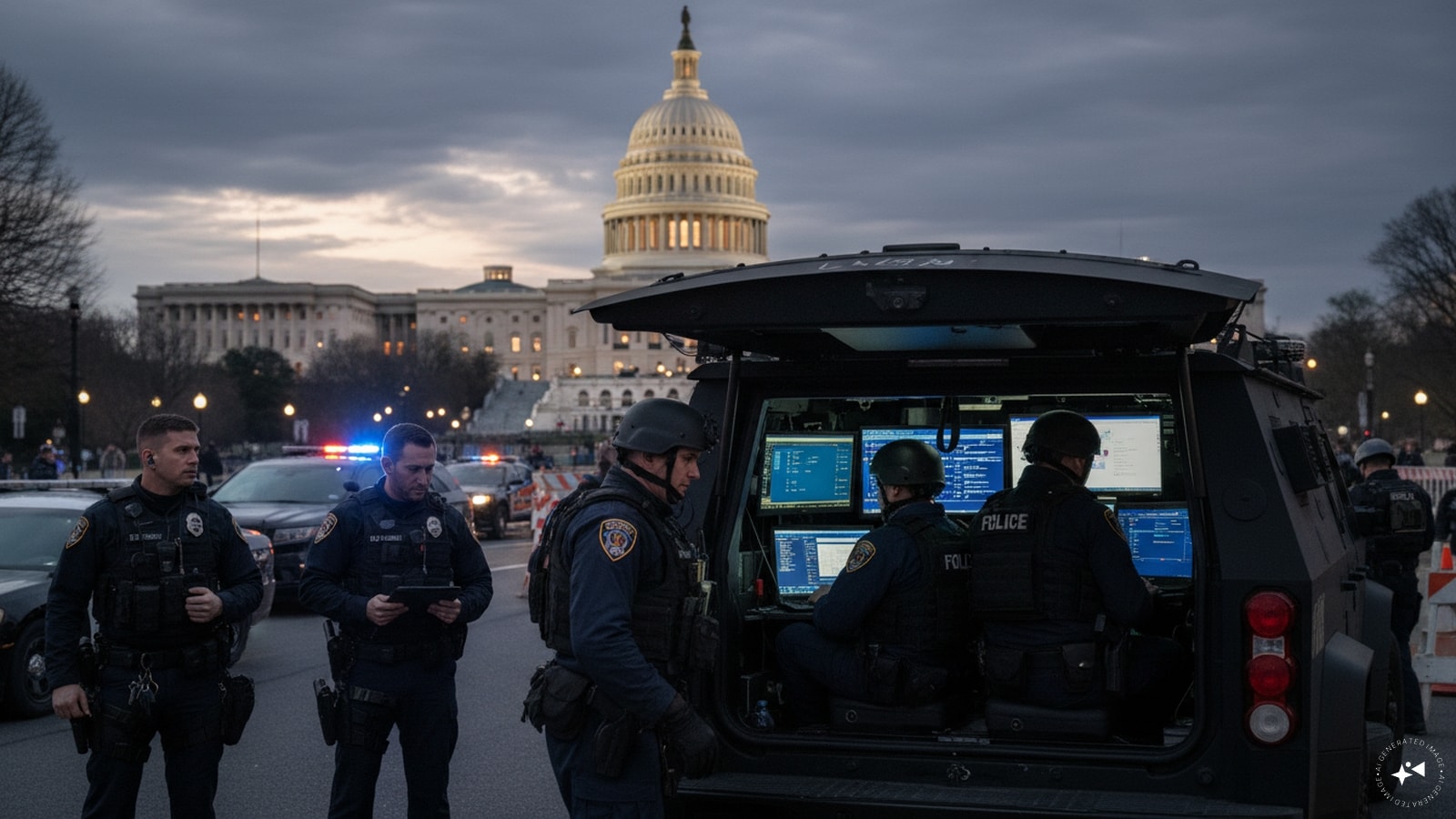
Inside major cities like Washington, the "Securing the Cities" program equips local police cruisers, fire trucks, and transit officers with wearable radiation pagers and backpack-sized spectroscopic detectors. Helicopters operated by the Aerial Measuring System routinely fly baseline grid patterns over the capital before major public events, mapping the natural background radiation of granite monuments and brick sidewalks down to the square meter. If a single illicit source of cobalt or cesium enters that grid, the anomaly lights up on a screen before a fuse can ever be lit.
Equally quiet is the global effort to lock down the ingredients at their source. International teams work continuously to replace high-risk radioactive blood irradiators in hospitals with non-radioactive X-ray technology, shrinking the global supply of materials that could ever be fashioned into a dirty bomb.
Mastering the Instinct to Panic
If the worst were ever to happen—if a plume of radioactive dust were ever loosed into the streets of a major city—the difference between chaos and survival would come down to something remarkably simple: fighting our own instincts.
Our evolutionary wiring tells us to run, to get in our cars, to flee the invisible danger as fast as possible. In a radiological event, running is almost always the wrong choice.
Because radiation from a dirty bomb travels primarily as airborne dust and fallout, the safest place during the first few hours is indoors, behind brick or concrete walls, with windows shut and air conditioning turned off. Staying inside for even twelve to twenty-four hours allows the heaviest radioactive particles to settle to the ground and gives emergency teams time to map the exact footprint of the contamination. Leaving the area too early means driving directly through the invisible plume, inhaling the very dust you are trying to escape, and gridlocking the roads needed by emergency responders.
If you are caught outside when dust settles on your clothes, the remedy is not an exotic antidote. It is taking off your outer layer of clothing—which removes up to ninety percent of external radioactive contamination—sealing it in a plastic bag, and washing your skin and hair with ordinary soap and warm water.
Knowledge strips the monster of its mystery. When we understand that a dirty bomb is a localized contamination hazard rather than an apocalyptic nuclear blast, the weapon loses its primary source of power: our own terror.
Late in the evening, when the commuter rush in Washington finally thins out, the monuments along the National Mall glow against the dark sky, solid and unyielding. Beneath the calm surface of the city, sensors hum quietly in the trunks of patrol cars, analysts sift through fragments of distant intelligence, and engineers refine the plans that keep an entire metropolis resilient. The threat of radiological disruption is real, complex, and deserving of sober vigilance—never panic. Because in the end, a weapon designed to shatter a city's spirit only works if we surrender our calm before the dust even settles.