A single rusty hull sits motionless in the turquoise haze of the Persian Gulf. From the bridge of a massive crude carrier, a captain stares at a radar screen that should be teeming with the rhythmic pulse of global commerce. Instead, there is a thickening silence. This isn't just a traffic jam at sea. It is the sound of the world’s carotid artery beginning to constrict.
When we talk about the Strait of Hormuz, the conversation usually retreats into the sterile language of "geopolitical tension" and "maritime security." We treat it like a game of Risk played by men in windowless rooms in Washington and Tehran. But look closer. The real story isn't about maps. It’s about the frantic phone calls made by logistics managers in Ohio who realize their supply chain just snapped. It’s about the price of a gallon of gas at a station in rural France. It’s about the flickering lights in an apartment in Tokyo that depend on a steady stream of liquefied natural gas. If you found value in this post, you might want to check out: this related article.
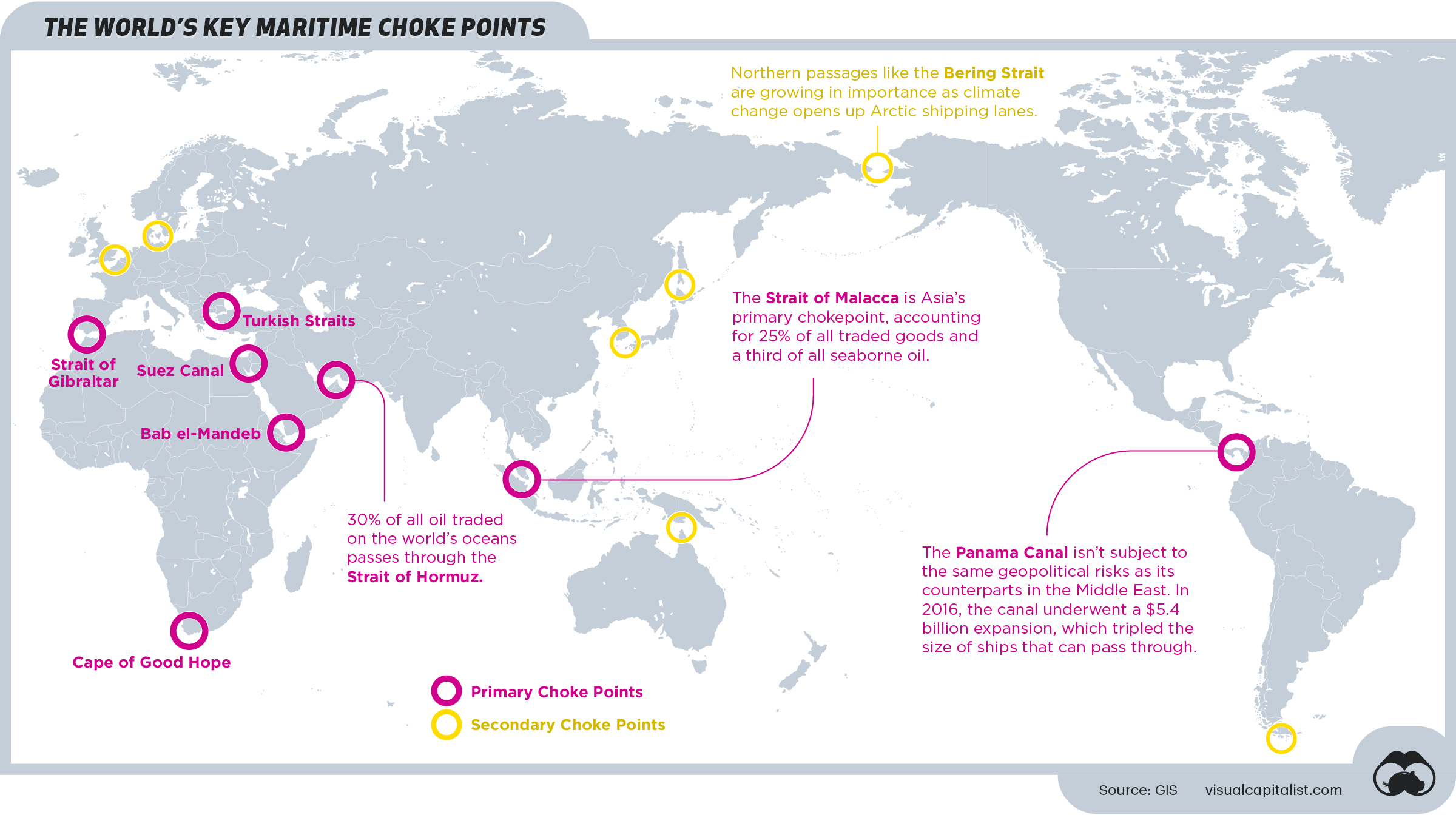
The Strait of Hormuz is a narrow stretch of water, barely twenty-one miles wide at its thinnest point. Through this slender throat passes one-fifth of the world’s total oil consumption. Think about that. Every fifth car on the road, every fifth plane in the sky, and a massive chunk of the plastic in your hand started its journey by squeezing through this tiny, volatile gap.
The Weight of a Narrow Sea
Imagine you are a merchant sailor. You are standing on a deck the size of three football fields, carrying two million barrels of oil. You know that beneath the waves, the math of global peace is being recalculated every hour. The United States is currently moving to assemble a new coalition, a digital and physical shield designed to keep these lanes open. They call it "Operation Sentinel" or various other bureaucratic names, but what they are actually trying to do is prevent a heart attack in the global economy. For another look on this development, check out the recent coverage from USA Today.
The problem is that trust has evaporated.
When a tanker is attacked or seized, it isn't just a loss for an insurance company. It creates a "risk premium." This is a polite term for a tax on existence. Suddenly, the cost to insure a vessel skyrocketing isn't just a line item on a spreadsheet; it is a weight that moves down the line until it hits your wallet. We often forget that the global economy is a physical thing. It is made of steel, salt water, and the courage of crews who are increasingly worried that they are becoming pawns in a high-stakes standoff.
The U.S. push for a coalition is a desperate attempt to spread the burden. They want the nations that rely on this oil—China, India, Japan, South Korea—to stop being spectators and start being participants. It is a logical request with a messy reality. Every country has a different threshold for what they consider a "threat," and no one wants to be the first to fire a shot in a waterway that could turn into a furnace overnight.
The Mathematics of Conflict
To understand why this matters, we have to look at the sheer density of the traffic. At any given moment, dozens of massive ships are threading the needle.
$$V = \frac{Q}{A}$$
If we look at the flow of a fluid through a pipe, the velocity must increase as the area decreases to maintain the same volume. In the Strait of Hormuz, the "volume" is the energy needs of the modern world. When the "area"—the safety and accessibility of the passage—is restricted by the threat of mines, drones, or seizures, the pressure builds until something ruptures.
We are currently seeing a shift in how we protect these waters. It is no longer just about destroyers and aircraft carriers. It is about a digital net. The new coalition isn't just looking for ships; they are looking for signals. They are using AI-driven surveillance and unmanned surface vessels to watch the water in ways humans never could. But technology cannot replace the fundamental human need for stability.
A captain on one of these tankers—let’s call him Elias—doesn’t care about the high-level diplomacy. Elias cares about the fact that his crew is looking at the horizon with binoculars, watching for small, fast-moving boats that don't show up well on traditional radar. He knows that if the Strait closes, even for a few days, the world changes.
The Ripple Effect
What happens if the coalition fails? What if the push for security only increases the friction?
The immediate result is a stall. Shipping companies begin to reroute. But you can't just "go around" the Persian Gulf. The alternative is a massive detour around the Cape of Good Hope, adding weeks to a journey and millions to the fuel bill. This is where the human element becomes inescapable.
Consider a small factory in Germany that relies on specialized chemicals derived from petroleum. When the tanker is delayed, the factory slows down. The workers' hours are cut. The local economy sags. This isn't a hypothetical "business trend." It is a lived reality for thousands of people who have never heard of the Strait of Hormuz but whose lives are governed by its tides.
The United States is betting that a show of collective force will deter aggression. It is the classic "neighborhood watch" theory applied to the most dangerous alleyway on earth. But the neighbors are hesitant. Some fear that joining the watch will make them a target. Others simply want to keep their heads down and hope the oil keeps flowing.
The Invisible Shield
We are living through a period where the "invisible" parts of our lives are becoming visible. For decades, we took it for granted that a ship could sail from Ras Tanura to Ningbo without incident. We assumed the oceans were a neutral, safe commons.
That illusion is gone.
The new coalition is an admission that the old way of doing business—where one superpower policed the waves—is over. We are entering a fractured era where security must be crowd-sourced. It is a messy, complicated, and often frustrating process.
There is a profound vulnerability in admitting that our entire way of life depends on a twenty-mile wide strip of water controlled by people who may not have our best interests at heart. It’s scary. It should be. When we see headlines about "ship traffic stalling," we shouldn't think about stocks. We should think about the fragile threads that connect us all.
Every time you flip a light switch, you are participating in a global chain of events that leads back to that turquoise water. You are connected to Captain Elias. You are connected to the drone operators in the Nevada desert watching the waves. You are connected to the diplomats in Brussels trying to balance the books of war and peace.
The push for a new coalition is more than a military maneuver. It is an attempt to patch a leaking hull in the ship of global civilization. Whether it works depends less on the hardware of the ships and more on the shared realization that we are all, quite literally, in the same boat.
If the Strait closes, the lights don't just go out in one country. The darkness spreads.
We watch the radar. We wait for the signal. We hope the silence on the water is just a pause, and not the beginning of a long, cold winter for a world that has forgotten how to live without the steady heartbeat of the Gulf.
The sun sets over the water, casting long, golden shadows across the decks of the waiting giants. For now, they move. Slowly, cautiously, they thread the needle. They carry the lifeblood of cities they will never see, fueled by the hope that the invisible shield holds for one more day.
The cost of failure is too high to calculate, and the cost of security is a price we are only just beginning to understand.
Next time you see a ship on the horizon, don't just see a silhouette of steel. See a lifeline. See a choice. See the narrow gap between the world we have and a world we cannot afford to imagine.
The water remains restless. The stakes remain absolute. The world continues to hold its breath, waiting to see if the coalition can turn a chokepoint back into a highway.
But the real question isn't whether the ships will pass. It’s whether we can ever go back to the luxury of not caring about the water at all.
The horizon is empty, save for the flickering lights of the next convoy, moving toward the narrowest part of the sea.
They sail on.
We wait.
The silence is the loudest thing in the world.