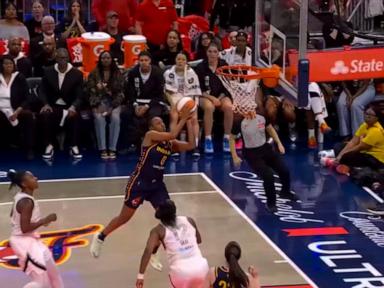
The margins in professional basketball shrink to absolute zero when the calendar flips to the postseason. Regular season habits, built over months of cross-country flights and routine back-to-backs, dissolve under the hot lights of elimination games. When high-profile matchups force a decisive Game 3 or when powerhouse franchises navigate the volatile terrain of October brackets, the conventional wisdom about talent accumulation gets tested to its breaking point.
Observe how the pressure changes the architecture of an offense. Teams that relied heavily on regular-season spacing and early-clock rhythm suddenly find themselves operating in a telephone booth. Defenses scout every tendency, shade every passing lane, and turn pick-and-roll coverments into physical chess matches. Every possession carries the weight of an anchor.
Take the structural reality of modern playoff series formats. A short series leaves zero room for tactical adjustment phases. Coaching staffs cannot afford a throwaway quarter, let alone an entire half, to figure out opponent coverages. The margin for error vanishes the moment the opening tip goes into the air.
Consider the physical toll on primary initiators. When opposing defensive coordinators scheme exclusively to take away a team's primary offensive engine, the secondary and tertiary pieces must step into unfamiliar offensive roles. Role players who spent the summer shooting corner jumpers off kick-outs suddenly find themselves attacking closeouts or making high-stakes decisions in secondary pick-and-rolls. This is where series are actually won or lost. The superstar will get her numbers, or at least draw enough attention to warp the defense, but the team that advances is invariably the one whose role players hit shots under duress.
The historical context of league expansion and talent distribution also plays a massive role in how modern series unfold. As the talent pool deepens across every roster, the historical gap between top seeds and lower seeds narrows perceptibly. Upsets are no longer freak anomalies born of shooting variance; they are calculated outcomes executed by well-coached units that exploit specific matchup vulnerabilities.
Depth becomes currency. By the fourth quarter of a grueling elimination battle, heavy minutes take their toll on conditioning and decision-making speed. Coaches who trust their benches find fresh legs capable of applying ball pressure or crashing the offensive glass when fatigue sets in. The teams that survive deep playoff runs are those built with interchangeable defensive versatility, allowing them to switch multiple positions without surrendering mismatches in the post.
Tactical adjustments in real-time separate elite tacticians from the rest. Halftime adjustments are rarely about drawing up entirely new plays; they are about defensive discipline, communication on ball screens, and limiting transition opportunities. Giving up easy run-out points in a playoff game is an unforced error that championship contenders simply cannot afford.
As the league continues its rapid evolution, the pressure on front offices to construct balanced rosters capable of withstanding postseason physicality will only intensify. The era of relying on a single dominant scorer is fading into history, replaced by multi-layered attacks that can beat you in transition, in the half-court, and on the offensive boards.
The pressure remains undefeated, waiting for the next team to blink.