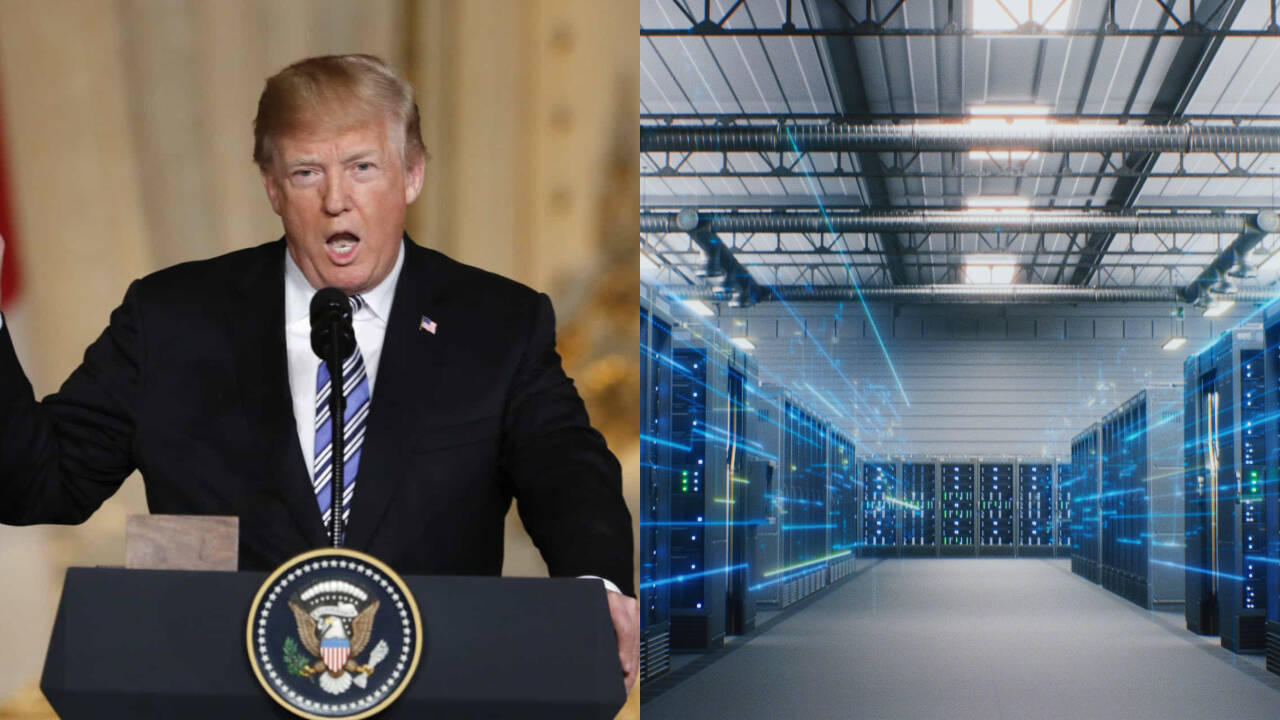
The White House has removed Sean Cairncross from his post as National Cyber Director, a decisive personnel move triggered by cascading technology outages across federal networks and critical infrastructure. While administration officials initially framed the departure as a routine leadership transition, the timing tells a far sharper story. Federal agencies have spent months wrestling with systemic software failures, supply chain bottlenecks, and escalating cyber intrusions that exposed deep structural flaws in how Washington manages digital resilience. Replacing Cairncross signals an urgent acknowledgment that policy coordination alone cannot stop a failing server or patch an unmonitored vulnerability when millions of citizens lose access to essential services.
To understand why this shakeup happened now, you have to look past the press briefings and examine the friction built directly into the Office of the National Cyber Director. Congress created the office following the SolarWinds breach to give the president a single, empowered quarterback for cybersecurity strategy. On paper, the role looked formidable. In practice, the office was handed sweeping responsibility without direct budgetary authority over the massive departments it was supposed to coordinate.
The Structural Trap of the National Cyber Office
Washington loves creating czars without giving them armies. That is the core flaw that has plagued every occupant of the National Cyber Director chair since its inception, and Sean Cairncross was no exception. When a widespread outage hits federal payment systems, aviation logistics, or regional power grids, the public looks to the White House for immediate answers. Yet the actual levers of operational control sit miles away inside the Cybersecurity and Infrastructure Security Agency, the Department of Defense, and dozens of fiercely independent cabinet agencies.
Cairncross arrived with a background heavy in political operations, international development finance, and executive management rather than deep technical incident response. Supporters argued that an experienced bureaucrat was exactly what the office needed to knock heads together across interagency turf wars. They believed someone fluent in the language of the West Wing could force stubborn department secretaries to prioritize baseline security hygiene.
It did not work out that way.
When cascading tech outages began disrupting both government operations and private sector contractors, the gap between high-level policy memos and ground-level engineering became impossible to hide. Agencies were still running legacy code written decades ago. Contractors were pushing unverified updates into production environments without adequate rollback protocols. Under those conditions, a coordinator who lacks direct command authority ends up writing strategy documents while fires burn in the server rooms.
Why Widespread Tech Outages Changed the Political Math
Cybersecurity used to be an invisible problem until someone stole a database of personnel records or locked up a hospital network with ransomware. Over the past two years, the nature of digital failure has shifted. The most damaging disruptions have increasingly stemmed from brittle software dependencies, misconfigured cloud updates, and single points of failure shared across thousands of enterprise networks.
Consider how modern federal infrastructure actually operates. A single software vendor provides endpoint monitoring or identity authentication across dozens of civilian agencies and Fortune 500 contractors. If that vendor pushes a flawed kernel-level update on a Tuesday morning, blue screens cascade across airport terminals, benefits offices, and emergency dispatch centers within minutes. You do not need a foreign intelligence agency to bring operations to a halt when monoculture software architecture does the damage automatically.
For the White House, these outages created an acute political liability. Voters do not care whether an interruption to their tax refund, flight schedule, or healthcare portal was caused by a state-sponsored hacker in Eastern Europe or a bad line of code pushed by a domestic contractor. They just know the system is broken, and they blame the administration in charge.
Cairncross found himself caught in the crossfire of this reality. Because his office served as the public-facing focal point for national cyber policy, every major systemic outage landed squarely on his desk. Behind closed doors, senior advisors grew frustrated with the slow pace of regulatory enforcement and the inability to compel private sector vendors to adopt stricter liability standards. The administration needed someone who could project immediate operational command, not long-term strategic patience.
The Battle Between Regulation and Voluntary Compliance
At the heart of this leadership change lies a brutal ideological divide over how the federal government should police the technology industry. For decades, Washington relied on public-private partnerships and voluntary frameworks. The logic was simple: tech companies move faster than regulators, so heavy-handed rules would only stifle innovation and bog down defenders in compliance paperwork.
That consensus is collapsing under the weight of repeated outages.
When critical infrastructure relies on private cloud providers and third-party software vendors, voluntary guidelines look dangerously naive. Yet pushing mandatory cybersecurity regulations through a divided Congress or against fierce corporate lobbying requires immense political capital. During Cairncross's tenure, efforts to impose strict software liability rules and mandatory incident reporting timelines ran into relentless pushback from industry groups and chamber-of-commerce allies.
Software liability remains the third rail of tech policy. Right now, software makers can ship products riddled with architectural flaws, disclaim all responsibility in their end-user license agreements, and leave customers holding the bag when systems crash. Shifting that burden back onto the vendors would transform the economics of software development overnight. It would force companies to invest in rigorous testing and secure-by-design engineering rather than rushing features to market.
The White House wants aggressive movement on this front, particularly through federal procurement power. If the government refuses to buy software that fails basic resilience standards, vendors will have to change their practices to keep lucrative federal contracts. Executing that strategy, however, requires a director willing to wage open warfare against some of the richest lobbying outfits in Washington.
What Happens Inside an Interagency Turf War
Anyone who has covered national security in Washington knows that organizational charts rarely reflect actual power. When the White House replaces a cyber director, the ripple effects immediately alter the balance of power across four distinct bureaucratic fiefdoms:
- The Cybersecurity and Infrastructure Security Agency (CISA): Operating under the Department of Homeland Security, CISA holds the operational boots on the ground for civilian network defense. Tension between CISA and the White House cyber office has existed since day one, largely over who gets to set the national agenda and speak directly to private sector executives during a crisis.
- The National Security Council (NSC): The Deputy National Security Advisor for Cyber and Emerging Technology sits inside the West Wing Situation Room apparatus, giving them immediate proximity to the president during foreign cyber crises. Whenever an outage blurs the line between technical glitch and foreign sabotage, the NSC naturally pulls authority away from the Office of the National Cyber Director.
- The Office of Management and Budget (OMB): Money talks in Washington, and OMB controls the purse strings for federal IT modernization. Without OMB locking down agency budgets, cyber directives remain polite suggestions.
- Sector Risk Management Agencies: Departments like Energy, Treasury, and Health and Human Services guard their regulatory turf jealously. They resist outside interference from White House coordinators who try to dictate how banks or power utilities manage their internal networks.
Sean Cairncross walked into this buzzsaw without the deep technical pedigree that commands automatic deference from intelligence officials or Silicon Valley engineers. When major outages struck, agency heads bypassed his office entirely, dealing directly with the NSC or DHS leadership. Once an executive branch official loses the room in Washington, no amount of organizational restructuring can restore their leverage.
The Hidden Danger of Monoculture Infrastructure
Looking beyond the personality politics of the West Wing, the crisis that unseated Cairncross highlights a technical vulnerability that no single personnel change will fix. Over the last decade, both the federal government and corporate America aggressively consolidated their IT stacks. To save money and simplify management, organizations migrated away from diverse, localized servers toward a handful of dominant cloud providers, identity managers, and security software platforms.
Efficiency came at the cost of fragility.
To illustrate how this plays out in practice, consider a hypothetical example of a regional transit authority and a federal benefits agency sharing the exact same cloud-based identity verification provider. In a decentralized world, a database corruption at one vendor affects only a localized network. In a consolidated cloud ecosystem, that single point of failure cascades simultaneously across thousands of downstream clients. Backup systems fail to trigger because the authentication layer required to access those backups relies on the exact same broken provider.
This is the precise mechanism behind the recent wave of widespread tech outages. Adversaries do not even need to breach individual agency firewalls anymore; they simply target the shared software supply chain, or wait for an overworked engineer at a major vendor to push an untested configuration file.
Replacing the National Cyber Director will not rewrite a single line of legacy COBOL running at the IRS, nor will it untangle the deeply nested dependencies of modern cloud computing. What it can do, however, is change how the federal government enforces resilience requirements on the vendors it pays billions of dollars every year.
What the Next Cyber Director Must Actually Do
Whoever steps into the role permanently faces an unforgiving mandate. The honeymoon period for the Office of the National Cyber Director expired years ago. If the next director wants to avoid becoming another casualty of Washington's revolving door, they cannot treat the job as a ceremonial policy shop.
First, the office must weaponize federal procurement rules. The U.S. government is the single largest buyer of enterprise software on the planet. By enforcing strict contractual penalties for unscheduled outages and insecure code—and actually suspending vendors who violate them—the White House can force market-wide changes without waiting for Congress to pass new laws.
Second, federal agencies need mandatory architectural redundancy. Mission-critical systems cannot rely on single-vendor authentication or unsegmented cloud environments. When a primary system goes dark, agencies must maintain tested, manual, or isolated failover pathways that keep essential public services running while engineers untangle the root cause.
Third, the administration has to resolve the chain-of-command ambiguity between the White House and the Department of Homeland Security. During a fast-moving outage, agencies need one clear operational commander, not competing guidance from three different offices.
The ouster of Sean Cairncross is a blunt reminder that in modern governance, digital infrastructure is physical infrastructure. When the screens go dark, political capital evaporates instantly, and the person holding the title takes the fall.