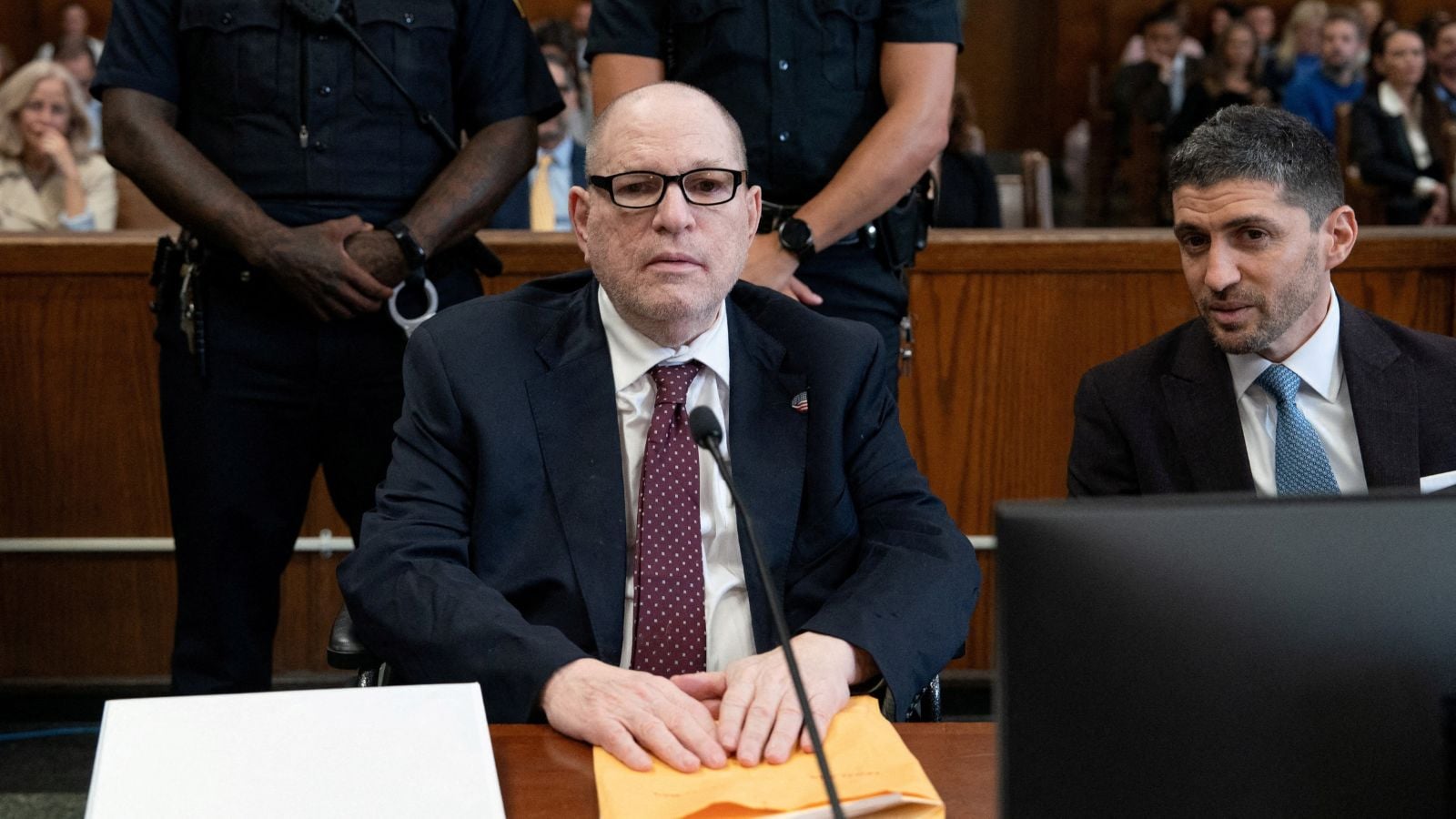
Harvey Weinstein was sentenced in New York on September 23, 2026, to 15 years in prison for a 2006 felony sex crime involving former television production assistant Miriam Haley, plus five years of post-release supervision and mandatory sex offender registration. On paper, the number sounds like a monumental reckoning. In practice, it is a complicated legal puzzle where credit for time served, concurrent versus consecutive sentencing across state lines, and declining health turn a headline figure into something far murkier.
Standard coverage treats the 15-year sentence as a clean closure point for a nearly decade-long legal saga. It is not. The sentence comes after New York's highest court overturned Weinstein's original 2020 convictions in April 2024, a 2025 retrial that produced a renewed conviction on Haley's case, and a deadlocked jury in May 2026 that forced Manhattan prosecutors to drop a separate charge involving Jessica Mann rather than drag her through a fourth trial. For a more detailed analysis into similar topics, we recommend: this related article.
How a 15-Year Sentence Shrinks Before the Ink Dries
Numbers in criminal courts rarely mean what they seem to a lay reader. Weinstein, 74, had faced up to 25 years on the New York count. Judge Curtis Farber landed at 15 years, splitting the difference between prosecutors seeking a stiffer term and defense attorneys asking for leniency.
Then comes the arithmetic. Weinstein has been incarcerated continuously since his initial conviction. Crediting more than six years already spent behind bars trims the remaining New York time down to roughly nine years. Add standard New York good-time allowances—which can shave off a portion of a determinate sentence for disciplinary compliance—and the standalone New York clock looks substantially shorter than the headline implies. For additional context on the matter, comprehensive analysis can be read at Reuters.
That math only holds if New York operates in isolation. It does not.
The California Trapdoor Still Hanging Over Him
Across the country, Weinstein still faces resentencing in Los Angeles. A California jury convicted him in December 2022 of rape and sexual assault charges involving another accuser, and he originally received a 16-year sentence in February 2023. An appellate panel later set aside that 16-year term because it leaned in part on the overturned New York conviction.
Now a California judge must decide whether Weinstein's Los Angeles punishment runs concurrently (at the same time) or consecutively (stacked end-to-end) with the New York sentence. Farber made his preference clear from the New York bench, saying he would stack the sentences if the choice belonged to him. If California agrees and runs them consecutively, Weinstein faces an effective life sentence regardless of how New York calculates credit or good time. If California runs them concurrently, the 15-year New York figure becomes a ceiling rather than a floor.
A sentence is only as real as the jurisdiction deciding whether the clocks run together or apart.
💡 You might also like: The Anatomy of Border Bureaucracy Chaos at the Attari Wagah Crossing
Why Remorse and Health Collided in Court
Sentencing hearings in high-profile cases double as theater, and Weinstein used his time in a wheelchair to run a familiar playbook. He told the court he felt remorse for Haley's pain while simultaneously insisting he was innocent and had never assaulted anyone. He read a letter from his daughter, spoke of his children's laughter, complained about conditions at Rikers Island, and reminded the room of his past philanthropy and film career.
Defense counsel leaned heavily on medical reality. Weinstein's lawyers pointed to chronic myeloid leukemia, diabetes, mobility limits requiring a wheelchair, and emergency surgery two years earlier to drain fluid around his heart and lungs. Their argument was straightforward: punishing a 74-year-old man in frail health does not require a decade-plus term, and a nine-year sentence would still function as meaningful punishment.
Prosecutors pushed back hard, pointing to a 2025 podcast interview they characterized as a tour of victimhood, deflection, and conspiracy theories. Haley echoed that point outside the courthouse, telling reporters that Weinstein's words proved he still felt entitled. For survivors, accountability is not just a calendar count. It is whether the institution forces the defendant to stop rewriting the record.
What Retrials Expose About Legacy Cases
Look closely at the procedural trail and a harder question emerges: why did a case that once looked settled take nearly a decade of appellate reversals, retrials, and hung juries to reach a fresh sentence?
First, historical sex crime prosecutions rely heavily on testimonial endurance. Haley testified at both the original trial and the 2025 retrial, describing years of PTSD, hypervigilance, private investigators watching her, and public ridicule. When a retrial deadlocks—as happened with Mann's allegation in May 2026—prosecutors face a brutal triage choice. Taking a witness through a fourth trial can inflict more harm than dropping the count.
Second, appellate courts police trial boundaries ruthlessly when public pressure runs high. New York's Court of Appeals threw out the 2020 convictions over what it termed egregious procedural errors, forcing the state to rebuild its case from scratch. The retrial succeeded on Haley's count, proving that a conviction can survive appellate scrutiny when evidentiary lines are drawn cleanly. Yet the detour cost years and left multiple charges unresolved.
The Civil Ledger Doesn't Wait for Criminal Finality
There is an overlooked divergence between criminal courts and civil dockets in cases like Weinstein's. Criminal sentences rise, fall, get vacated, and get appealed. Civil settlements and judgments rarely unwind just because an appellate panel dislikes how a trial judge handled prior-act testimony.
Even when criminal outcomes wobble, financial and institutional consequences stick. Studio empires dissolve, board seats vanish, and civil payouts continue independent of whether a prisoner is sitting in Rikers or a California facility. That distinction matters for anyone trying to measure whether the post-2017 reckoning actually changed anything. Criminal law measures culpability beyond a reasonable doubt; civil law and market exile measure risk and liability.
What to Watch Next
Nobody should treat September 23, 2026, as the final chapter. Two concrete markers will determine what Weinstein's 15-year New York sentence actually produces:
- The California resentencing ruling: Watch whether Los Angeles orders concurrent or consecutive time. That single judicial decision outweighs New York's good-time math.
- New York appellate filings: Weinstein's team has signaled plans to challenge the new judgment. Until appellate review closes, the headline number remains provisional.
Strip away the cable-news shorthand, and the 15-year sentence is neither a total triumph nor a hollow gesture. It is a stubborn, hard-won conviction surviving a second pass through New York's courts—while California holds the keys to whether Weinstein ever walks free.
Harvey Weinstein sentenced to 15 years in prison for sexual assault
This video report covers the New York sentencing outcome and courtroom context surrounding Weinstein's 15-year prison term.