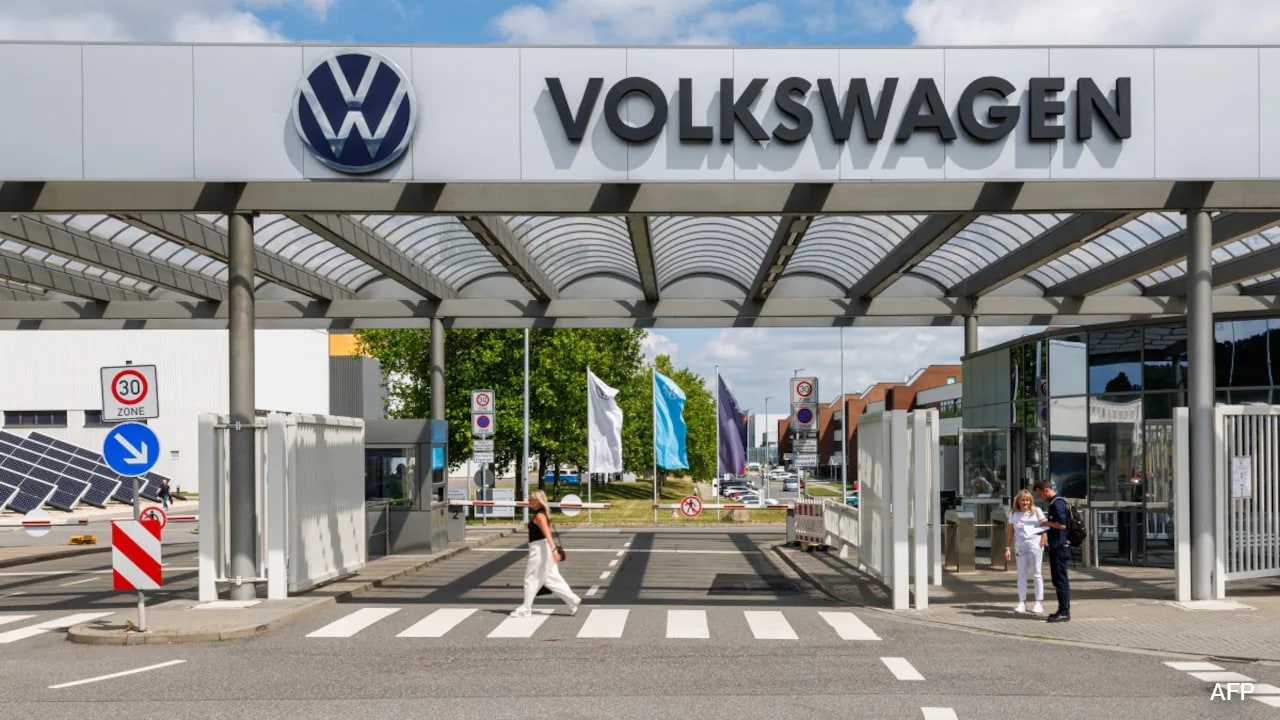
The ground is shifting beneath Wolfsburg. Volkswagen has officially agreed to eliminate 100,000 jobs by the end of the decade, a staggering reduction amounting to roughly 15 percent of its global workforce. This is not merely a corporate downsizing exercise. It represents the painful dismantling of the post-war European industrial compact, where job security, political consensus, and manufacturing dominance went hand in hand.
When a corporate titan of this scale shakes, the shockwaves travel through every tier of global commerce. Chief Executive Officer Oliver Blume and the company's supervisory board have signed off on an agreement that pairs these mass layoffs with the unprecedented prospect of shuttering domestic factories in Germany. For decades, the mere mention of closing a home-market plant was enough to spark political warfare. Today, the math of the global automotive market has rendered those old protections mathematically impossible.
To understand how Europe's largest carmaker reached this precipice, one must look past the immediate headlines of management-labor strife and examine the structural rot eating away at legacy manufacturing.
The Perfect Storm of Margin Collapse
The immediate catalysts are well documented. Patchy consumer appetite for high-cost electric vehicles, the heavy burden of incoming United States tariffs, and an unrelenting margin squeeze have combined to create a toxic financial environment. Yet these external pressures merely accelerated a crisis that was decades in the making.
European automakers built their empires on the internal combustion engine. They mastered the intricate, capital-intensive art of building multi-cylinder powertrains, transmissions, and exhaust systems. This mastery created an unassailable moat of intellectual property and supply chain dominance.
Then came the transition to battery-electric platforms. The internal combustion engine required thousands of specialized suppliers and precision assembly technicians. A battery pack and electric motor require significantly less manual labor to assemble. Companies like Volkswagen found themselves carrying bloated organizational structures designed for a mechanical era while trying to fund a digital and electrical transition.
Compounding this internal friction is the rise of Chinese competitors. Domestic Chinese manufacturers did not carry the baggage of legacy union agreements, legacy pension funds, or decades of legacy tooling. They built agile, vertically integrated supply chains capable of delivering feature-rich electric vehicles at price points that European manufacturers cannot match within their home cost structures.
When a company's structural cost per vehicle sits significantly higher than its market rivals, volume drops translate directly into existential threats. Volkswagen had reached the end of the financial runway.
Breaking the Sacred Pact of Wolfsburg
The decision to cut 100,000 positions dwarfs previous automotive restructuring efforts, eclipsing even the 50,000 job reductions General Motors enacted following its 2009 bankruptcy. What makes this agreement historic is the inclusion of domestic plant vulnerability.
Management and union representatives have conceded that the long-term viability of four major German facilities—specifically those in Hannover, Emden, Zwickau, and Neckarsulm—cannot be guaranteed into the next decade. For a company founded as Das Auto des Volkes and deeply intertwined with the social fabric of Lower Saxony, the prospect of closing full-scale domestic factories breaks a foundational social contract.
Labor leaders, naturally, pushed back with fierce rhetoric. Prior to the formal board approval, clashes between the powerful IG Metall union and executive suites turned volatile. Accusations flew over transparency, with union representatives decrying backroom maneuvers to bypass traditional supervisory roadblocks.
Yet the final unanimous approval by the supervisory board—which balances labor representatives with shareholder interests—signals a grim realization. Both sides recognized that a bankrupt company preserves zero jobs. The compromise allows management to aggressively shrink the cost base while scrambling to find alternative industrial uses for threatened regional facilities.
The Domino Effect Across the Supply Chain
Mass layoffs at an original equipment manufacturer never happen in a vacuum. For every direct job lost inside a Volkswagen assembly plant, multiple positions evaporate across the tier-one, tier-two, and tier-three supplier networks.
Consider a hypothetical tier-one component supplier located three hours away from Wolfsburg, dedicated entirely to producing mechanical fuel injection components or specialized exhaust hardware. That business relies on steady volume from Volkswagen brands like Audi, Porsche, and the core VW nameplate. When the parent company slashes production targets and trims 15 percent of its global headcount, the ripple effect hits the supplier's order books immediately.
These smaller firms lack the cash reserves of a global automotive group. Many will face difficult choices between bankruptcy, consolidation, or hasty pivots toward industrial sectors where margins are equally thin. The hollowing out of the European automotive supply chain is the quiet part of this crisis. While the media focuses on the white-collar offices and assembly lines in Wolfsburg, the quiet bankruptcy of specialized component makers in industrial towns will alter the continent's manufacturing foundation for a generation.
Navigating the Next Industrial Revolution
Can a legacy giant successfully re-engineer its core while shedding a tenth of its workforce? History offers sobering precedents. Massive corporate turnarounds frequently stumble because the cuts required to achieve financial health simultaneously destroy the operational agility needed to innovate.
Volkswagen is attempting to thread a microscopic needle. It must strip out billions in structural overhead while continuing to pour capital into software development, autonomous driving research, and next-generation battery cell chemistry. If management focuses too heavily on short-term labor savings to appease quarterly balance sheets, it risks falling further behind agile global competitors who treat software integration as the primary product differentiator.
The leadership team insists that aligning workforce levels with current economic realities is the only path forward. They are betting that a leaner, more focused enterprise can survive the transition away from fossil fuels.
The rest of the European industrial sector is watching closely. If Volkswagen succeeds in forcing through the largest restructuring in automotive history without collapsing its internal cohesion, it will establish a harsh new blueprint for legacy manufacturing across the continent. If it stumbles, the fall of Europe's largest carmaker will serve as a permanent monument to the perils of industrial inertia.
The factories are adjusting their shift schedules. The unions are preparing for a landscape of diminished footprints. The old era of European automotive supremacy has officially closed its doors.


