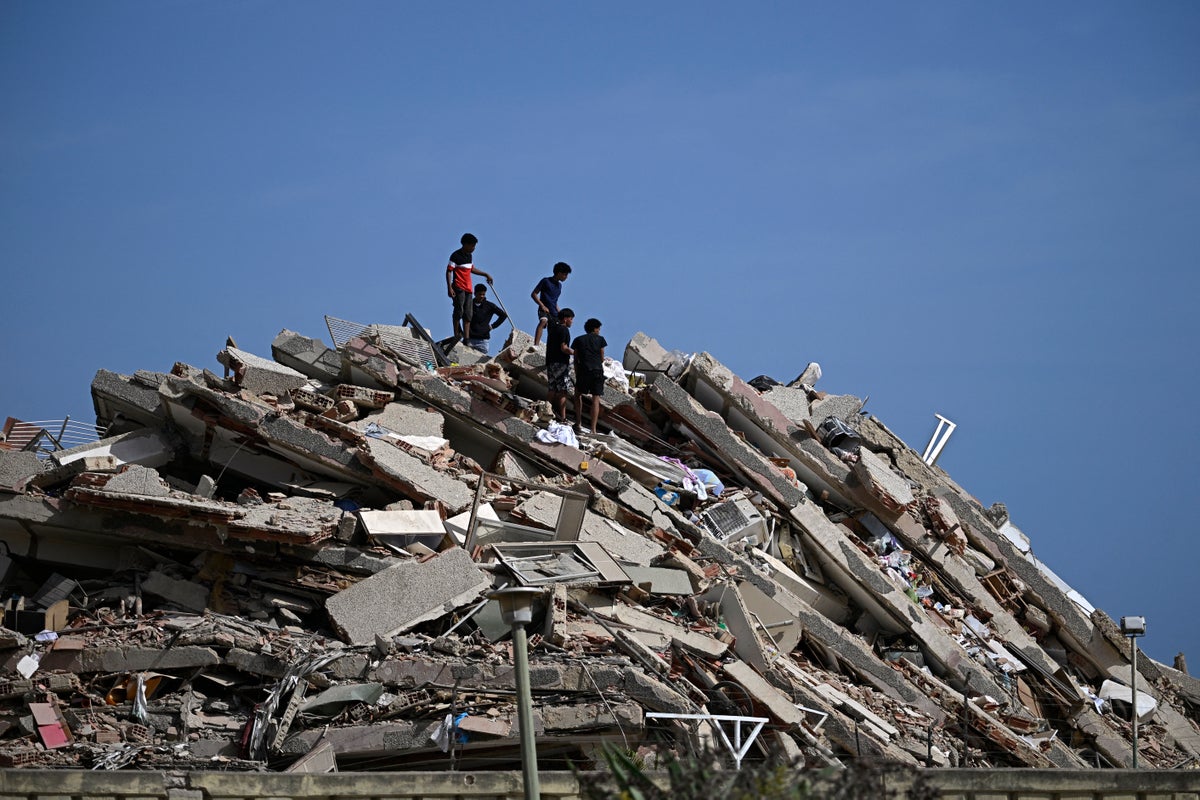
The ground in northern Venezuela did not just shake on June 24, 2026. It completely severed the thin illusion of stability that the nation's fragile infrastructure had managed to maintain. When back-to-back earthquakes measuring 7.2 and 7.5 magnitude struck less than a minute apart near the coastal town of Morón, the immediate toll was horrifyingly clear. Official state reports quickly confirmed at least 164 deaths and nearly 1,000 injuries. Yet the real catastrophe lies in the terrifying gap between state rhetoric and the digital logs of missing persons networks, which already show upwards of 30,000 people unaccounted for.
This is Venezuela’s worst seismic disaster in more than a century. In related updates, read about: Why US-India Ties Are Becoming the Only Relationship That Actually Matters for Tech Survival.
To understand why a major geological event transformed so rapidly into a systemic collapse, one has to look far beyond the tectonic plates. The fault lines that destroyed entire apartment complexes in Caracas and left the coastal region of La Guaira a designated disaster zone are deeply political and economic. Decades of hyperinflation, severe underinvestment in basic utilities, and a lack of adherence to modern seismic building codes turned ordinary concrete structures into brittle traps. Now, as rescue workers and local volunteers dig through mountains of debris with bare hands and borrowed power tools, a darker reality is setting in. The state apparatus is profoundly unequipped to handle a disaster of this magnitude, and a quiet media blackout is masking the true scale of human loss.
http://googleusercontent.com/lmdx_content/qsfcSWZeicPSgotGXviyoTKJiVizqCWvmHmPiWFZVTUMCYlxQlBHtxZDNjJxGmmAsNboFiTkjoyLXJBUlnIKaZpkqtvxDIyZzCHovqMYwsElZgziRdUCVgvDGGxVtSMdCvIoHESfiQEtVoFbxThmGvLfcDlJLuonWCHpuG9737 TIME has also covered this fascinating issue in extensive detail.
Thirty Nine Seconds of Absolute Ruin
The science of the disaster explains the immense physical trauma inflicted on the region. According to data from the U.S. Geological Survey, the first shock hit west of Morón at a depth of 22 kilometers. Just 39 seconds later, a secondary and more powerful 7.5 magnitude quake tore through the Boconó-San Sebastián-El Pilar fault system at a much shallower depth of 10 kilometers.
When a shallow earthquake strikes directly beneath populated urban areas, the surface acceleration can overwhelm even well-engineered structures. For a country where basic concrete quality has been degraded by years of supply shortages and black-market cement cutting, the results were catastrophic. In southeastern Caracas and the high-density districts of Chacao and Baruta, multi-story residential blocks simply dropped.
A stark contrast emerges when comparing this event to similar earthquakes in regions with modernized infrastructure. Consider Chile’s 8.2 magnitude earthquake in 2014. Despite being significantly more powerful in terms of raw energy release, that offshore event resulted in fewer than a dozen deaths because of strict architectural enforcement and rapid emergency response frameworks. In northern Venezuela, the twin shocks hit a population living in structures that had received zero safety upgrades or structural evaluations for nearly a generation.
The Quiet Blackout and the Missing Thousands
In the immediate aftermath of the disaster, Interior Minister Diosdado Cabello and Acting President Delcy Rodríguez took to state television to announce an immediate emergency fund of 200 million dollars to rebuild hospitals and housing. They stressed that the state was acting in accordance with established emergency protocols.
But local journalists and international observers quickly noticed a severe discrepancy. While state broadcasts focused heavily on controlled rescue sites in affluent parts of Caracas, independent missing persons tracking platforms and opposition networks outside the country were flooded with desperate pleas from lower-income barrios. In places like Pinto Salinas and the steep hillside settlements of La Guaira, entire informal neighborhoods had shifted or slid entirely down the slopes.
Communication lines went dark within minutes of the second tremor. While the government blamed the outages entirely on structural damage to cell towers, regional tech monitoring groups observed targeted blockages on several localized data networks. This tactical containment of information serves a clear purpose. By keeping casualty counts localized and strictly controlling the narrative, the administration attempts to minimize public panic and obscure the total failure of municipal emergency services.
Families have been left to organize their own search teams. Without heavy lifting equipment, specialized canine units, or thermal imaging technology, the chances of retrieving survivors from collapsed concrete basements diminish with every passing hour.
Decades of Structural Decay Exposed
The physical destruction of Caracas is not an isolated accident of nature. It is the direct consequence of an economic strategy that treated basic infrastructure maintenance as an afterthought. For over two decades, capital funds intended for municipal oversight, geological monitoring, and structural reinforcement were systematically diverted.
The national grid, already notorious for rolling blackouts before the disaster, collapsed instantly. Without electricity, water pumps failed across the capital, leaving hospitals reliant on aging diesel generators that were never intended for continuous, multi-day operations. Surgeons in Caracas have reported performing emergency triage by the light of mobile phones, running out of basic surgical consumables within the first twelve hours of the crisis.
Furthermore, the country's economic isolation has complicated the logistics of international aid. Although Washington confirmed initial contact regarding disaster assistance units and humanitarian supplies, the underlying friction of long-standing international sanctions creates immediate bottlenecks. Shipping channels, air transport clearances, and banking restrictions mean that even if external aid is approved, it faces days of bureaucratic and political delays before reaching the ground.
The Reality of Local Triage
On the streets of La Guaira, the situation has devolved into a manual struggle for survival. Local residents have formed human chains to move heavy blocks of masonry. The smell of leaking cooking gas and ruptured sewage lines hangs heavy over the coastal strip, raising immediate concerns about secondary public health crises, including waterborne disease outbreaks.
Emergency personnel are forced to make brutal decisions about where to deploy limited resources. High-rise buildings with visible signs of void spaces where survivors might be trapped receive the bulk of official attention, while older, unreinforced brick dwellings that completely pancaked are frequently bypassed. This grim triage is a direct result of a total lack of heavy state machinery.
The true human cost of the June 24 disaster will not be known for weeks, possibly months. As long as the official state narrative remains detached from the thousands of names accumulating on digital missing persons registries, the families of northern Venezuela are left to carry the burden of recovery entirely on their own. The physical ruins can eventually be cleared with enough capital and time, but the trust in the systems meant to protect these communities has been permanently shattered.