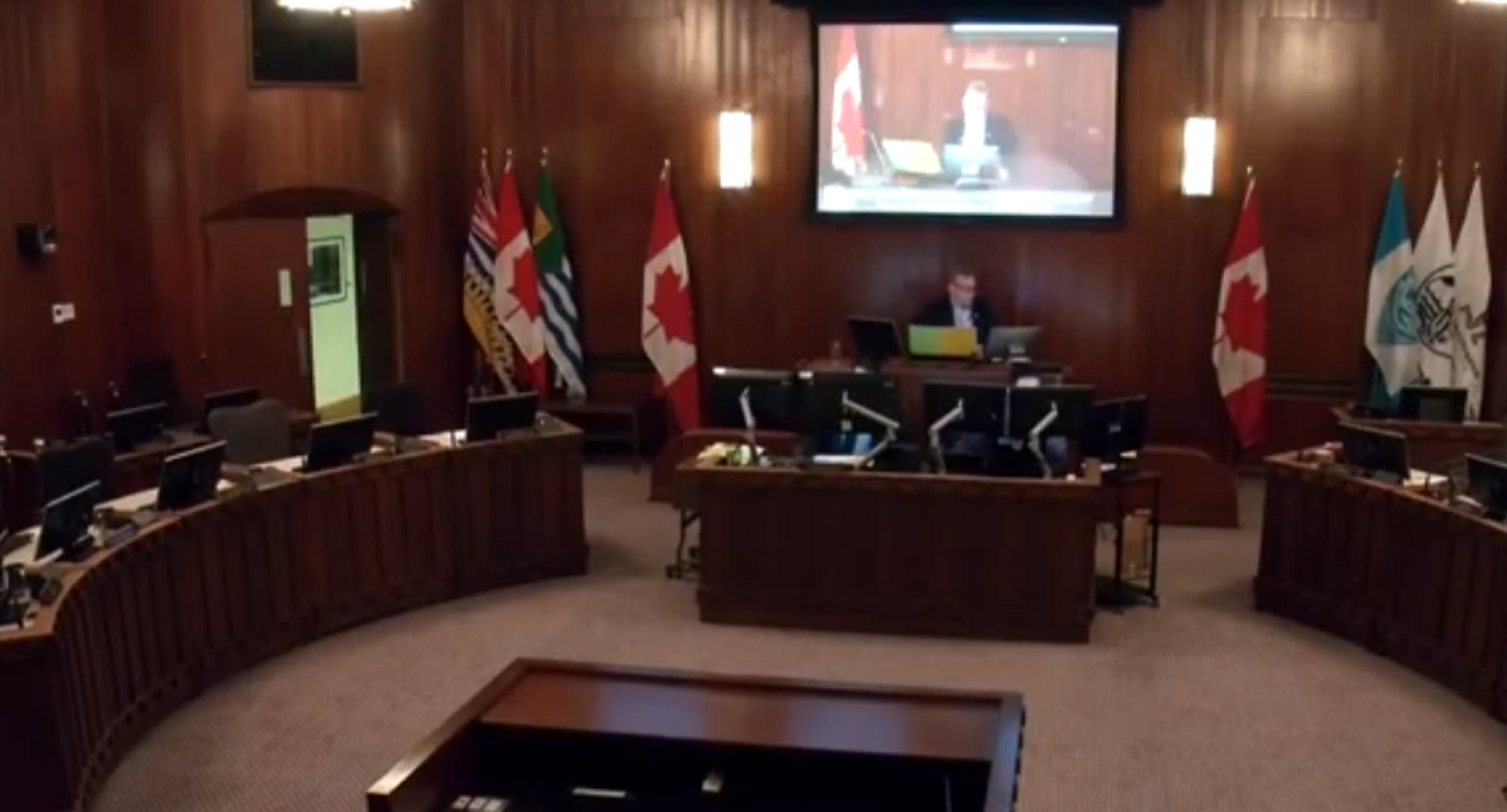
When a Southern California resident phoned into a Vancouver City Council hearing to rail against local zoning reforms, nobody expected the municipal drama to escalate into a police investigation and a demand for provincial intervention. During three days of public debate over Vancouver’s controversial Villages Plan—a sweeping proposal designed to rezone 17 single-family neighborhoods for six-story multi-unit housing—the speaker queue was overwhelmed by out-of-country callers reading identical scripts. Vancouver Mayor Ken Sim branded the coordinated phoning spree an act of foreign interference, calling emergency meetings with the police chief and urging the British Columbia government to strip non-Canadians of their right to address city hall.
The headline-grabbing phrase caught immediate attention, but the operational reality behind the curtain is far more nuanced than a shadowy foreign power meddling in Canadian democracy.
The Anatomy of an Automated Filibuster
Public hearings in Canadian municipalities were originally built on a simple premise. Local citizens affected by municipal decisions deserve a platform to speak directly to their elected officials. That premise crumbled during the marathon public hearing on the Villages Plan.
City councillors found themselves sitting through morning-to-midnight sessions as an influx of long-distance callers clogged the telephone lines. The procedural breakdown exposed how easily open-access civic channels can be turned into tools of institutional paralysis.
The friction became glaring during an exchange between ABC Councillor Sarah Kirby-Yung and a caller named Cristina Melendez.
Under questioning, Melendez admitted she was dialing in from California, had never set foot in Vancouver, and hoped to visit someday. She claimed she was speaking on her own accord out of concern over policy precedent. Yet, when Councillor Brian Montague pressed her to explain technical terms in her own testimony—specifically "development cost levies"—the caller paused, coughed, and fell silent.
She had been reading a script provided by someone else.
"Only those affected by land use decisions should speak before council, not those calling in from Southern California," Mayor Ken Sim stated publicly after convening an emergency meeting with City Manager Paul Mochrie and Vancouver Police Chief Steve Rai.
The tactic was simple. By flooding the public sign-up queue with out-of-town callers, organizers could stretch public hearings out over multiple days, exhausting council members and delaying final votes on land-use legislation.
Union Solidarity or Political Astroturfing
The mystery of who directed the California callers did not remain unsolved for long.
UNITE HERE Local 40, a hospitality workers union active in British Columbia, acknowledged that it organized the cross-border phone campaign. The union had enlisted American union brothers and sisters to call into the Vancouver hearing, weaponizing international labor solidarity against a municipal planning initiative.
The union’s motive stems from its broader fight against municipal development priorities. Local 40 leadership argued that the Villages Plan grants major concessions to real estate developers without requiring sufficient affordable housing units or protecting local service sector workers.
Union president Zalida Chan pushed back aggressively against the mayor’s characterization of their actions.
Chan asserted that the mayor was labeling basic worker solidarity as foreign threat activity while simultaneously rushing through approvals for international developers.
This justification ignores the fundamental mechanics of local governance. Municipal land-use decisions are intended to balance the competing interests of local residents, taxpayers, and neighborhood business owners. Importing non-resident activists who do not pay property taxes, do not vote in local elections, and cannot define basic municipal tax jargon converts a democratic feedback channel into coordinated noise.
It is classic astroturfing—creating the false appearance of a widespread, spontaneous grass-roots uprising by deploying external actors reading pre-written talking points.
The Blur Between Espionage and Political Theater
Mayor Ken Sim’s immediate reaction was to frame the incident as a national security issue, announcing that the Vancouver Police Department was looking into the matter to see if it met the criminal threshold for foreign interference, with a potential referral to the Royal Canadian Mounted Police.
Calling in the police makes for strong political performance, but it conflates two entirely different concepts.
Under the Canadian Security Intelligence Service Act, foreign interference carries a rigid legal definition. It refers specifically to covert, deceptive, or coercive activities conducted by or on behalf of a foreign state actor to advance foreign state interests.
A labor union asking its American affiliates to call into a city council meeting to protest a zoning bill is annoying to municipal officials. It breaks civic norms and exploits procedural vulnerabilities. But it is not state-sponsored espionage.
Legal analyst Kyla Lee noted the stark gap between the mayor's public rhetoric and legal reality, pointing out that foreign interference requires clandestine state activity detrimental to national security.
By tossing around serious security terminology to describe what amounts to a union-funded political stunt, politicians risk diluting the actual danger of hostile foreign intelligence operations. When every disruptive phone call is branded as a foreign attack, the public loses the ability to distinguish between administrative nuisance and actual threats to national sovereignty.
The Flawed Legacy of Virtual Governance
The vulnerabilities exposed during the Villages Plan debate were not created by California union members. They were manufactured by city hall during the emergency measures of the COVID-19 pandemic.
Before the pandemic, participating in a Vancouver City Council public hearing required physical presence. You had to show up at City Hall, sign the register, and wait your turn at the microphone. That physical barrier provided a natural filter. It ensured that speakers had enough personal investment in the issue to physically travel to the chamber.
When councils across North America introduced remote call-in systems to maintain operations during lockdowns, they celebrated the change as a victory for civic accessibility.
The system worked as long as participants acted in good faith. But open telephone lines without verification protocols created a massive security hole in municipal procedure. Anyone with a phone number and a script could hijack council time from thousands of miles away.
Green Party Councillor Pete Fry pointed out that while phone-in accessibility was designed to empower local residents who could not attend evening meetings, interest groups quickly learned to exploit the system.
When interest groups fill public comment queues with automated or coordinated remote callers, legitimate local voices are drowned out. Neighborhood residents who took time off work to speak about their own block end up waiting hours behind out-of-country union reps reading standardized statements.
Political scientist Max Cameron observed that public hearings in their current format are fundamentally broken. Rather than facilitating constructive dialogue between council and the public, five-minute open-mic call-in slots reward extreme voices, theatrical posturing, and procedural filibustering.
How Cities Must Repair Municipal Democracy
The immediate response from Vancouver city officials was swift. By Thursday, the city altered its public hearing procedures, pushing non-Canadian residents to the very end of the speakers queue so local residents take priority.
Mayor Sim went further, sending a formal letter to Premier David Eby and Housing Minister Christine Boyle requesting an urgent amendment to the Vancouver Charter. The proposed change would explicitly restrict registration for public hearings to Canadian residents.
Moving non-residents to the back of the line is a temporary patch on a systemic vulnerability.
If Canadian municipalities want to protect their democratic institutions from organized distortion without shutting out legitimate public input, they must implement structural fixes.
Implement Strict Verification Protocols
Civic participation should not require a security clearance, but verifying local residency for land-use hearings is standard practice in many jurisdictions. Requiring speakers to verify their identity through postal codes or local property records when signing up to phone in prevents mass call-in campaigns orchestrated from outside the jurisdiction.
Re-Establish Physical Priority
Remote participation should remain an option for accessibility, but physical chambers must take precedence. Prioritizing in-person speakers guarantees that those directly impacted by local housing developments have the first opportunity to address their representatives.
Replace Open Mic Slated Hearings with Participatory Panels
Five-minute open microphone sessions are easily hijacked by organized interest groups, whether they are American labor unions or local NIMBY organizations. Transitioning toward deliberative town halls and representative citizen panels creates structured environments where policy details are debated rationally rather than spoken off a pre-scripted card.
The spectacle at Vancouver City Hall was a wake-up call for local governments. When municipal councils leave their front doors wide open to digital exploitation, they should not be surprised when interest groups walk right in and seize the microphone. Fixing the system requires moving past hyperbolic claims of foreign intelligence threats and rebuilding municipal processes that prioritize actual community voices.