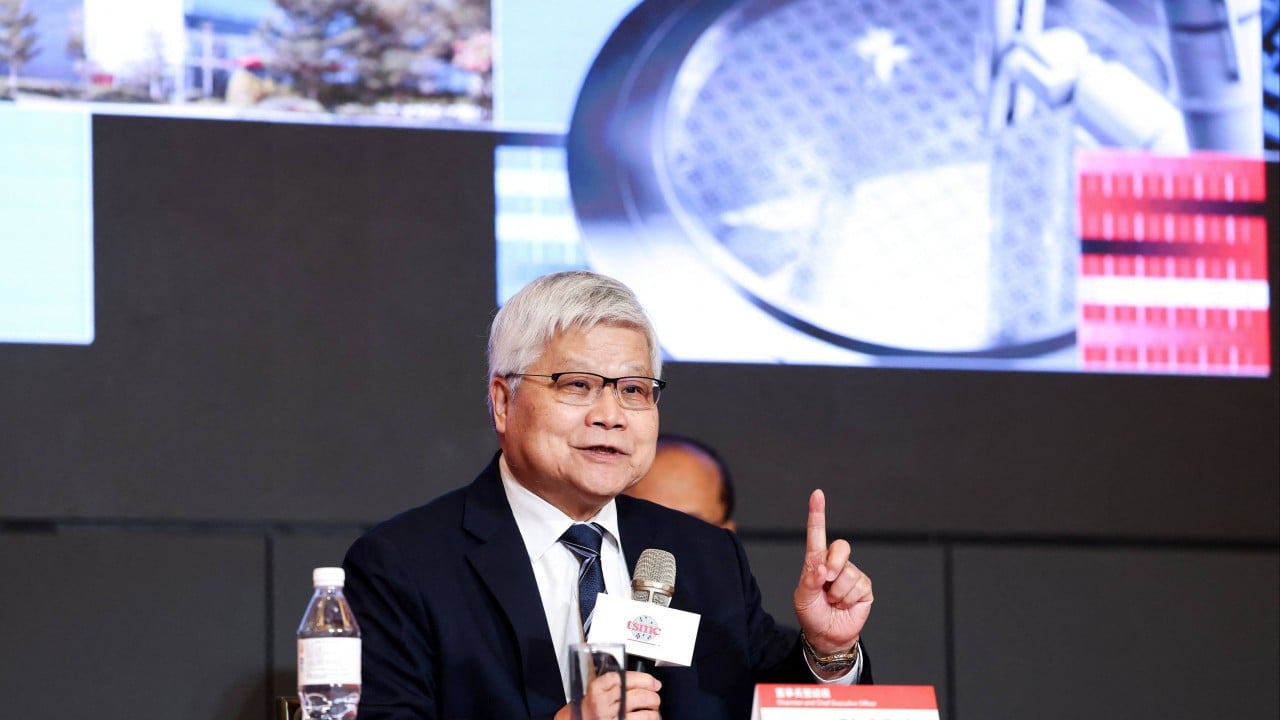
Talks between TSMC and Elon Musk over a massive Texas Terafab have collided head-on with an immovable rule of leading-edge silicon manufacturing. TSMC is open to discussing co-investment, customer commitments, and facility buildouts in Texas, yet it refuses to surrender operational control inside the cleanroom.
Watch the semiconductor trade press long enough and you start recognizing the cadence of these stories. A billionaire founder announces a scale of ambition that sounds like a rocket stage test. A foundry executive issues a careful, measured acknowledgment. Headlines shout about a mega-project. Veterans in Hsinchu and Phoenix quietly ask who is actually going to run the lithography tools at three in the morning when yield drops by four percentage points.
A Terafab is not a bigger warehouse with more parking spaces. In foundry parlance, gigafabs already measure output in tens of thousands of wafer starts per month and demand capital outlays that make oil refineries look modest. Stretching that concept to a terafab implies an industrial complex built to feed voracious compute appetite at an unprecedented scale, backed by aggressive timelines and deep pockets. When Musk enters a capital-intensive arena, speed and vertical integration usually sit near the top of the slide deck. When TSMC enters a new geography, process discipline and yield stability sit on top of everything else.
That clash of instincts is the real story behind the talks. Not a simple yes or no, and not a dramatic breakup before ink hits paper. It is a hard negotiation over who owns the day-to-day steering wheel of an asset that cannot tolerate improvisation.
Why Operational Control Is Non-Negotiable in Leading-Edge Fabs
People outside the industry often treat chipmaking like assembling smartphones or welding steel frames. You buy machines, hire technicians, turn on the line, and tune throughput. Silicon does not care about enthusiasm.
A leading-edge logic or AI accelerator die passes through hundreds of precision steps over weeks or months. Etching, deposition, ion implantation, chemical-mechanical planarization, and extreme ultraviolet lithography leave almost zero margin for drift. A microscopic particle, a subtle shift in gas flow, or an impatient shortcut on preventive maintenance can turn an entire batch of wafers into expensive coasters.
TSMC built its market dominance on operational repeatability. Its engineers track thousands of process parameters, enforce strict change-control protocols, and run tightly coupled manufacturing execution systems across its fabs. When a customer asks for a tweak, TSMC evaluates how that change ripples across defect density, cycle time, and long-term reliability before anything touches production silicon.
Handing operational control to an external partner—even a major customer or co-investor with a track record of fast iteration—creates a structural hazard. Fast iteration in rocket propulsion or vehicle software often relies on testing hard, breaking parts, and learning from failures. In a leading-edge fab, "move fast and break things" breaks tens of millions of dollars of wafers and equipment before lunch.
Hypothetical Example: Imagine a customer-led engineering team pushes to alter a chemical etch recipe mid-ramp to shave three days off a tape-out schedule. If yield falls from 82 percent to 64 percent across ten thousand wafers, the financial hit lands squarely on fab economics and schedule credibility. A pure-play foundry insists on holding the keys to process changes so one customer's urgency does not poison the entire line.
Even when a facility is dedicated to a single major buyer or co-funded alongside one, TSMC has long guarded process know-how and fab management authority. Sharing equity or long-term capacity rights is negotiable. Surrendering day-to-day authority over tool qualification, shift scheduling, and quality gates is a different matter entirely.
What Texas Brings to the Table and Where the Friction Starts
Texas is not a blank map for semiconductor manufacturing. The state has decades of chip history, an active industrial workforce, deep legal and corporate roots for Musk's ventures, and plenty of land compared with cramped coastal sites.
Yet building and running a Terafab in Texas runs straight into physical and human realities that no tax incentive can wave away. A massive advanced fab requires staggering amounts of power, water, and specialty gases. Grid reliability and voltage stability matter immensely; a brief power sag or frequency dip can disrupt sensitive tools and force lengthy requalification cycles.
Then there is talent. A cleanroom needs seasoned process engineers, equipment technicians, chemical specialists, and fab managers who know how to read subtle alarm patterns before a tool goes down. Training that workforce takes years. Importing experienced staff from overseas helps in the short run, but sustaining a huge multi-phase complex in Texas requires a deep domestic pipeline and local supplier ecosystem.
Consider the cultural friction as well. Musk's companies are famous for compressing schedules, questioning legacy assumptions, and pushing teams relentlessly toward aggressive targets. TSMC's operating culture is famously methodical, hierarchical in execution, and conservative when it comes to altering proven recipes. Put those two instincts in the same room without clear boundaries and every schedule slip becomes a tug-of-war over who is at fault.
| Dimension | Foundry-Led Model (TSMC Style) | Partner-Driven Model (Musk Style) | Key Friction Point in Texas |
|---|---|---|---|
| Primary Metric | Yield, defect density, wafer output | Speed to scale, cost per compute unit | Schedule compression vs. process qualification |
| Change Control | Strict, data-gated, slow to deviate | Rapid iteration, aggressive re-baselining | Mid-ramp adjustments risking wafer scrap |
| Capital & Risk | Staged capex tied to demand & yield | Bold upfront scale, vertical integration | Gigantic capex exposure before full ramp |
| Workforce Model | Deep fab engineering & shift discipline | Cross-functional, high-intensity sprints | Skilled cleanroom & utility talent bottlenecks |
The Pure-Play Foundry Dilemma Behind Closed Doors
There is another layer to these talks that rarely gets enough air time. TSMC is a pure-play foundry. Its business model rests on serving multiple customers—including fierce rivals in AI accelerators and mobile processors—without playing favorites or letting one buyer dictate the roadmap of a shared-style asset.
Even if a Texas Terafab were pitched around enormous demand from Musk's AI and robotics ambitions, a foundry executive has to ask a cold commercial question. What happens two years after construction when AI architecture shifts, or when demand surges in one node and cools in another?
A fab with operational control firmly in TSMC's hands can manage capacity allocation, maintain strict neutrality across customers, and protect intellectual property boundaries. If an outside partner holds operational levers, other customers will immediately worry about confidentiality, priority access, and whether engineering decisions favor one balance sheet over the rest.
At the same time, TSMC cannot simply ignore massive strategic buyers or geopolitical pressure to expand U.S. manufacturing. Governments in Washington and Taipei watch every major fab announcement closely. Building in Texas fits broader supply-chain diversification goals, provided the economics work and the operational guardrails hold.
Why TSMC Is Talking Anyway
If operational control is a red line, why hold talks at all? Because large industrial deals rarely start with a finished contract. They start with probing questions.
First, demand visibility matters. Building a giant fab takes years and tens of billions of dollars. Anchor commitments, long-term off-take structures, and co-funding mechanisms help de-risk massive capital expenditure before concrete is poured.
Second, talking lets TSMC test what kind of partnership is actually on offer. Is the counterparty looking for a guaranteed supply agreement and priority capacity in exchange for patient capital and infrastructure support? That is a conversation TSMC knows how to have. Is the counterparty demanding joint management of the cleanroom and unilateral authority over fab schedules? That is where talks stall or pivot.
Third, there is a signaling value for both sides. For Musk, engaging with the world's most capable advanced foundry underscores the seriousness of scaling custom silicon and compute infrastructure. For TSMC, staying in the conversation keeps it close to one of the largest potential buyers of high-end compute in the world without conceding its core operating principles.
What to Watch Before Anyone Celebrates
Announcements around mega-fabs often get treated like ribbon-cuttings when they are really just opening bids. Real progress in a Texas Terafab effort would show up in concrete, unglamorous details rather than bold slogans.
Watch for how governance is defined. If TSMC retains sole authority over fab operations, safety, quality, and process engineering—while commercial terms cover capacity allocation, milestones, and financial participation—the structure aligns with historical precedent. If governance looks blurred or experimental, seasoned analysts will treat the timeline with heavy skepticism.
Watch site and utility milestones too. Sub-transmission power agreements, water supply commitments, environmental permits, and cleanroom shell construction tell you far more about actual momentum than a handshake ever will. A fab is concrete, steel, ultrapure water, and precision machinery long before it is a political or financial headline.
Silicon rewards patience and humility in equal measure. You can bend timelines with enough money and grit up to a point, right up until physics and yield curves remind everyone who is in charge.


